





Neobank UX Patterns: How Monobank, Revolut, Monzo & N26 Design Daily Banking





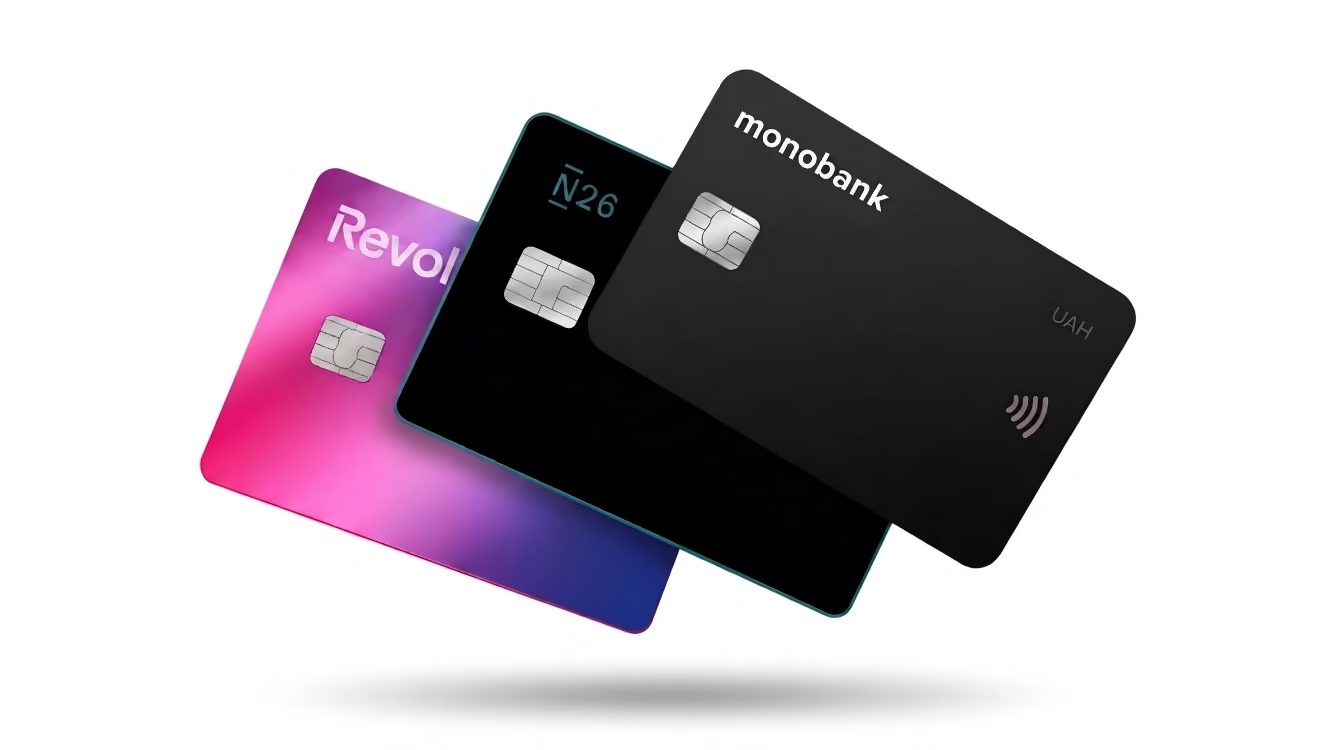
Pots, Pockets, Spaces, Banka: how four neobanks solve the same daily banking problem. For product designers, PMs and fintech founders evaluating UX patterns to apply to their own banking or financial product.
A current account used to be a number on a statement. Monobank turned it into something else: a glass jar that purrs when money lands, a fundraising tool that crossed UAH 100 billion in donations (≈ $2.4B at the exchange rate when the milestone was reached in June 2025), a game with 123 achievements, and a card that shows a different illustrated cat every time you open Apple Pay.
Revolut, Monzo and N26 are excellent products — each with real structural innovations in how they handle daily money. But Monobank, built in Ukraine, has consistently pushed further than any of them on what a banking app can be as a product experience.
This article maps the design decisions of all four side by side. Not "which neobank is best" — but which patterns work, why they emerged, and what they teach product teams designing the next generation of fintech. Monobank leads as the most creatively ambitious of the four. The other three provide structural context and comparison.
TL;DR
- Every major neobank built sub-accounts — but Monobank's Banka went furthest, becoming Ukraine's de facto civilian fundraising infrastructure with a public URL, live progress bar, and over 1.6 million monthly donors.
- Automation layers differ in model: in their automation, Monzo and Revolut are salary-routing-first; Monobank is social- and credit-first — Group Expenses, contact-based transfers, and financing decisions dissolved into the purchase itself.
- Payment UX has split into distinct gestures. Monobank's Shake to Pay — using accelerometer and GPS to find nearby contacts and transfer without entering any details — is the most inventive P2P mechanic in the category. Randomurzer, a roulette mini-game built on top of it, turns splitting a restaurant bill into a social moment.
- Monobank's gamification system — 123 achievements, time-based quest mechanics, collectible cats, and daily-changing digital card skins — is the deepest in consumer fintech. No direct competitor comes close.
The Sub-Account Architecture: Banka, Pockets, Pots, Spaces
A sub-account is a virtual envelope inside a single customer account that lets users separate funds for different purposes without opening a second bank account. Every major neobank built one — because the moment a current account became a screen, the screen needed something to organise.
What separates them is how literal the separation is: some sub-accounts are pure UI groupings on one balance, others have their own IBANs and accept direct debits independently. One became the largest civilian fundraising tool in Eastern Europe.
Here's how four neobanks solved the same architectural problem:
Monobank Banka — when a sub-account becomes a public object
Banka started as a personal savings jar — a glass-jar illustration in the app where you could set a goal, add a title, and watch the fill level rise. What made it different from day one: every Banka had its own URL.
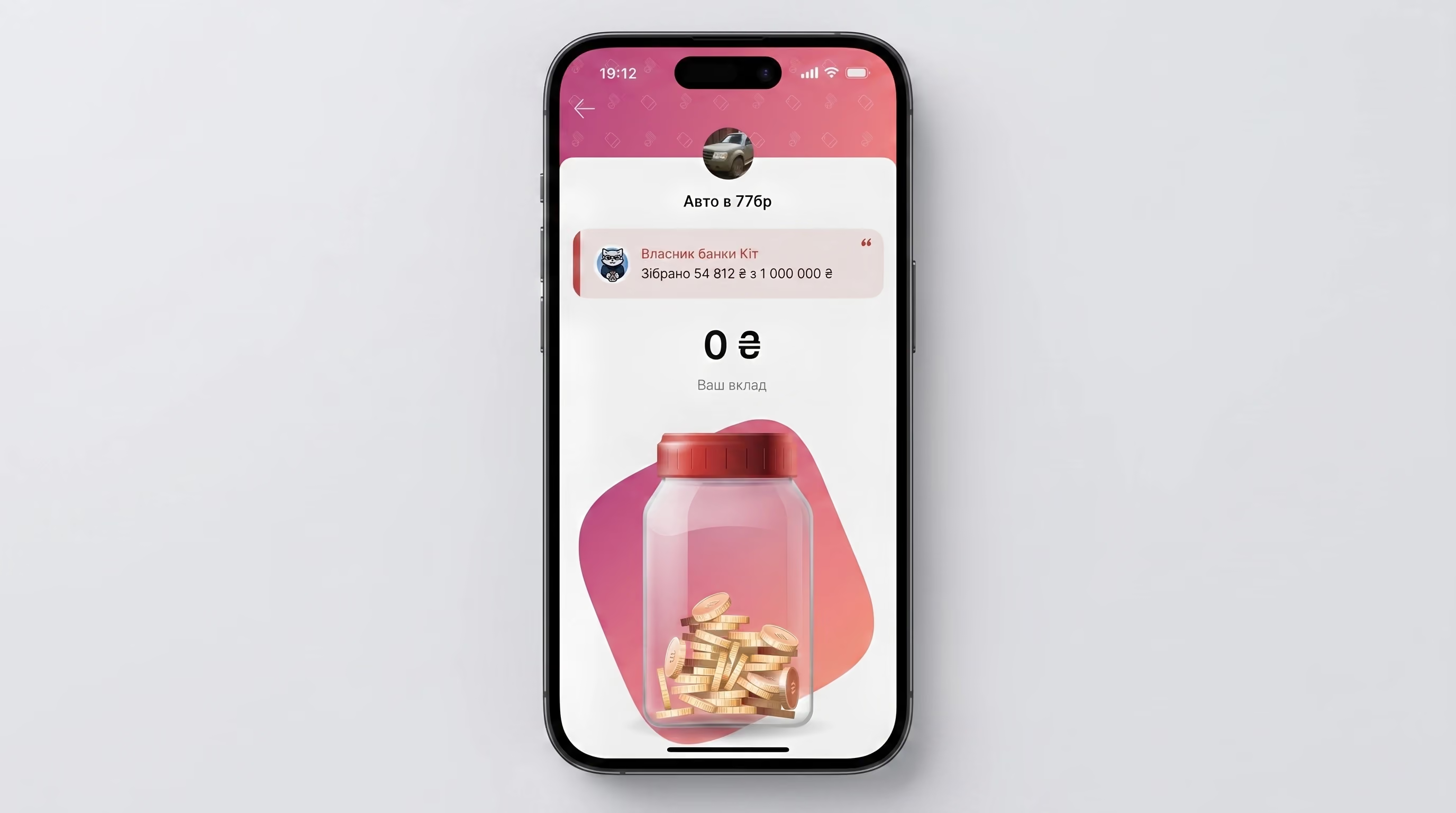
That single decision — a shareable link on a financial object — changed what the product was. Once a Banka could be posted to a Telegram channel, embedded in a website, or sent via SMS, it stopped being a private savings feature and became a public fundraising primitive. The glass-jar visual stayed, but was opened up: users can replace the jar with any image from their gallery and write any title, turning the artefact into shareable content rather than just a payment link.
How Ukraine actually uses it. Banka is now the default fundraising mechanic of Ukrainian internet culture. Bloggers and streamers pin Banka links in their profiles and run live fundraising marathons where the progress bar updates on stream in real time. Volunteers coordinating military equipment drives open a Banka per vehicle, per drone batch, per unit — and close it publicly when the goal fills. Ordinary users open Bankas for a friend's medical bill, a colleague's farewell gift, a birthday collection instead of guessing what to buy. The closing of a large Banka — the moment the bar hits 100% — became its own genre of shareable screenshot.
Two design details do disproportionate work here. The live progress bar turns a donation from a private transaction into a visible contribution to a shared outcome — donors see the jar fill because of them, sometimes within seconds of paying. And the customizable cover image and title mean each Banka carries its own identity and story, so a link circulating through Telegram or Instagram reads as this specific cause, not as a generic payment request. The mechanics of virality were designed into the financial object itself.
The cumulative result: donations through public Bankas crossed UAH 100 billion in June 2025 — roughly $2.4B at the time, per the National Bank of Ukraine's archived exchange rate (~41.72 UAH/USD). Over 1,300 verified foundations are connected. More than 1.6 million people donate each month. The same product UI carries birthday collections, apartment deposits, and military equipment drives — with no separate product line for any of them.
No other neobank in this comparison asked the question Monobank asked: what happens when a sub-account becomes a public object? The answer turned out to be civic infrastructure.
Revolut Pockets — automation-first routing
Revolut treats Pockets as a routing layer for incoming money, not a storage layer. When wages arrive, predefined slices route to specific Pockets, and bills attached to those Pockets debit automatically. There is no IBAN per Pocket — Revolut keeps the underlying architecture flat and pushes differentiation into logic and rules.
Alongside Pockets sits Vaults, Revolut's savings layer: partner-bank interest with deposit protection, and Spare Change — round-up automation that sweeps the difference between each purchase and the next whole unit into a chosen Vault. In user reviews, Spare Change is one of the features Revolut customers most often credit as their entry point to saving.
Monzo Pots — the most product-rich system
Monzo built the deepest Pots system in the comparison. Pots earn interest natively — Instant Access Pots up to ~4.6% AER, Fixed-Rate Pots up to ~5% AER for 6–12 month lock-ins (£500 minimum). Bills Pots accept Direct Debits directly, siloing rent and utilities from daily spending. Shared Pots let partners or roommates pool money without a joint account. Virtual cards on paid tiers bind to specific Pots, so subscription payments draw from one isolated balance.
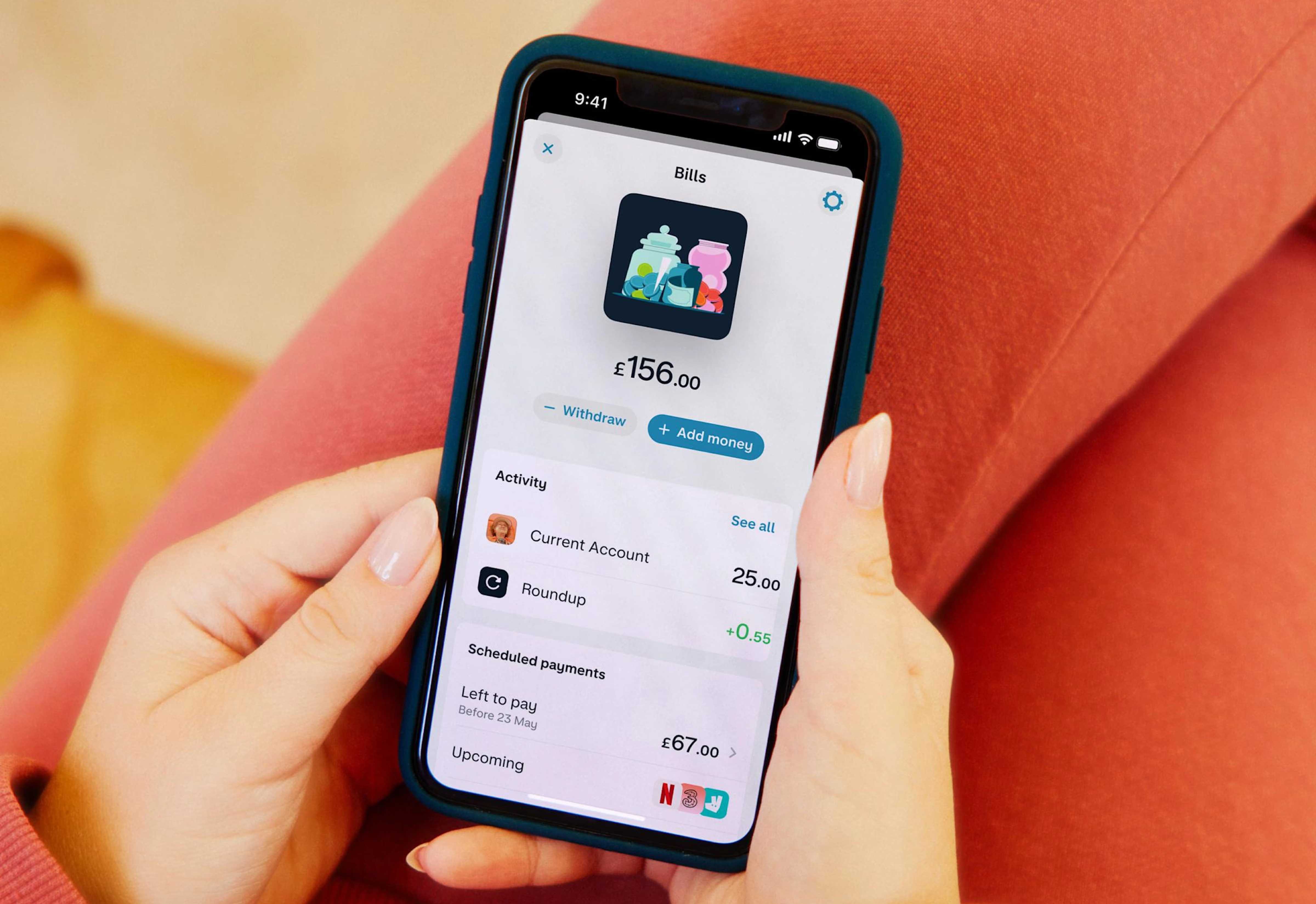
Salary Sorter activates at the moment wages arrive (£100+) and one-tap-distributes the paycheck across configured Pots. Combined with Get Paid Early — which releases BACS wages at 4pm the day before payday — Monzo turns the salary moment from a notification into a workflow.
N26 Spaces — IBANs as the structural bet
N26's architectural bet is the per-Space IBAN. On premium plans, any of up to 10 Spaces can generate its own valid European IBAN — meaning a landlord pays rent directly into a "Rent" Space, a freelance client settles invoices into a "Tax" Space, and a salary lands in a "Salary" Space separated from spending money the moment it arrives.
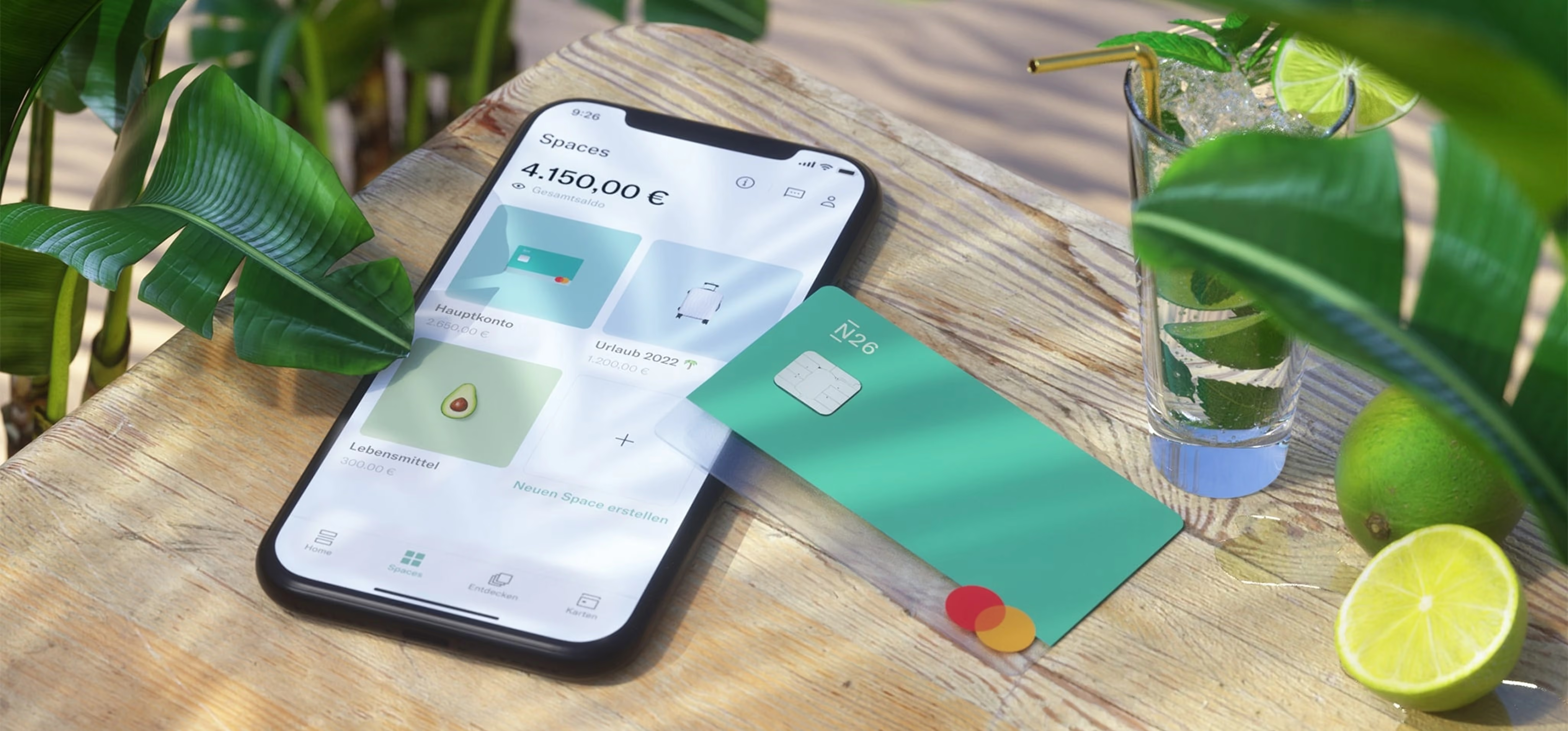
Card binding is the second structural choice: any physical or virtual N26 card links to any Space in real time and switches at the moment of payment. Shared Spaces extend this to couples and roommates via a Trusted Beneficiary mechanism that bypasses 2FA for routine transfers between participants — which is what makes the drag-and-drop transfer gesture (covered in the payment UX section below) feel as instant as it does.
Automation Layers: Four Philosophies for Making Money Move Itself
Every neobank in this comparison added a layer of automation on top of sub-accounts. The goal is the same — remove the effort of managing money — but the underlying model differs in a way that reveals each bank's theory of what daily banking actually is.
Revolut and Monzo treat money as a flow to be routed: salary arrives, rules distribute it, bills pull from the right buckets. N26 does the same with less sophistication. Monobank took a wider position — its automation covers relationships between people and credit decisions at the moment of purchase, two territories the other three largely left untouched. The difference is structural, not cosmetic.
Monobank — social-first automation, and credit dissolved into the purchase
Monobank's most developed automation tools are not about salary distribution. They automate two things the other three banks barely touch: money between people, and credit decisions at the moment of purchase.
The social layer. Group Expenses tracks shared costs across a group — a trip, a shared flat, a dinner — and automatically calculates who owes what to whom. It then sends reminders to debtors without the user having to do it. The automation here is not financial rules; it is social accounting. The product removes the awkwardness of asking friends to pay you back by making the request automatic and impersonal — the app is the one nagging, not you.
P2P by contact removes the requisite-entry step entirely: if the recipient is already a Monobank user, a transfer starts from their name, the way a message starts from a contact. Payments by IBAN keep history, so recurring external payments — rent to a non-Monobank landlord, a utility company — never require re-entering details. Regular Payments then automates those on a schedule, attached to a contact name rather than a raw IBAN. The whole payments interface reads like a contact list, not a payment schedule.
The credit layer. Where Monzo automates what happens after the salary arrives, Monobank automates the financing decision inside the purchase itself — three products at three time horizons:
- Split payments (Покупка частинами) — a purchase divides into interest-free installments at checkout, with the merchant covering the cost. From the user's side there is no loan application, no interest calculation, no separate credit product — the automation absorbs the entire credit decision into a single tap at the point of sale.
- Installment Plan — the same mechanic extended to any merchant, including AliExpress and Amazon, where the merchant isn't a partner.
- «До завтра» ("Until tomorrow") — an instant micro-credit for right-now situations, sized and issued in seconds inside the app.
Three products, one design principle: the user never fills out a credit application. The automation eliminates the form, which for most users is the real barrier — not the interest rate.
What this adds up to. Monobank's automation model reflects a clear product thesis: for its user base, the friction in daily banking is not "where does my salary go" — it's "who do I owe, who owes me, and can I afford this right now." Revolut and Monzo automated the spreadsheet. Monobank automated the social and financial conversations around money. That is a fundamentally wider definition of what banking automation is for.
Monzo — the most developed salary-routing system
Monzo built the deepest salary automation in the comparison. The system has two interlocking parts.
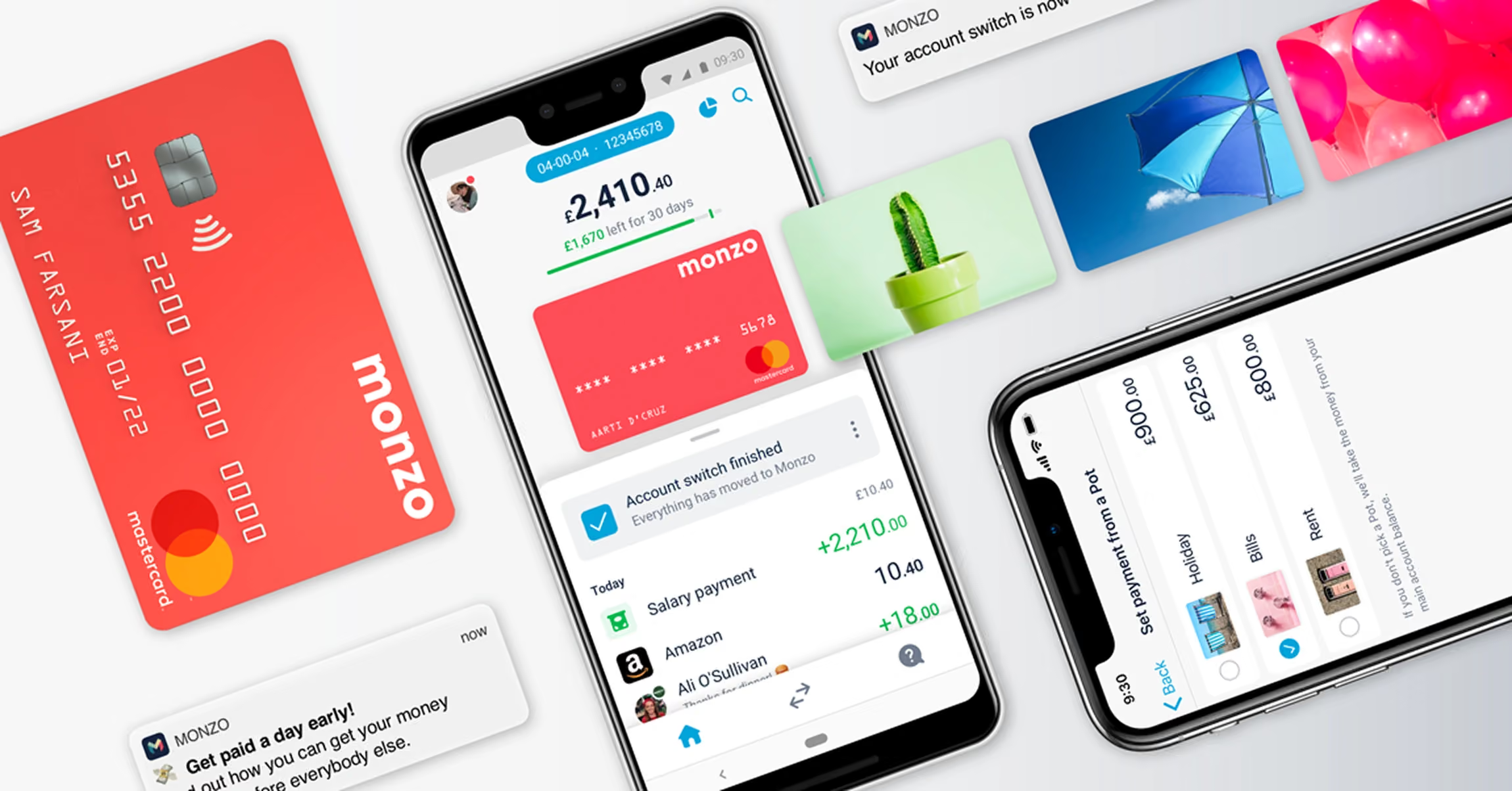
Salary Sorter activates the moment a qualifying deposit (£100+) lands. It recognises incoming salary and immediately offers a one-tap distribution screen: fixed amounts route to Bills Pots, savings targets top up from the remainder, and a defined slice stays in the main account for daily spending. The entire workflow completes at the paycheck moment — before the user has spent anything.
Bills Pots complete the loop: any Direct Debit or standing order can be assigned to a specific Pot, so utility bills, rent, and subscriptions pull from an isolated balance rather than the main account. The combination means that from the moment wages arrive to the moment bills leave, no manual intervention is required.
Get Paid Early adds a time layer: BACS-paid wages are released at 4pm the day before the official payday. For users living close to zero balance at month-end, this is not a gimmick — it removes a structurally stressful 12-hour window.
Revolut — round-up automation as the entry point
Revolut's automation philosophy is simpler than Monzo's but broader in one direction: Spare Change applies to every purchase, not just salary events. Every card transaction rounds up to the nearest whole unit; the difference sweeps automatically into a chosen Vault. Because it runs on every transaction rather than requiring setup at paycheck time, it has lower activation friction — users who never set up Pockets often still have Spare Change running.
Pockets auto-sort adds salary routing for users who configure it, but the rules system is less guided than Monzo's Salary Sorter. Revolut assumes the user knows what they want to do; Monzo prompts the user through the process.
N26 — Round-Ups, less salary logic
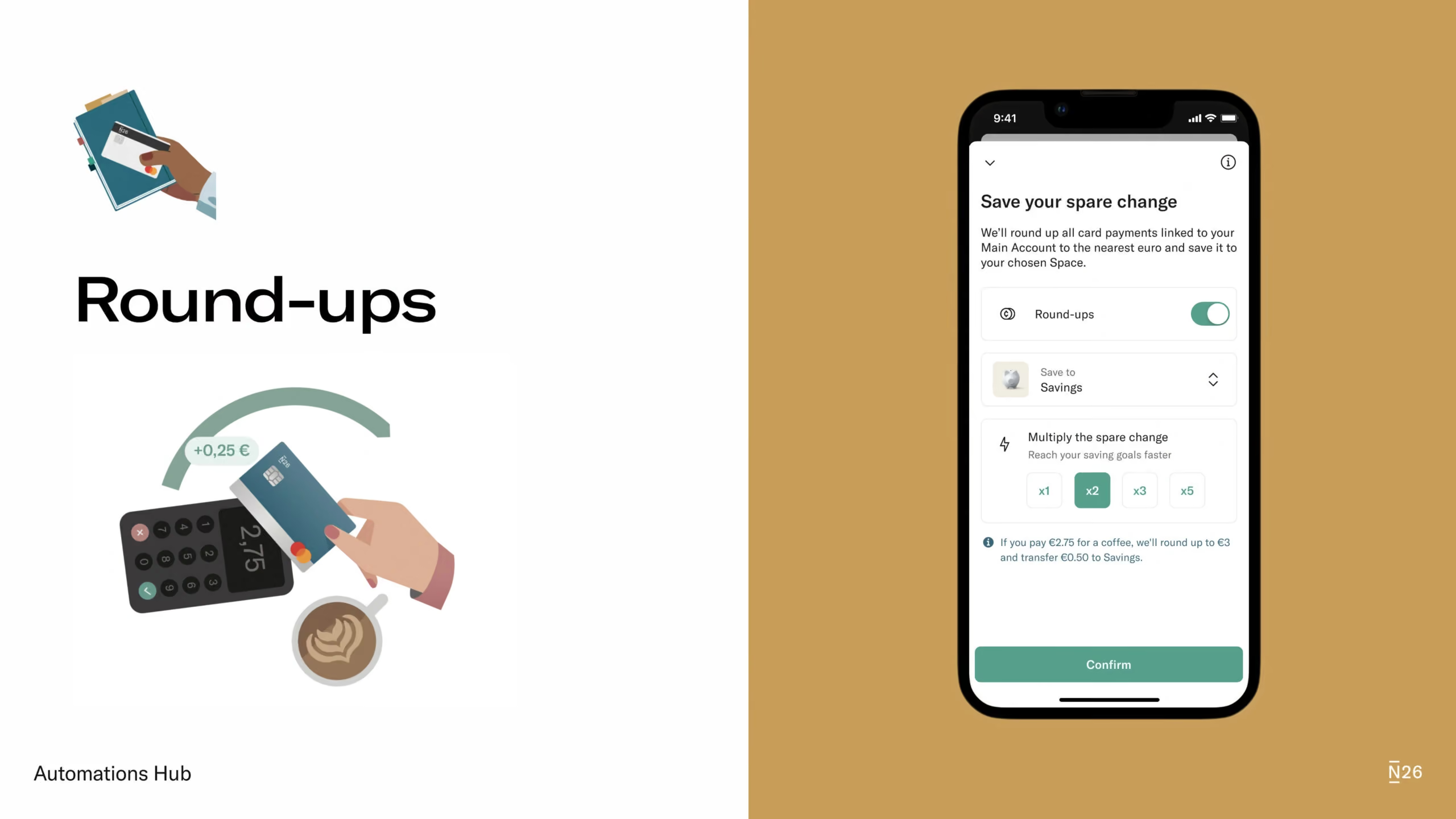
N26 supports Round-Ups to Spaces and recurring transfers, but has no equivalent of Salary Sorter. Instead, the per-Space IBAN system does the routing at the incoming-payment level: a salary paid directly to a named Space never touches the main balance at all — though that requires the employer to configure it externally.
Payment UX Patterns: When a Transfer Becomes a Gesture
Peer-to-peer payments are where neobank design philosophies become physical. The task is identical everywhere — move money from me to you — but each bank encoded it into a different gesture, and each gesture carries a different social model of money.
Monobank Shake to Pay — the transfer as a shared physical moment
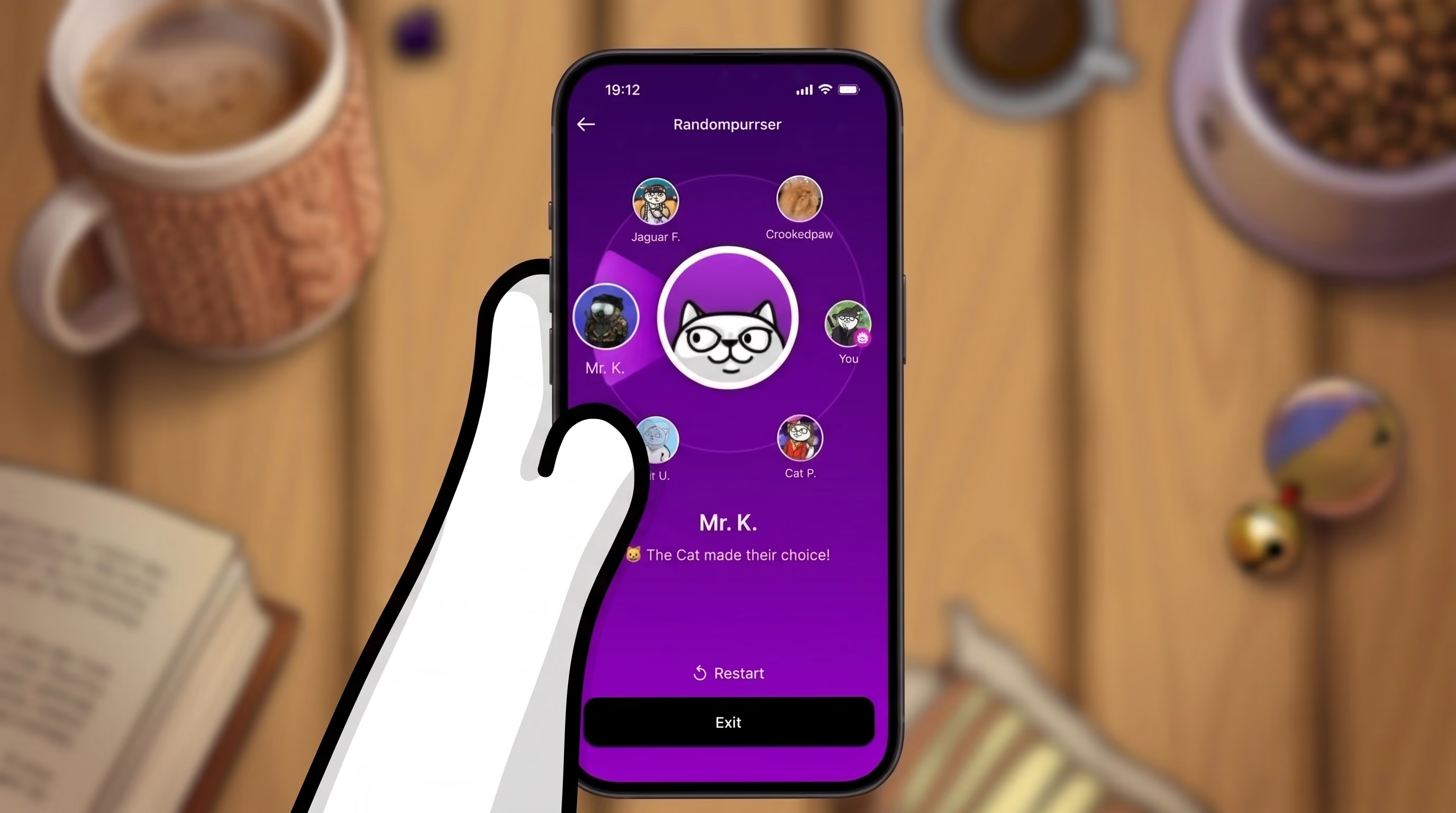
Shake to Pay is the most inventive P2P mechanic in consumer banking. To send money to someone standing next to you, both of you shake your phones at the same time. That's the whole interaction.
Under the hood, the app combines the phone's accelerometer (detecting the shake) with GPS (finding who else is shaking nearby) to match sender and recipient — no card number, no phone number, no QR code, no IBAN. The requisites disappear entirely, replaced by physical co-presence: the fact that you are standing next to each other is the authentication of intent.
The design insight is worth pausing on. Every other bank's P2P flow is asymmetric — one person does the work of finding, typing, confirming, while the other passively receives. Shake to Pay makes the transfer symmetric and simultaneous: both people perform the same gesture at the same moment. A payment between friends stops feeling like a transaction and starts feeling like a handshake.
Randomurzer builds a game on top of this mechanic. When a group is settling a shared bill — up to six people — they all shake their phones, and a virtual roulette wheel with Monobank's cat mascot spins to randomly select one "sponsor" who pays the entire bill. It is a mini-game embedded inside a payment flow: the moment of splitting a restaurant check, normally the most awkward beat of a group dinner, becomes the most entertaining one.
Nothing structurally similar exists at Revolut, Monzo, or N26. Shake to Pay and Randomurzer treat the payment not as a task to be minimised, but as a social moment to be designed.
N26 drag-and-drop — the balance as a physical object
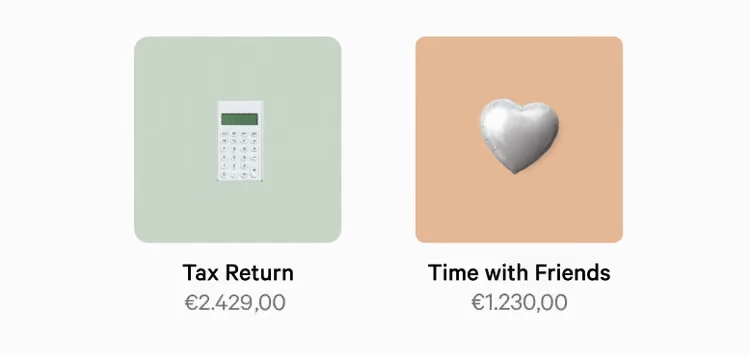
N26's signature payment gesture is internal rather than social: moving money between the main balance and Spaces happens by pressing and dragging one account icon onto another, in real time. The metaphor is direct manipulation — money behaves like a physical object you pick up and put somewhere else.
The gesture works because of the Trusted Beneficiary mechanism covered earlier: without it, every drag would end in a passcode prompt and the physicality of the metaphor would collapse. The lesson generalises — a fluid gesture in fintech is never just a front-end achievement; it requires the security architecture to get out of the way at exactly the right moment.
Monzo Split — the group as a first-class object
Monzo's contribution to payment UX is not a gesture but a data structure: the shared expense as a persistent object. After a March 2025 redesign, Monzo Split unified one-off bill splitting and long-running shared tabs into a single system with two modes.
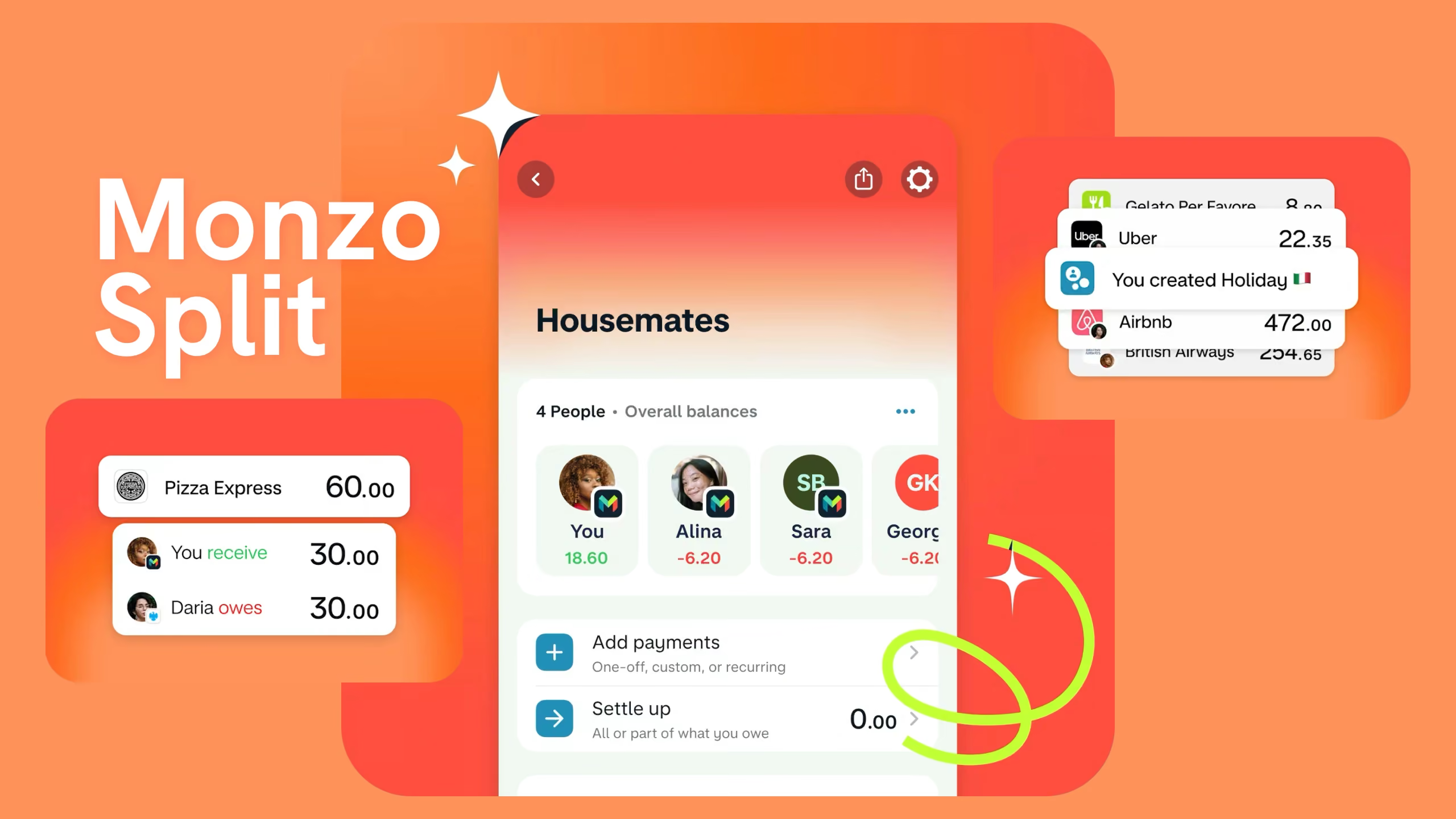
Single Split handles the quick case: pick a transaction, tap "Split this bill," select people, send requests — equal or custom amounts. Running Split handles the long case: a holiday, a shared flat, a group project. Participants add expenses into the shared tab over days or weeks, and when the tab closes, Monzo calculates the net settlement — who owes whom, collapsed into the minimum number of transfers.
The structurally interesting decision: Running Split participants don't need a Monzo account. External friends — including people outside the UK — receive a guest link and settle via Apple Pay, Google Pay, or any UK debit card. Monzo deliberately broke the walled garden for this feature, betting that the group utility matters more than forcing sign-ups. (Limits apply: up to 9 participants per transaction, £500 per request, 10 split requests per day.)
Three gestures, three models of money
Revolut, notably, has no signature payment gesture — its P2P flow is a conventional contact-based transfer. Its inventiveness is concentrated elsewhere — FX routing and investment layers, covered in Article 2 of this series.
The Card as a Canvas: Customisation and Sensory Branding
A debit card used to be the least designable object in banking — a rectangle the network and the compliance department controlled. Neobanks turned it into an identity surface. And one of them extended the idea beyond the visual entirely, into sound.
Monobank — a living card and a bank you can hear
Monobank treats the card not as a static artefact but as a living, daily-changing object.
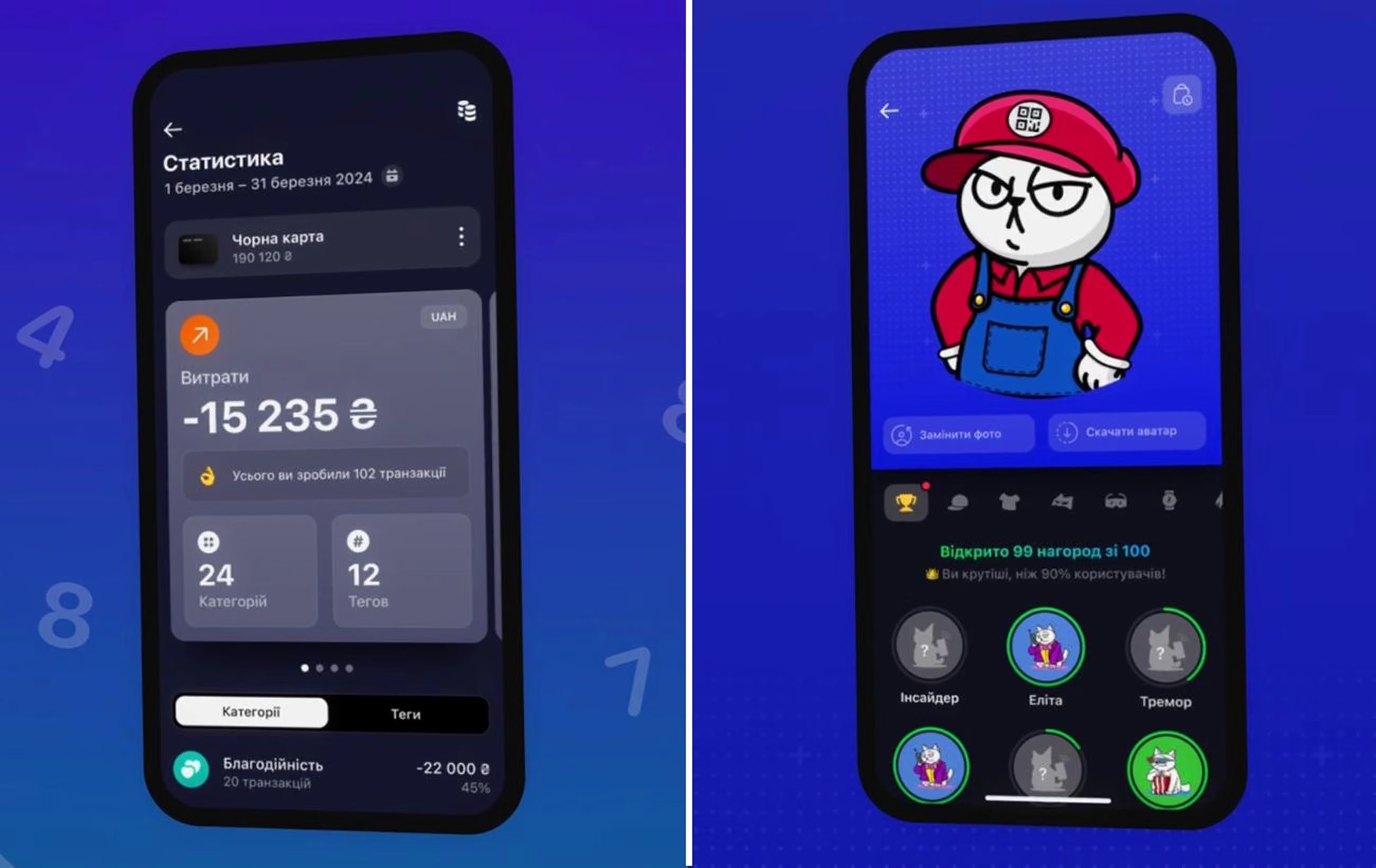
The centrepiece is the dynamic cat skin for virtual cards in Apple Pay and Google Pay: a card design that changes its illustration and text quote every day on its own. The user adds the card once; from then on, opening the wallet shows a new drawing of the cat with a new line — a small daily moment of novelty inside the most utilitarian screen on a phone. Structurally, this is something neither Revolut nor any Western neobank has shipped: a card skin as an ongoing content channel rather than a one-time customisation.
Skins also work as rewards: patriotic and limited-edition designs unlock in exchange for donations to charity fundraisers — connecting the card-customisation system directly to the Banka donation infrastructure covered earlier. Your card design can literally signal that you donated.
Notably, none of this touches physical plastic. Monobank's Black and White cards ship in one standard design — there is no option to order a physical card with a custom skin. Every skin, reward, and daily-changing illustration lives exclusively in Apple Pay and Google Pay. This reads less like a limitation than a strategic bet: a digital skin costs nothing to produce, updates instantly, and can change daily — a physical card cannot do any of that. Revolut invested in making the physical object customisable; Monobank made the physical object irrelevant and put all the creative energy into the wallet screen instead.
Then there is sound. Monobank owns an audio brand: the signature notification for incoming money is not a system ping but the purring of Monocat, the bank's cat mascot. Every salary, every transfer from a friend, every Banka donation arrives as a purr. It is a tiny decision with outsized effect — the single most frequent touchpoint a bank has (the payment notification) carries the brand's character instead of the OS default. Users recognise the sound across a room; the purr is the bank.
Child's Card extends the same emotional design to the youngest segment: a card for children aged 6–14 with parental controls on the functional side — and custom skins on the emotional side. The design bet is generational: a ten-year-old whose first card is a playful, customisable Monobank product is not a customer acquired later; they are a user who never considers anything else. Emotional design as long-horizon retention.
Revolut — the card as user-generated content
Revolut's approach is a card design constructor: users create their own physical card in the app, drawing freehand with a finger, adding text blocks and emoji. The output is genuinely user-generated — a one-of-one physical object.
The most telling artefact of this system came from outside the company. RevoDraw, a community-built tool, uses Python, Flask, OpenCV for contour detection, and Android Debug Bridge to transfer complex images pixel-by-pixel onto the card customisation canvas via automated ADB commands — enthusiasts reverse-engineering a banking app's drawing screen to plot artwork on it. When developers build unofficial tooling for your card designer, the feature has crossed from customisation into a creative medium.
The contrast with Monobank is instructive: Revolut made the card customisable once, by the user, at order time. Monobank made the card continuously alive, authored by the bank, every day. One is a canvas; the other is a channel.
Monzo and N26 — colour as identity, deliberately quiet
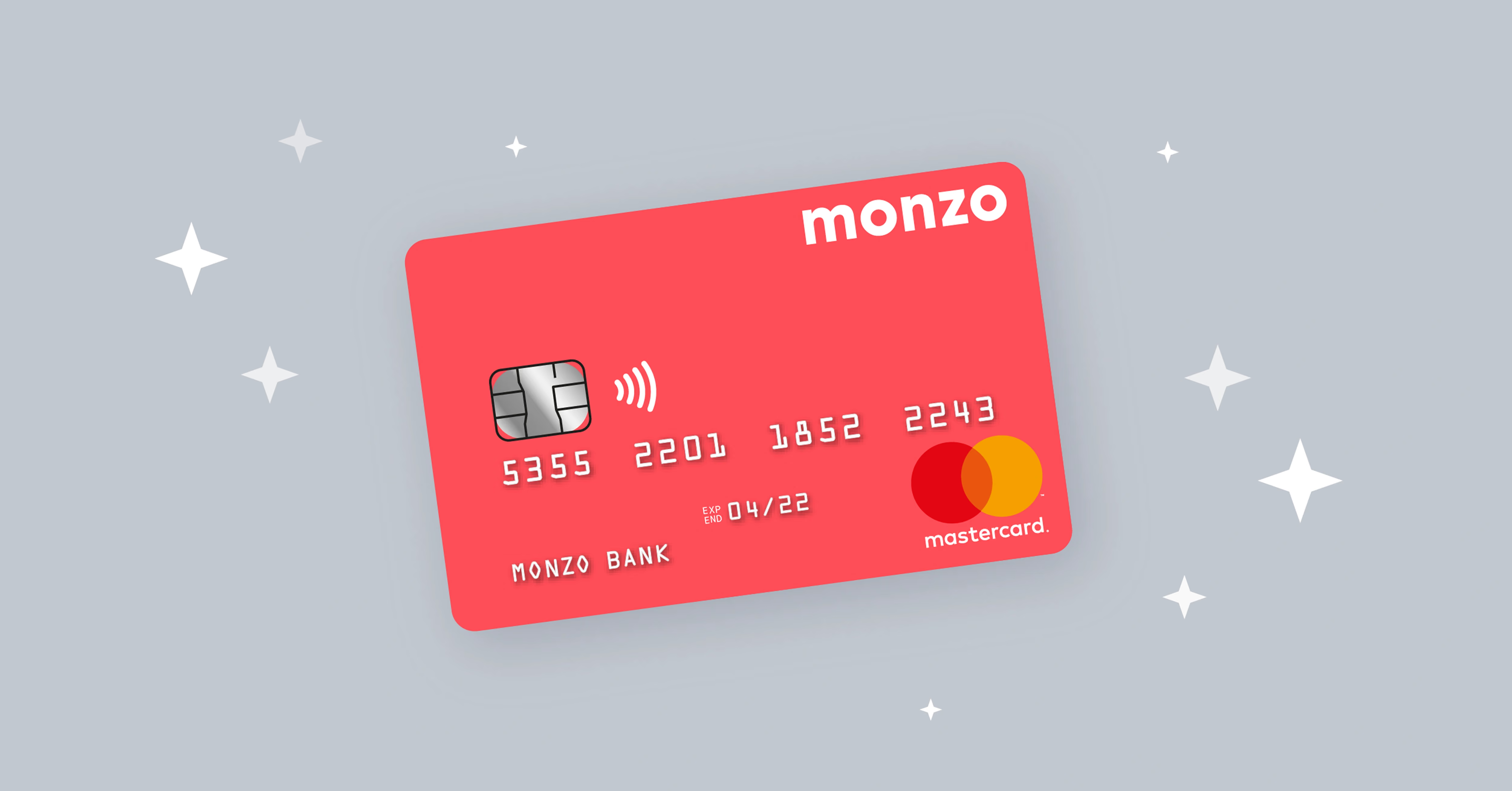
Monzo's hot coral card functions as a logo on café counters; N26's transparent and metal cards play the same game in a premium register. But both stop at static differentiation: the card identifies the bank, not the user, and never changes after it arrives. In this dimension, the gap between the leaders and the rest is unusually wide.
Gamification as Retention Architecture: The Monobank Case
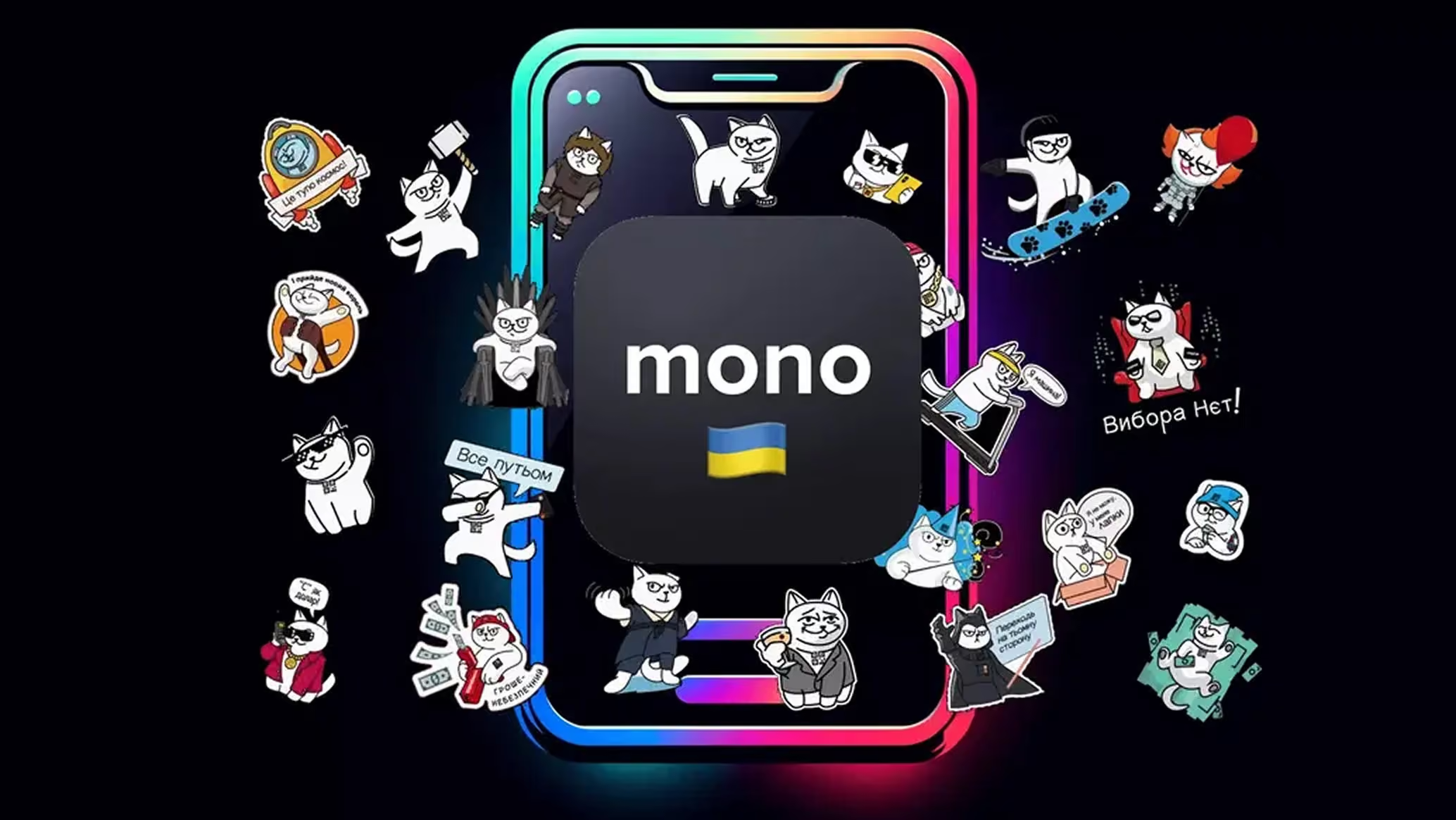
Most banks that attempt gamification ship a points program and call it a day. Monobank built a full game layer on top of real financial behaviour — quests, collectibles, an avatar system, and a reward economy that reaches up to physical objects and access to the founders. This section covers one bank only, because arguably no other bank anywhere has built anything at this depth.
The achievement system: 123 rewards on real transactions
At the core is a system of 123 achievements, each unlocked by completing quests built on actual financial behaviour. These are not "make 10 payments" checkboxes. The quests are designed with the specificity and mischief of a proper game:
- Complete transactions in six different spending categories within one hour — in a strict order.
- Make a purchase in a bar at night and in a restaurant the next morning.
The quest design does two jobs at once. It creates engagement loops that have nothing to do with cashback economics — the reward is the achievement itself. And it subtly maps the full breadth of the product: a user chasing category-based quests discovers spending categories, payment types, and features they would never have opened otherwise. The game is also an onboarding system wearing a costume.
The avatar economy: collectible cats you dress with your spending
Completing quests unlocks collectible digital cats, clothing, and accessories used to customise a personal avatar. The avatar sits inside the app as a persistent identity object — the accumulated visual record of everything the user has done with their money.
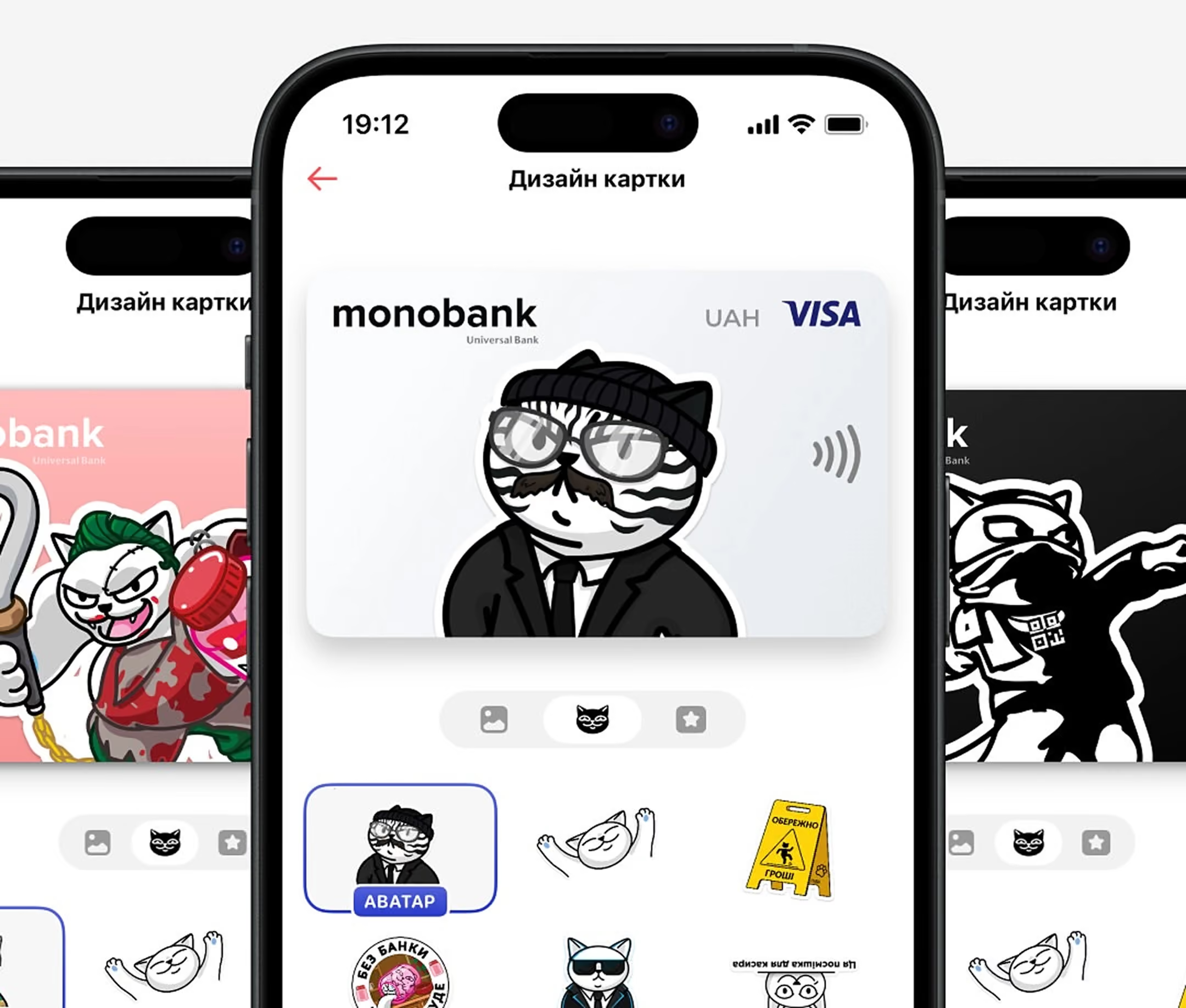
This is where Monobank's design connects back to everything covered earlier: the same cat that purrs on incoming payments (audio brand), appears on the daily-changing Apple Pay skin (sensory branding), and spins the Randomurzer roulette (payment UX) is the character the user dresses through gameplay. One mascot, four systems, a coherent character-driven product world. Western neobanks have brand mascots; Monobank has a brand protagonist.
The reward ceiling: from pixels to the physical world
Most gamification systems collapse at the top — the final reward is a badge nobody cares about. Monobank inverted this. The highest achievements convert into rewards that cross out of the app:
- A free monobank IRON Card — the bank's top-tier metal product, normally a paid status object.
- A meeting with the bank's founders.
The design logic: the scarcest rewards are not discounts but status and access. Reaching the top of the achievement system earns the user a physical artefact (the IRON Card) other people pay for, or an experience — a meeting with the founders — money cannot buy at all. The game's endgame is real.
Why this matters beyond Ukraine
It is tempting to file Monobank's gamification under "quirky local flavour." That would misread it. The system solves the two problems every retention team in fintech struggles with:
- Frequency without spend incentives. Quests give users a reason to open the app that costs the bank nothing per interaction — no cashback burn, no promotional budget. The engagement is intrinsic.
- Feature discovery at scale. Every quest that requires using a new category or payment type is a tutorial the user volunteers for.
The lesson for product teams is not "add cats." It is that Monobank treats retention as a designed system with its own mechanics, economy, and endgame — not as a metric that marketing improves with push notifications. The achievement layer is as deliberately architected as the sub-account layer.
What Fintech Product Teams Should Take From This
Five things from this comparison are worth taking directly into a roadmap, regardless of market:
- The sub-account is an infrastructure decision, not a UI decision. Whether it gets its own IBAN (N26), earns interest (Monzo), auto-sorts salary (Revolut), or becomes a public URL (Monobank) determines what the feature can become later. Decide the ceiling before shipping the floor.
- Automation should match the real friction, not the obvious one. Monzo optimised for "where does my salary go." Monobank optimised for "who owes me, and can I afford this right now" — a different, and for many users more accurate, read of daily financial stress.
- A payment gesture encodes a social model whether you design it on purpose or not. A silent one-way transfer says something different about money than a simultaneous shake or a running shared tab. Choose the model deliberately.
- Small sensory decisions compound. A notification sound owned by the brand, a card that changes daily — neither is expensive to build, and both outlast most marketing spend in daily brand exposure.
- Gamification only works as a system, not a feature. It needs an economy (what's scarce), an endgame (what's the ceiling reward), and a reason it costs nothing to run per interaction — which is what separates Monobank's quest layer from a standard cashback program.
One caveat for teams outside Ukraine. Monobank's "eliminate the form" approach to embedded credit — Split payments, Installment Plan, «До завтра» — operates inside Ukraine's regulatory framework. Teams building point-of-sale financing for the EU need to design around the second Consumer Credit Directive (CCD2), which brings interest-free instalment credit — including BNPL — into full consumer-credit scope: mandatory creditworthiness assessment and pre-contractual disclosure, scheduled to apply from 20 November 2026 across member states (implementation has already slipped in most countries, so treat this as a working date, not a fixed one). The design principle — remove the application, not the underwriting — still holds. The compliance layer behind it does not transfer automatically.
These aren't abstract principles — they show up as concrete, testable decisions the next time a sub-account, a payment flow, or a rewards system reaches a design review.

Frequently Asked Questions
What is Monobank's Banka feature?
Banka is a sub-account with its own shareable URL, launched in 2019 as a personal savings tool. After Russia's 2022 invasion, it became Ukraine's primary civilian fundraising infrastructure – donations through public Bankas passed UAH 100 billion by June 2025, with 1,300+ connected foundations and 1.6 million monthly donors.
How does Shake to Pay work?
Two Monobank users shake their phones at the same time. The app uses the accelerometer to detect the shake and GPS to match the two nearby devices, opening a transfer between them with no card number, phone number, or IBAN required.
What's the difference between Revolut Pockets, Monzo Pots, N26 Spaces, and Monobank Banka?
All four are sub-accounts for separating money by purpose. The differences are architectural: N26 Spaces can carry their own IBAN, Monzo Pots earn interest and accept Direct Debits, Revolut Pockets auto-sort salary, and Monobank Banka is the only one built to be public and shared beyond the bank's own users.
Is Monobank's gamification distinctive among neobanks?
es, by a wide margin. Its system of 123 achievement-based quests, a collectible cat avatar, and rewards up to a free IRON Card and a meeting with the founders has no equivalent depth at Revolut, Monzo, or N26, which limit gamification to basic cashback or streak mechanics.
Can Western neobanks copy Monobank's instant-checkout credit model?
The UX pattern – no credit application, financing resolved in one tap – is replicable. The regulatory path is not identical: in the EU, the second Consumer Credit Directive (CCD2) brings BNPL and interest-free instalments into full consumer-credit scope, requiring creditworthiness checks Ukraine's framework doesn't mandate in the same form.
Is Monobank available outside Ukraine?
Monobank operates in Ukraine under Universal Bank's licence; foreigners legally residing in Ukraine can open an account with a passport or residence permit and a tax ID. The team has separately launched a Poland-focused project (Stereo by Mono) for transfers between Poland and Ukraine, but the full Monobank product is not available as a bank in other countries.
Which neobank is best for young users?
Monobank makes the strongest case: five-minute phone-only onboarding, a Child's Card from age 6 with custom skins, Group Expenses and Shake to Pay for splitting money with friends, interest-free purchase splitting, a collectible cat avatar, and Banka for the donation culture young Ukrainians actively participate in. Revolut's <18 account is the closest Western equivalent, with a functional rather than emotional focus.
Which neobank has the best gamification?
Monobank, by a wide margin – 123 achievement quests, a dressable cat avatar, daily-changing card skins, and rewards reaching a free IRON Card and a meeting with the founders. Revolut, Monzo, and N26 limit engagement mechanics to cashback, referral bonuses, or savings streaks.
What features are coming to neobanks next?
The visible trajectory is super-app expansion: Monobank has already shipped an eSIM store, insurance, a used-goods marketplace (monobazaar) with AI-generated listings and escrow, and a stock-investing app (mono invest). Across the category, expect more embedded non-banking services, AI assistants inside the app, and deeper social mechanics – the directions this article's four banks are all investing in.
