



Flatstudio × BoxBet: How We Built an iGaming Ecosystem With Character




Full Flatstudio × BoxBet case study. BoxBet is a crypto iGaming platform: Telegram app, sports betting, casino, and its own BXBT token. For founders, product teams, and designers building or rethinking a digital product from scratch.
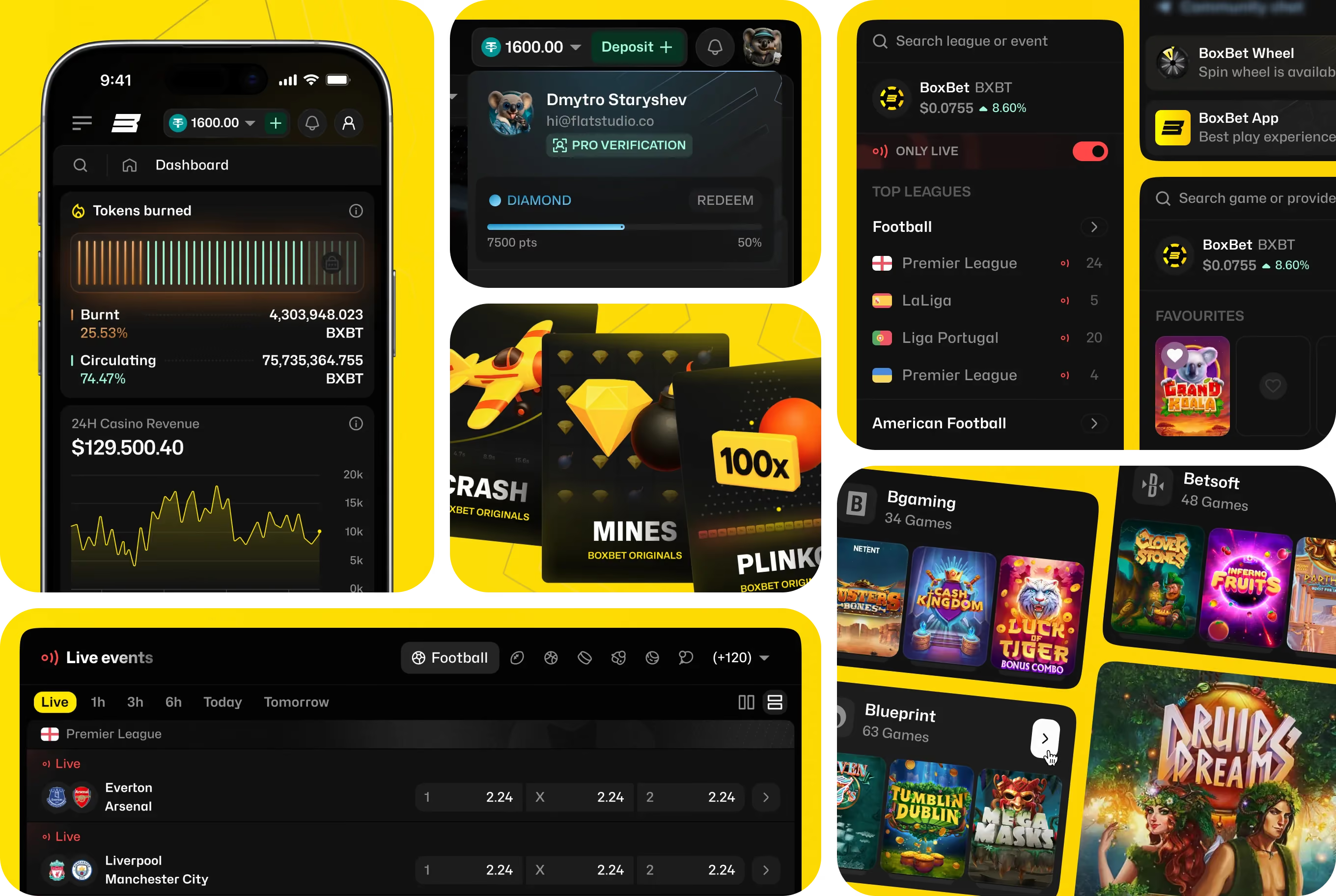
iGaming is a market where everyone looks the same. Dark background, aggressive CTA, promise of a win. Platforms change, the pattern stays.
BoxBet came in with a different challenge. The product already existed and already had an audience — in a Telegram app. The goal was to take it to a new level: a full website, casino, token, a unified design system, and a character it didn't have before. One UX across a responsive site and a Telegram app. We started with a one-sentence brief. We finished with a full product ecosystem.
Here's how it happened.
Where BoxBet Started
BoxBet didn't start with a website. It started as a Telegram app for sports betting — and already had an audience and traction in Telegram before we joined.
When Flatstudio came into the project on October 8, 2024, website development was already underway. In parallel. The client had a working Telegram product, a development team, and the ambition to take BoxBet to a full website with a casino, token, and sportsbook. The brand, mascot, and design system didn't exist yet.
Part of the Flatstudio team worked on the identity, while another part was building wireframes and the design system. That decision had consequences — we talk about them honestly in the section below.
The goal: make sure that a user moving between Telegram and the website felt like they were in the same product. On mobile, on desktop, in the app — one language, one navigation, one feeling. And the product design had to feel like a McLaren W1. Great brief, right? We thought so too.
Identity: A 15° Tilt and a Color That Doesn't Shout
Before drawing anything, we built five stylescapes — each with its own emotional register, all somewhere in the territory of McLaren W1. The client shared what resonated, the direction became clear, and we moved.
The first output — brandbook v1.0 — was ready in four weeks. Logo with a 15° tilt by Mariia Solovieva, Pantone 102 C (#FFE600), Hubot Sans typography with reworked letterforms.
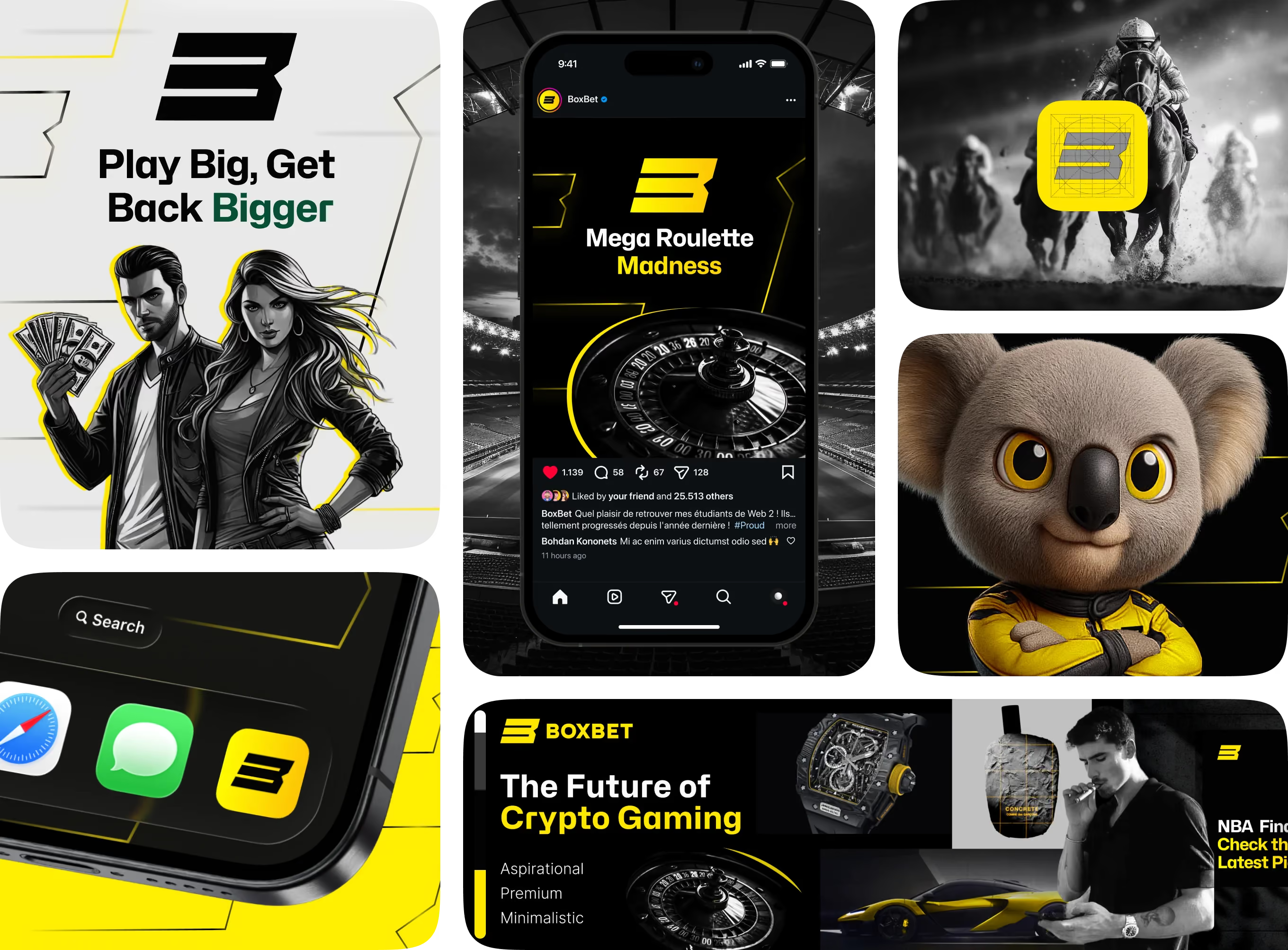
Every one of those decisions is justified. The 15° tilt communicates dynamism without instability. Pantone 102 C reads on a dark background without a stroke. Hubot Sans didn't exist in the form we needed, so we rebuilt it for the product.
By April 2025 the brandbook had grown to version 3.0 — a complete system with full rules for the entire team: designers, developers, marketers, and partners.
More on the identity — in Article 1.
Lucky: A Mascot That Serves 8 Roles
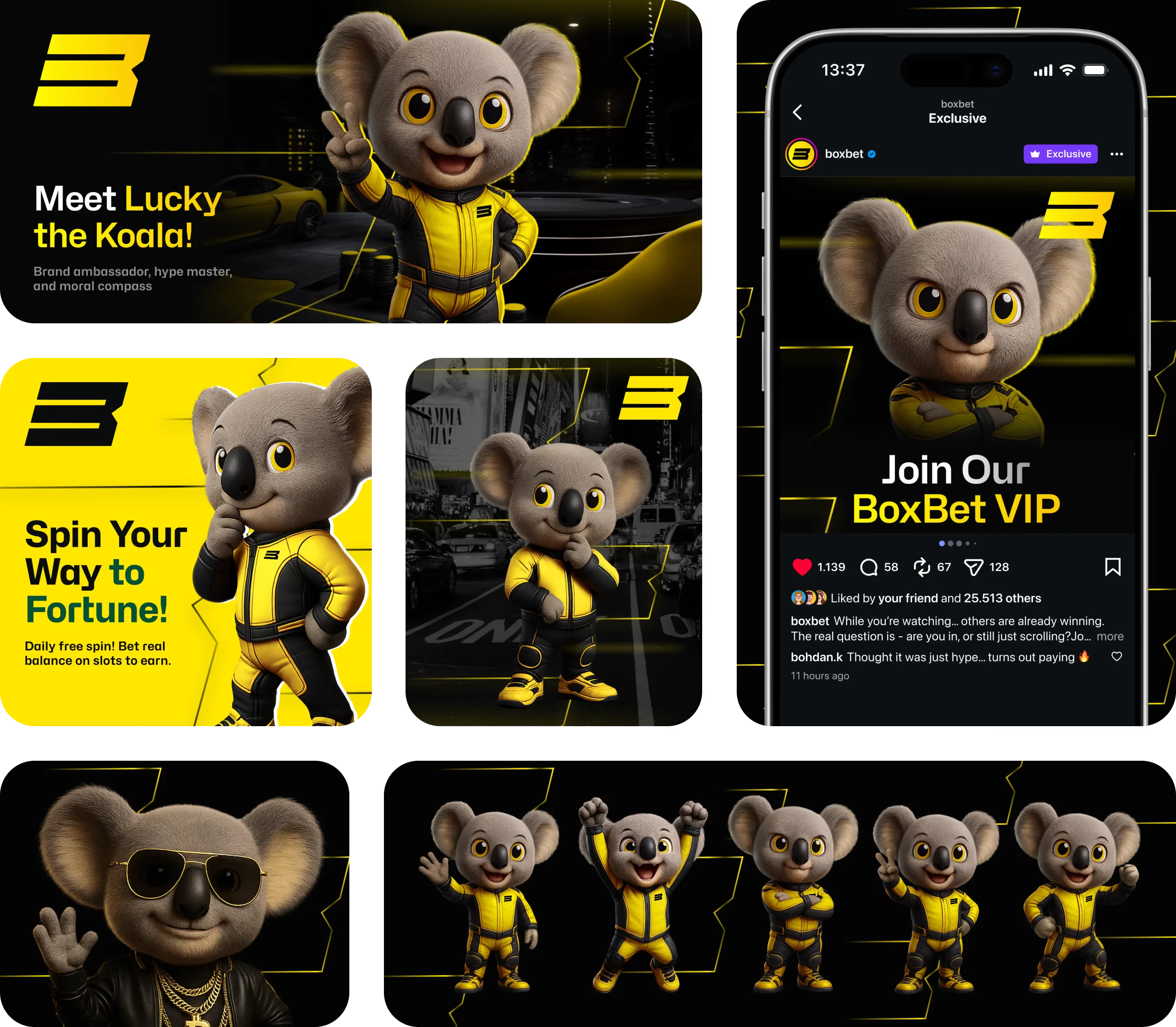
After the identity came the question: who speaks on the brand's behalf? The answer — a koala named Lucky. Confident, grown-up, with the energy of Reuben from Ocean's Eleven. Designed by Dmytro Staryshev in November 2025 using Sora and Nano Banana.
Lucky is a system:
- 5 facial expressions,
- 8 variants for VIP levels,
- a 360° view,
- animated versions for social media. One character with a clear job in every context.
The first version was young and energetic. The client said: too much of a newcomer. We restarted the personality. Lucky aged — but didn't lose his charm.
More on Lucky and working with AI tools — in Article 2.
Promo: Eight Mechanics, One Language
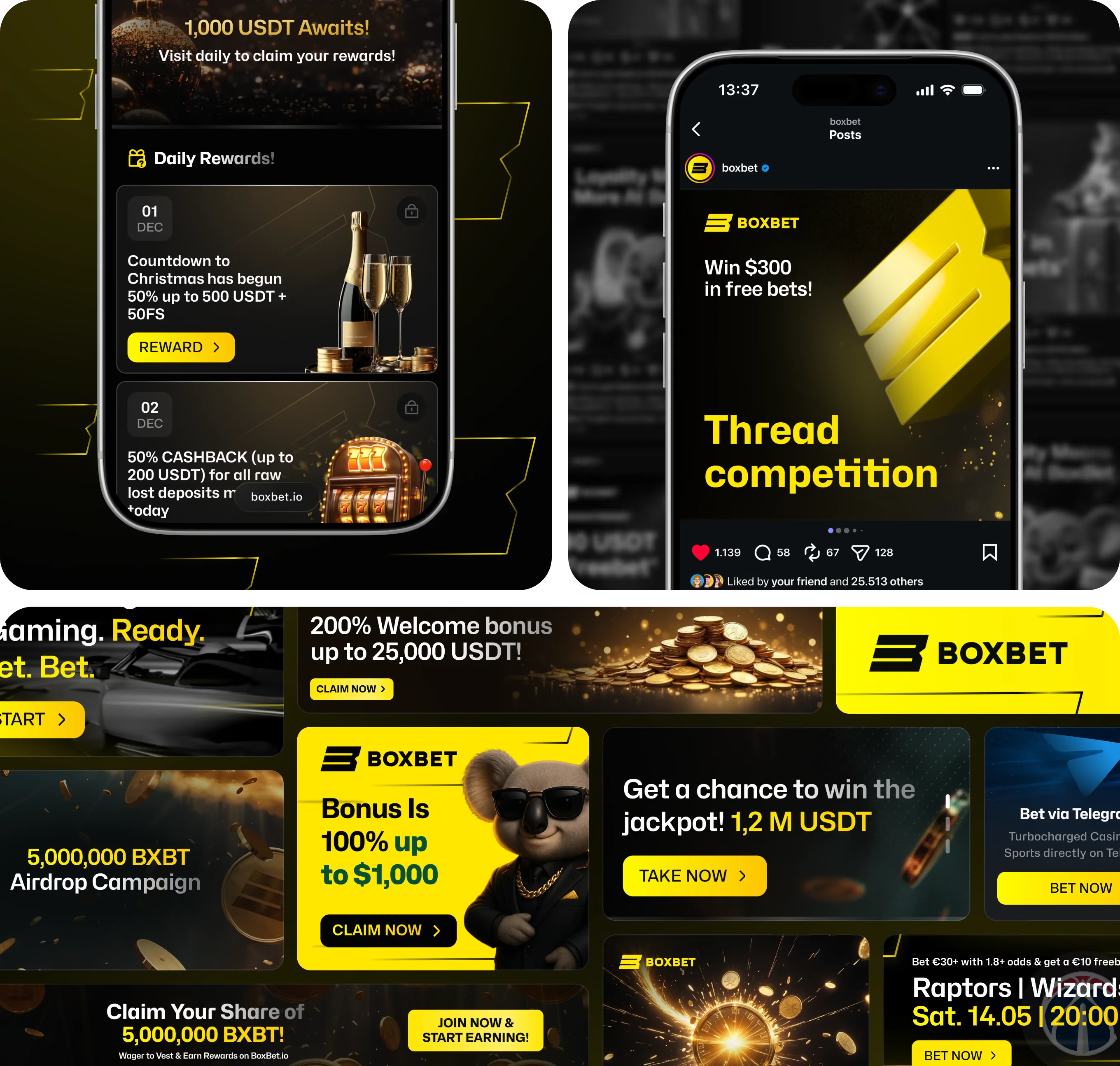
Alongside the product, a promo ecosystem was being built. Eight interface mechanics — Jackpot, Lottery, VIP Program, Bonuses, Referral, Airdrop, Advent Calendar, Tournaments. Each with its own design, its own scenario, its own rules.
Plus external campaigns:
- 18 banner variants for Etherscan,
- tempaltes for social networks,
- ad placements in the Indian market,
- a Bitcointalk ANN thread,
- streamer banners for Twitch and YouTube,
- TON App,
- airdrops.io.
The client's team can update banner copy and switch between visual styles without involving Flatstudio for every small change. That's how our Marketing Design & Assets service works.
More on promo and what we built — in Article 3.
Design System: From Token to Component
Roman Daneliyuk built the design system covering everything: color tokens, Hubot Sans typography with a full style scale, components from Icons to Betslip, navigation across the platform's four sections, banner system for hero blocks.
All components are connected to code via Code Connect. After one 20-minute Zoom, developers went into the files and started using them on their own — almost no questions came back. Where design ended and complex implementation began, we went further and prepared CodePen examples: banner animations, button behavior, game card micro-interactions, logo animation — to simplify and speed up the developers' work.
More on the design system — in Article 4.
Our Services and the Client's Team
On this project we worked across three areas: Product & Interface Design, Brand Identity & Strategy, and Marketing Design & Assets. The client wanted to build the product with their own development team — that's a completely normal working model for us.
Worth noting: the client's tech lead was the one who recommended Flatstudio. We'd already worked together on another project, and he knew our approach and the level of detail in our design systems. So trust between the teams was there from day one — no need to prove the methodology or spend time warming up.
Where the developers ran into something non-trivial — animations, complex hover effects with responsive behavior, the carousel block with mixed content types — we didn't just describe the solution. We built it ourselves and handed over working code. These were things we'd done before on other projects. Delivering a ready solution took hours, not the weeks it would have taken a team encountering the problem for the first time.
What Didn't Work
Twice during the project, finished work didn't make it into the product.
- The first failure is directly tied to how the project started. Website development ran in parallel with brand work — before the logo, brandbook, or mascot existed. When the site was 70% done, it became clear: the colors didn't match the system, UI elements contradicted the rules. We had to go back and redo it. Christian took responsibility.
- The second — a complete sports section with navigation, promo mechanics, and SEO architecture. The client couldn't build it in their own codebase within the available timeline. They had to take SoftSwiss with its limited customization. Most of the sports components stayed in Figma.
Both failures cost resources. Both are part of an honest case study.
What Came Out of It
BoxBet is a product that stands apart from most in this market. Most iGaming platforms launch on white-label solutions from operators: standard template, standard components, minimal customization. BoxBet took a different path.
A custom identity with a specific Pantone code and a logo built on a systemic tilt angle. A mascot people recognize (I'm confident you'll be associating a koala with BoxBet for a while 😄) — one that serves a function in every section of the product. Promo mechanics built in a unified visual language regardless of the channel. A design system that makes the Telegram app and the website feel like the same product in different containers.
Three progressive jackpots, a monthly lottery, an Advent Calendar, a VIP program with eight levels — each with its own Lucky variant. An affiliate landing with 60% revenue share for partners. Ad campaigns running across six platforms simultaneously, with templates the client's team manages on their own.
The Telegram app that started it all is now part of a wider ecosystem — and every part of it speaks the same language.
After Launch
When the product went live, the work didn't stop. Flatstudio moved to a Dedicated Team solution — ongoing support for interface, marketing, and graphics.
New promo mechanics, banner updates, new Lucky poses for social media, adaptation for new markets — all of this happens inside a long-term partnership, not one-off tasks.
BoxBet keeps growing. We keep supporting it.
Why It Worked
One brandbook. One mascot. One color system with a specific Pantone code.
When a designer, a developer, and a marketer are looking at the same document — the product stays coherent even as the team grows, channels multiply, and the client tests new markets.
That's what we build at Flatstudio.

Frequently Asked Questions
Do you work with white-label and turnkey platforms?
Yes – it's a dedicated service. We differentiate skins on SoftSwiss, BetConstruct, and BetBy, and integrate content from Evolution Gaming and Pragmatic Play – working within platform constraints to make your product not look like every other operator on the same engine.
How much does it cost to design a sportsbook or casino product?
It depends on scope. A focused UX audit of your conversion funnel costs far less than a full platform redesign or white-label customization. The fastest way to a precise number is a short discovery – we scope against your platform and markets.
What's your engagement model, and what happens after launch?
Four models by stage: Product Audit & Discovery (fixed project), MVP Design & Development (fixed price or dedicated team), Product Rebuild & Redesign (full-cycle), and Dedicated Product Team (long-term partnership). Average client partnership runs 6+ years – iGaming products live or die by continuous iteration on retention and compliance.
What does an iGaming product design agency do?
We design real-money gambling products – sportsbooks, casinos, and white-label platforms. That means engineering the flows where operators win or lose: bet slip conversion, KYC completion, deposit funnels, bonus mechanics, and affiliate landing flows – product strategy, UX/UI, design systems, and front-end.
Do you sign NDAs? Who owns the work?
Yes – NDA by default, signed before we see your data or discuss your roadmap. You retain full commercial ownership of all assets upon final payment: source files, design systems, and code.
What does Flatstudio do for iGaming?
Flatstudio is an iGaming product design agency for licensed real-money operators – sportsbooks, casinos, and white-label platforms. We design GGR-focused UX for regulated markets: onboarding, betting flows, retention mechanics, and geo-compliance, from MVP to platform modernization.
