







Product Rebuild & Redesign



.png)


You've outgrown your own product
The "Legacy" Anchor. Shipping features takes weeks.
Visual Fatigue. Your UI looks dated. It kills user trust.
Disconnect. Great marketing, outdated product.
Performance Cap. Tech crashes at x10 growth.
What we do
From strategy to code: A complete relaunch:
Audit & product strategy (The Brain)
Brand identity (The face)
Scalable design system
Engineering & modernization (The engine)
Real-world rebuild in action:

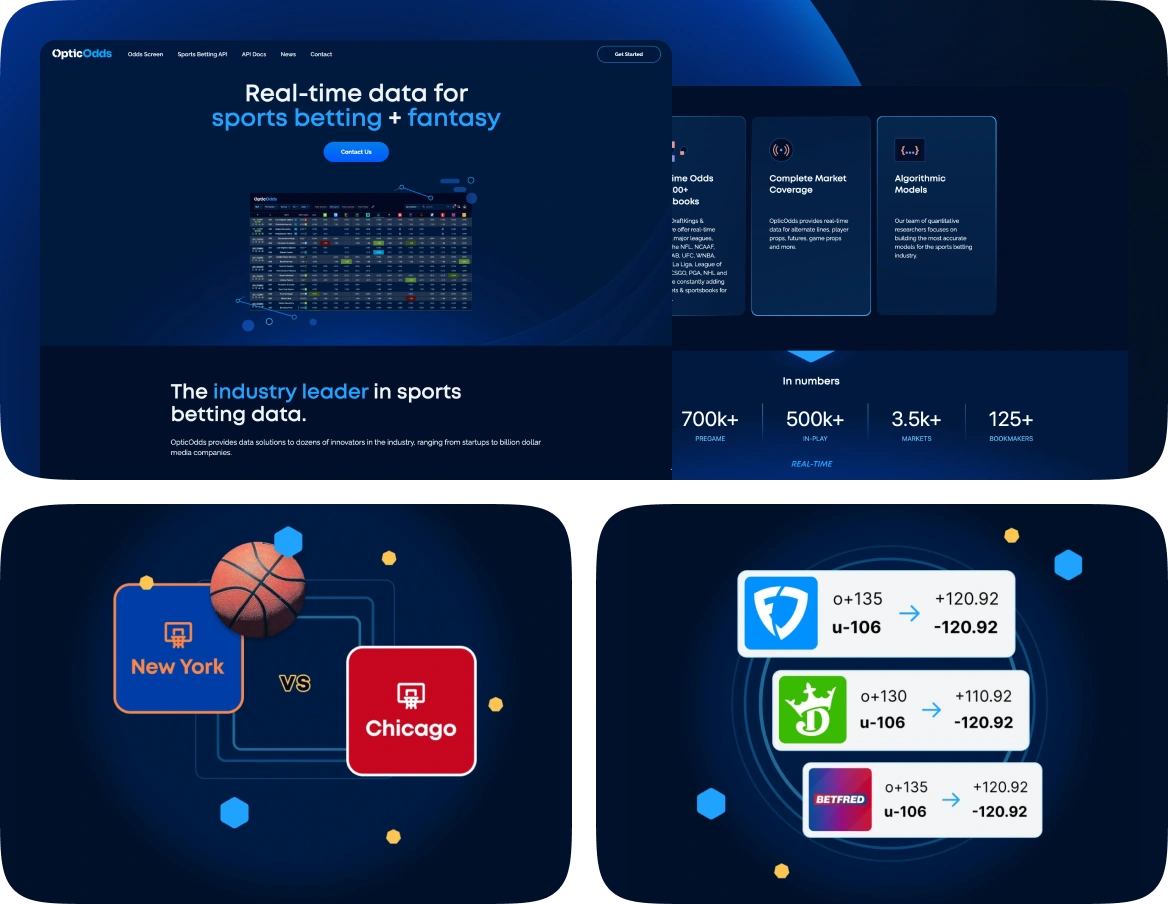
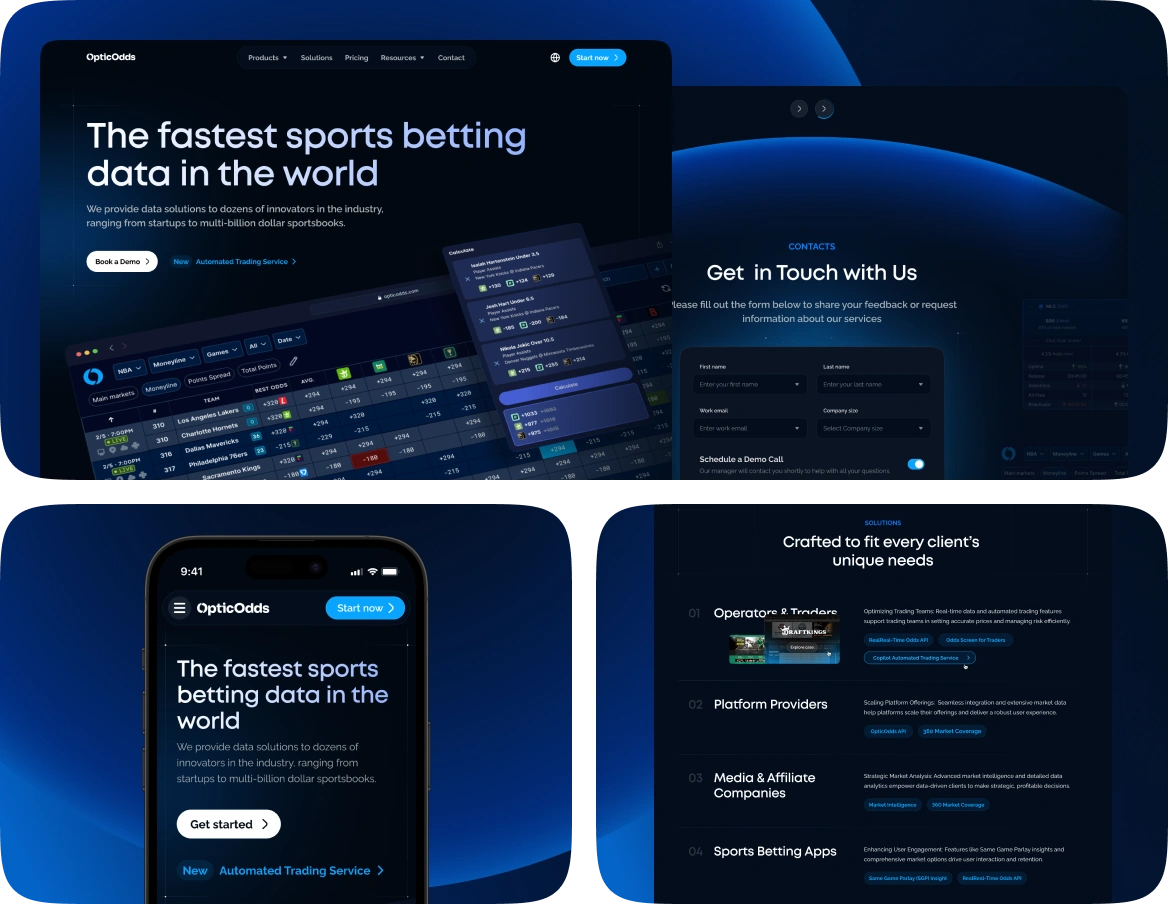
Opticodds
Redesigned the marketing site end-to-end, tripling inbound demo requests.

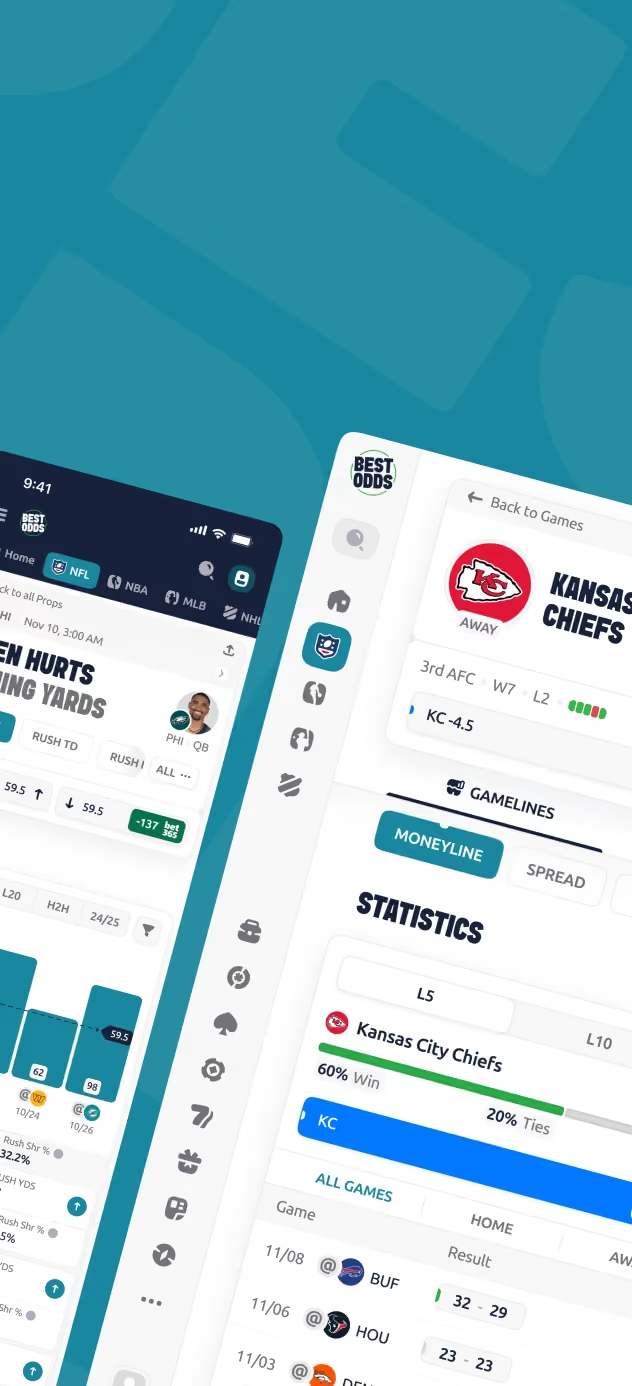
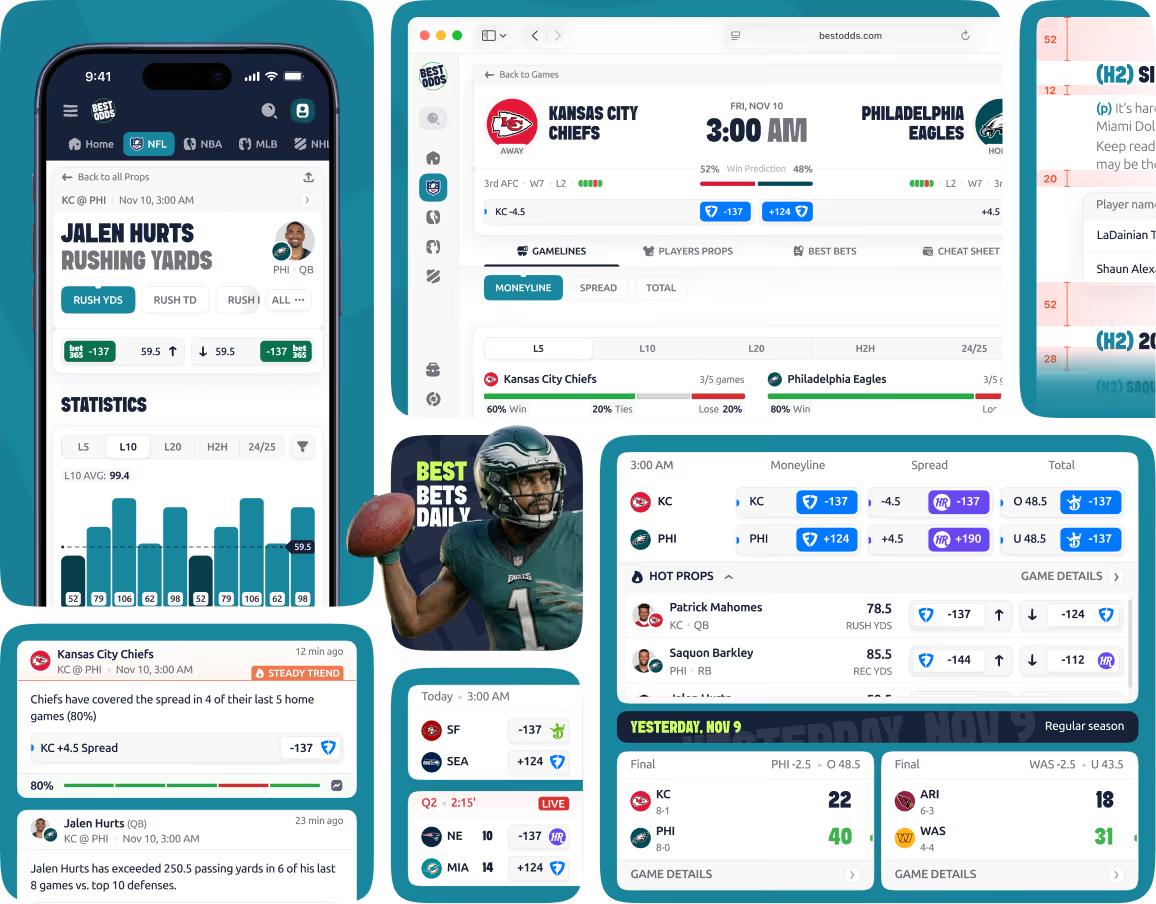
Bestodds
Redesigned from an editorial affiliate site into a product-led betting platform.

The "Phoenix" roadmap
Discovery & deconstruction
Brand & UI/UX
Visual proof
The core rebuild
Migration & launch
Modernization without the risk
Business logic preservation.
Faster time-to-market
Parallel running. Zero downtime.
What you get

Brand & experience
Code & architecture
Infrastructure
Full transparency
Phased Billing
Agile Delivery
Deep Integration
Frequently Asked Questions
How will you work with our in-house team?
We don't replace your team – we extend it. Your PMs and engineers stay in the loop on Slack, Figma and GitHub. We align on architecture, coding standards and deployment so that, after launch, your team can confidently maintain and evolve the new product without vendor lock-in.
Do we have to rebuild the entire product at once?
No. We can focus on the most critical modules first – for example, onboarding, trading flows or admin dashboards – and modernise the rest in later phases. This staged approach reduces risk and lets you see ROI earlier while still moving toward a full relaunch.
We already invested in a redesign before and it didn't move the needle. How is this different?
Most redesigns focus only on looking modern. Our rebuild starts from product strategy, analytics and revenue mechanics. We keep the logic that works, remove features that don't, and connect UX, brand and engineering to concrete metrics like activation, retention and ARPU – not just aesthetics.
Can you keep my database structure during a redesign?
Yes. We specialize in Refactoring. We audit your current logic, keep what works, and update the UI/UX layer to modern standards without disrupting your backend data structure. We migrate your data to the new structure safely.
How does the contract work with Push?
Transparency first. You sign direct contracts: one with Flatstudio (Strategy & Design) and one with Push (Engineering). This ensures zero hidden margins for you. However, we work as a single squad. Flatstudio manages the design supervision, ensuring Push builds exactly what we designed. You get two contracts but one integrated team.
Do I need to pause my business?
No. We build the new version in parallel. Your users switch only when it's perfect.
Will you help with the marketing website too?
Yes. We redesign your product and your marketing site together, so the brand stays consistent across both.
Is this a fixed-price project or a time-and-materials engagement?
We use phased, scope-based billing. Each phase (strategy, brand, UX/UI, engineering, launch) has a clear scope, estimate and deliverables. You always see what you are paying for per phase and can adjust priorities between phases as your business needs change.
How long does a full rebuild usually take?
Timelines depend on complexity, but most full rebuilds take between 4 and 9 months from discovery to launch. We break the work into phases with clear milestones, so you can see progress every 2 weeks and start using parts of the new system before the final switch-over.

