





Vibes, Tails, and Leaderboards: Why Oddible's Social Layer Is Infrastructure, Not Gamification






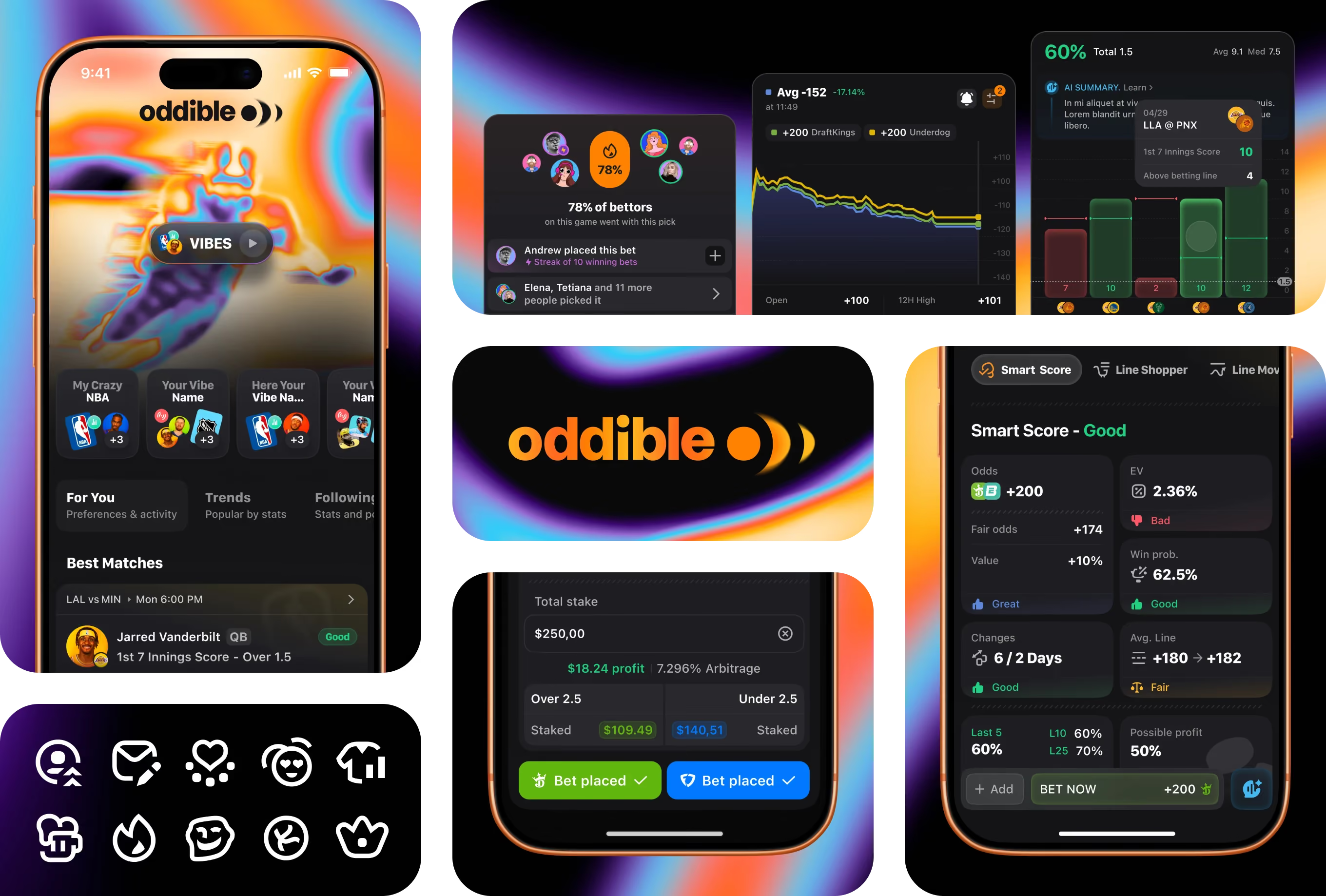
Written for founders of betting and sports analytics startups deciding what to build before the first line of code.
Social features are usually the last sprint of a betting app roadmap. A share button, a leaderboard, a badge system – bolted on after the odds engine works, because the engagement charts demand it. Oddible inverted that order. In this sports betting app design, the social layer is how picks get discovered, how bets get placed, and why anyone trusts a number on the screen.
A social layer in a betting product only works if every number inside it is verified. Otherwise it's a feed of strangers overstating their win rates – and users figure that out within a week.
We designed Oddible from a one-sentence brief across a 2+ year partnership: 300+ screens, a design system of 1,000+ components, and zero developer clarification cycles after handoff. This article covers the part founders most often underestimate – the social mechanics – and why each of them is a data problem wearing an engagement feature's clothes.
TL;DR
- A "vibe" is a saved query over live odds data – personalization as filter logic, not visual themes
- Tailing a parlay has to handle odds drift, partial sportsbook coverage, and removable legs
- Win rates and leaderboards are only credible because bet history syncs from real sportsbook accounts
- Every social feature multiplies states – comments, privacy tiers, empty states – and states, not screens, are what you budget for
A Vibe Is a Saved Query, Not a Theme
Oddible's core discovery mechanic is the "vibe" – a personalized pick feed the user configures by betting style, leagues, and timing. Choose "+EV Betting" and the app generates a saved feed of positive-EV picks at fair odds. Presets cover styles from Underdogs to Most Historically Profitable to Meme Picks, each returning results with its own AI hint.
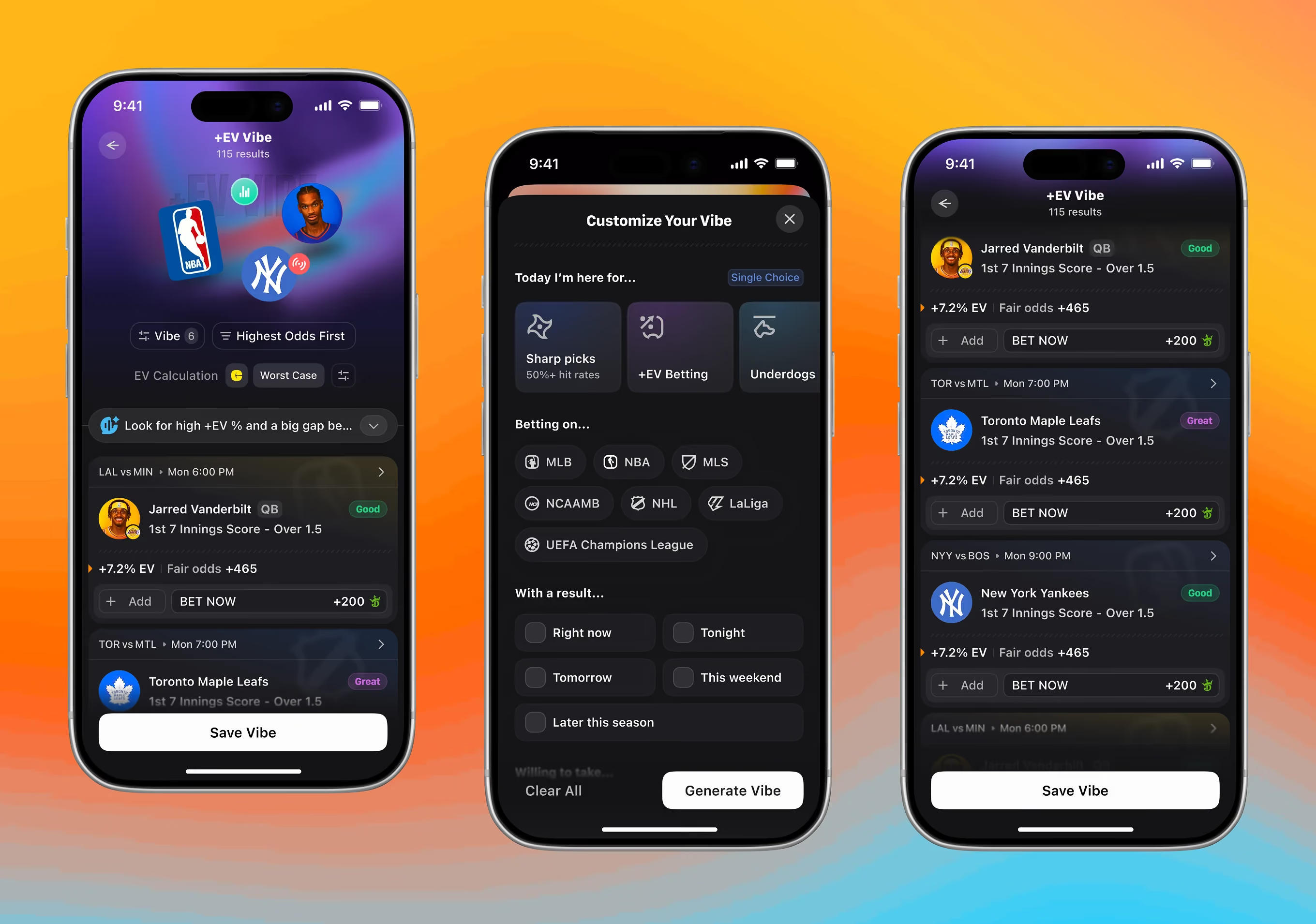
It looks like personalization. Underneath, it's query design. Each vibe carries its own expected-value calculation method – Worst Case, Power, Multiplicative, Additive, or Shin – and its own no-vig baseline sportsbook, with sorting by odds, time, popularity, or highest EV. Every vibe screen had to be designed as a filter configuration with defined math, not a mood board: what happens when the baseline book has no line, when a feed returns nothing, when the user switches methods mid-session.
The design system carries this logic all the way down. Six distinct vibe colors sit as tokens next to the core palette from Oddible's brand identity – shaped from the same one-sentence brief – so personalized feeds render consistently across all 300+ screens instead of accumulating one-off styles.
Tailing a Parlay Is a Data Problem, Not a Share Button
The tail flow – copying another bettor's parlay into your own slip – is where most social betting concepts quietly break. Odds move. By the time you tail a 3-leg parlay, your price is not the original poster's price, and an interface that hides this is lying to its users.
Oddible's answer is honesty at the component level. A banner compares your current odds against the tailed bet and flags whether they're better or worse. Each leg can be removed before placing. And because a parlay can span events that one sportsbook doesn't carry, the comparison view shows partial coverage – books missing an event display a lower leg count instead of pretending the parlay exists everywhere.
None of that is visible in a pitch deck screenshot. All of it decides whether the feature survives contact with live data.
What Makes a Good Sports Betting App Design?
Good sports betting app design puts verified data under every claim the interface makes. That is the whole answer, and the social layer is where it gets tested hardest.
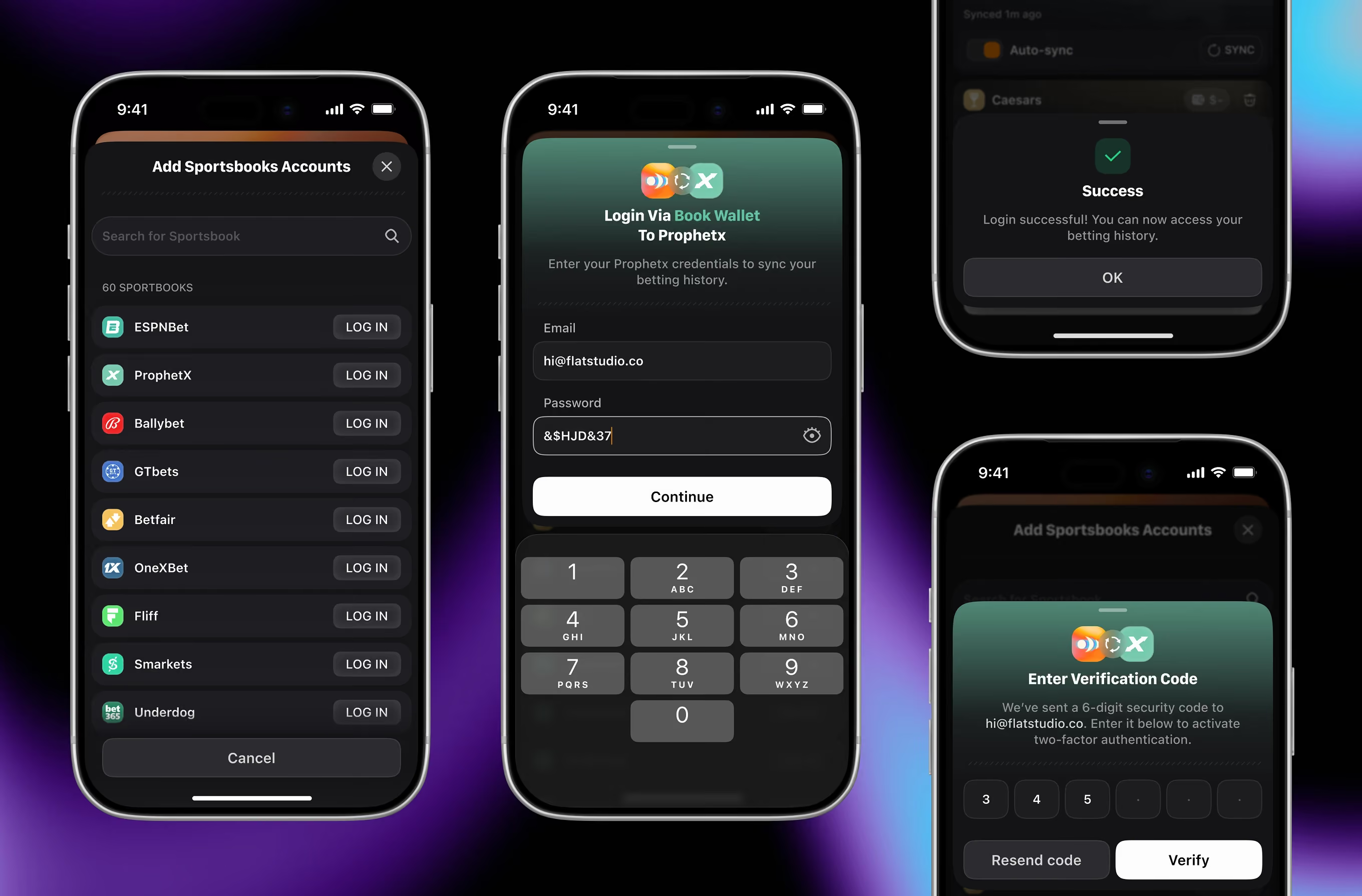
A win rate printed next to a Follow button is either the strongest trust signal in the product or its biggest liability. Oddible earns it: bet history syncs from users' actual sportsbook accounts, with 2FA re-authentication flags, per-book auto-sync toggles, and explicit confirmation before a connection is deleted. Leaderboards rank bettors by ROI or profit in units, filterable by day, week, month, or all time – computed from that synced history, not from self-reported screenshots.
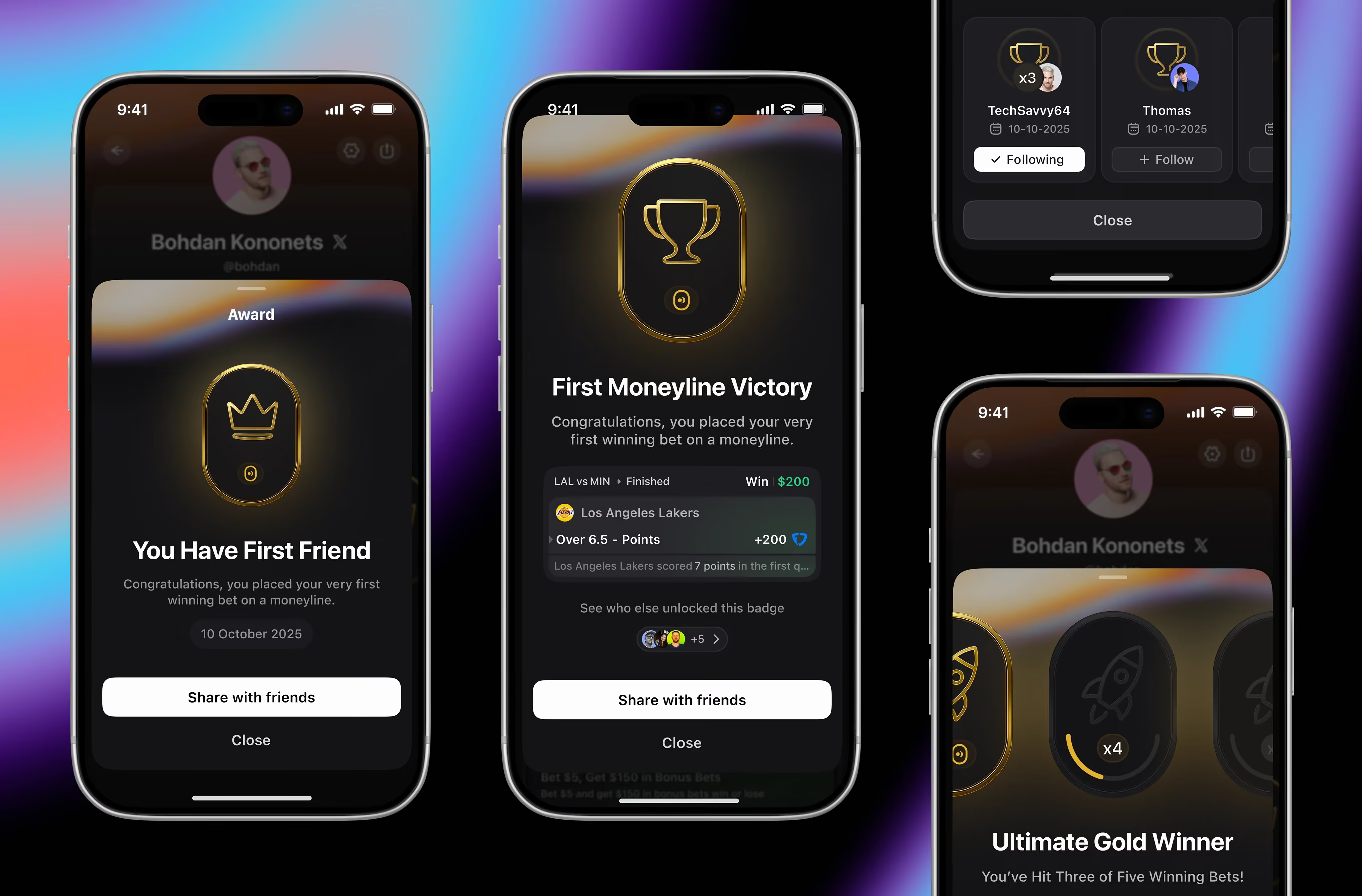
The same discipline applies to lighter mechanics. Achievement badges tie to real betting milestones – a first moneyline win, three of five winning bets – and can be shared or compared with other users who unlocked them. And because social pressure is real when money is public, privacy is granular: profile access, sharing, and comments each carry their own three-tier setting (Everybody, People I follow, Nobody), and a follower can be removed without being notified.
The States Nobody Budgets For
For a founder scoping a build, the lesson is not "add social features". It's that every social mechanic multiplies states. A comment thread needs reply, edit, delete, report, and an empty state prompting the first reply. A tailed bet needs better-odds, worse-odds, and missing-leg variants. A profile needs public, follower-only, and private renders. Multiply that across a feed, a leaderboard, badges, and sportsbook sync, and the honest screen count lands at 300+, with 1,000+ components behind it.
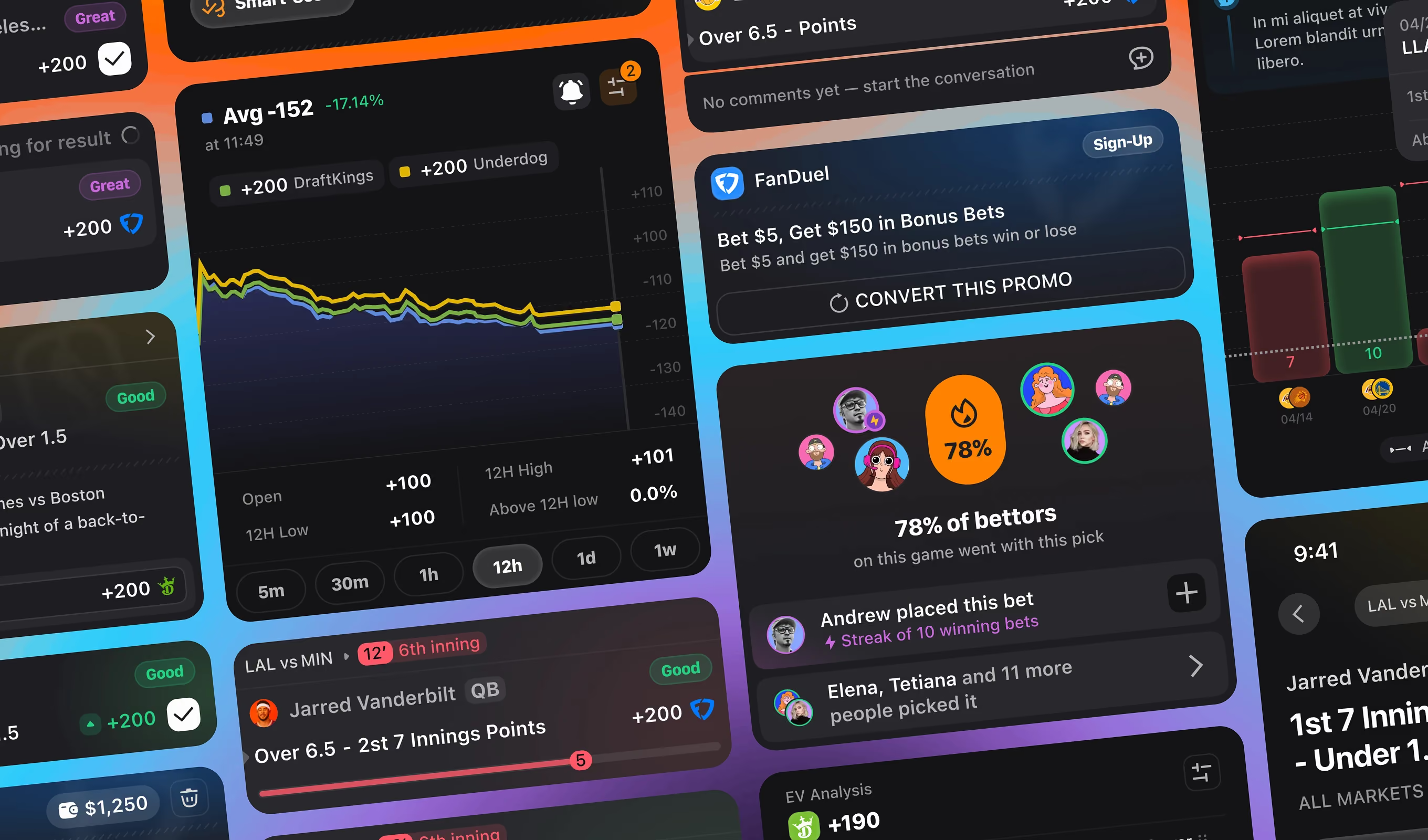
We mapped all of it – every user scenario and every component variation – at the wireframe stage, before UI, working as a dedicated product team inside a sports analytics product. That is the mechanism behind zero developer clarification cycles post-handoff: by the time engineers opened the files, the design system had already answered the questions they would otherwise ask mid-sprint.
If you're still deciding what your betting product is, the social layer is not a later phase. It defines your data model, your sync architecture, and half your screen count – which is exactly the kind of decision a pitch and product concept sprint exists to settle before the build starts.

Frequently Asked Questions
Can you design social betting features for an existing app?
Yes. We map social mechanics – feeds, tailing, leaderboards, comments – as states and data requirements first, then design components that fit the existing system. On Oddible, this scenario mapping happened at the wireframe stage, which is why developers needed zero clarification cycles during implementation.
How long does it take to design a sports betting app?
Scope decides. Oddible is a 2+ year partnership covering 300+ screens and a 1,000+ component design system, delivered iteratively alongside the product. An initial wireframe-to-design-system scope for a focused MVP is measured in months, not years – the state map, not the screen list, defines the timeline.
Do social features make sense before launch?
They should be decided before launch even if they ship after it. Social mechanics define the data model – verified bet history, sportsbook sync, privacy tiers – and retrofitting verification under an already-live feed costs far more than designing for it from the start.
How does Oddible verify win rates and leaderboards?
Bet history syncs directly from users' connected sportsbook accounts, with 2FA re-authentication and per-book auto-sync controls. Win rates, ROI rankings, and profit-in-units leaderboards are computed from that verified history rather than self-reported results – which is what makes a win rate next to a Follow button credible.
What did Flatstudio deliver on Oddible?
User research, information architecture, UX/UI design, and a full design system for the iOS app: 300+ screens, 1,000+ components, wireframe sets, high-fidelity mockups, and Figma source files. The same brief also shaped Oddible's brand identity – strategy, logo suite, guidelines, and tone of voice – delivered as a dedicated product team across a 2+ year partnership.
