





From Research to Product Intelligence: How AI Changes the Way We Understand Users, Markets and Interfaces





Written for founders, product managers, and designers who need research to change decisions – not sit in Notion, Google Docs or your personal Notes.
There is a quiet failure mode in product research: it gets done, it gets presented, and then it gets archived. The market analysis was thorough, the personas were beautifully formatted, and six weeks later nobody can point to a single interface decision that would have been different without them.
The problem was the economics of research, never its quality. Deep research used to cost so many days that teams could only afford a thin slice of it – the client's brief, a look at three competitors, three personas. Everything else was out of budget before the project even started.
That budget just changed. What AI changed at Flatstudio is the cost of exploring a question: deeper research became economically possible, and that changed what we can know before we design a single screen.
TL;DR
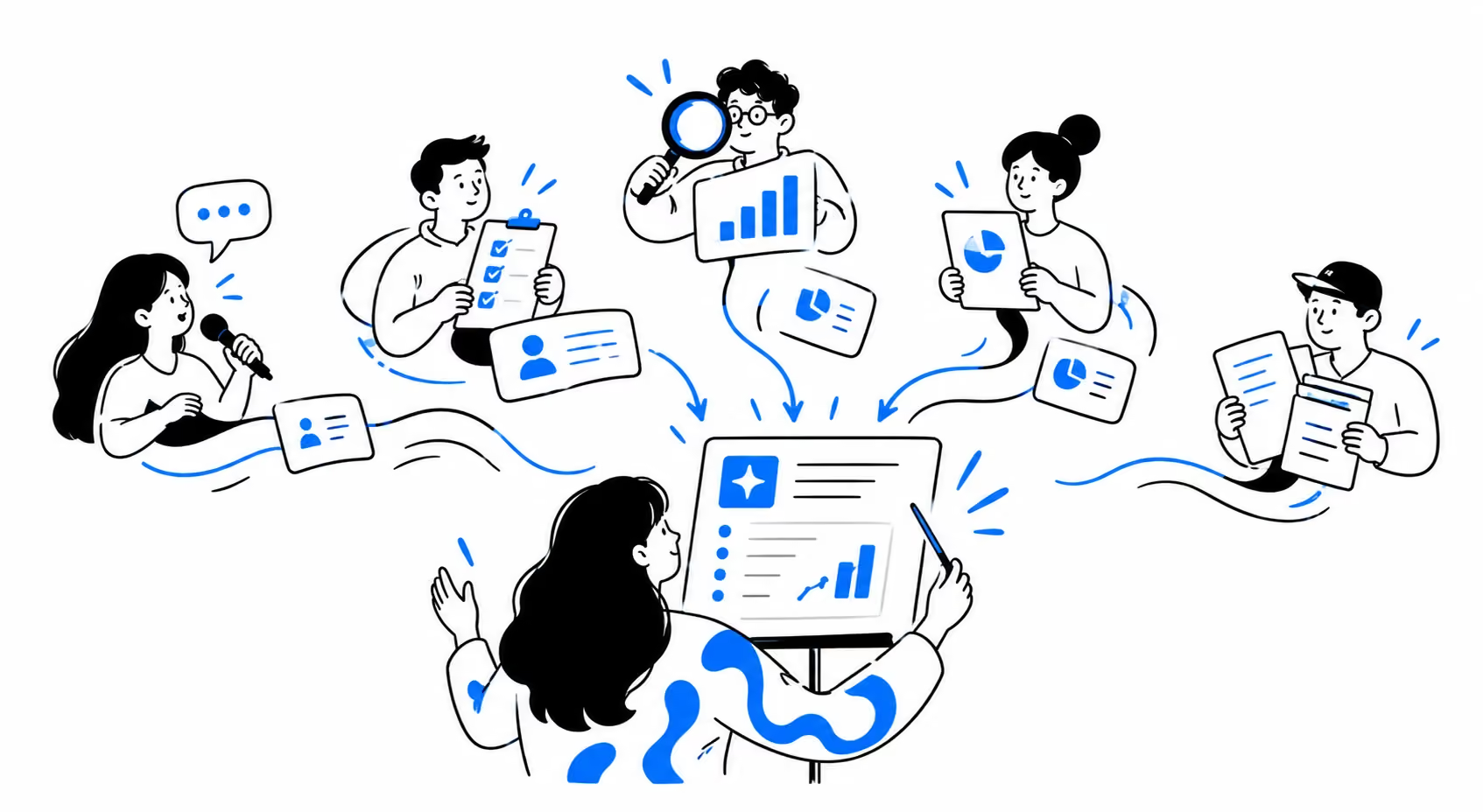
- We compress the client brief, custom interview questions, two rounds of client interviews, market data, competitor analysis, and open sources into a single Research Intelligence Document – the one file the whole team refers to for the rest of the project.
- Competitor research and research document preparation used to take two people two weeks. In our current workflow, the same phase takes 3–5 days – and we reinvest the difference into breadth: competitor marketing, branding, positioning hypotheses, and public sources we previously never had time to touch.
- We build up to 10 personas instead of 3 – but 3–5 of them are explicitly labeled hypothesis personas: models of the segments competitors appear to target, not claims about validated users.
- Personas ship in two formats: PDF for people, MD for machines – so clients can load them into their own AI tools and keep generating scenarios after handoff.
What Is AI Product Research?
AI product research combines traditional user research, market analysis, and competitor research with AI-assisted synthesis. In practice it spans AI user research, AI UX research, AI competitor research, and AI market research – one product research process with AI synthesis at its core. The goal is to make deeper research economically possible, and to turn the resulting evidence into decisions the product team can actually use – rather than to replace research with AI.
The rest of this article is how that works in a real studio workflow.
Research Was Always Rationed
Every agency says it does research. What nobody says out loud is how much research gets cut before it starts.

A typical branding or product engagement gives you a fixed window between kickoff and first concepts. Inside that window, manual research forces a triage: read the brief, interview the client, scan the three most obvious competitors, write up findings. Market structure beyond the top competitors? Competitor marketing and positioning? Public sources, forums, reviews? Out of scope, because each of those directions costs a day the schedule simply doesn't have.
We ran this rationed model for years, including on branding projects like Dustbit and StatKing, where the direction of an entire visual identity hangs on how well you understand the market in week one. In that model, competitor research and research document preparation took two people two weeks. In our current workflow, the same phase takes 3–5 days.
The real shift was a realization: the time AI saves on synthesis shouldn't be pocketed as margin – it should be reinvested as scope.
What Goes Into the System
Our current research input set, project by project:
- The brief – product or branding brief the client fills in.
- Custom questions – a question set prepared specifically for this client and this project, not a generic template.
- Client interviews – typically the first two calls with the founders or product team, recorded and transcribed.
- Client documents and analytics – anything the client shares: decks, metrics, past research.
- Market research – industry structure, business models, product types.
- Competitor analysis – products, but also their marketing, branding, and positioning.
- Open sources – public information, reviews, communities, and other sources we can now investigate at a breadth that wasn't economically practical before.
The Research Intelligence Document
We process all of it with AI into analysis categories and assemble one artifact. At Flatstudio, we call this system a Research Intelligence Document: a living research artifact that connects evidence to product decisions throughout the project – and the single source the whole team works from for the rest of the engagement.
A Research Intelligence Document is a structured synthesis of everything known about the product, market, and users at the start of a project – brief findings, interview findings, market structure, competitor analysis, competitor marketing and branding observations, patterns, contradictions, hypotheses, personas, and open questions – maintained as one living file rather than scattered across decks and notes.

The document does more than store research. It keeps decisions traceable to evidence: insight → evidence → hypothesis → decision. We learned the value of this the expensive way: clients would come back six months later with a question their research had already answered. They still had the final document with the solution – what they'd lost was how we arrived at it together. That changed what we deliver: the result, and the reasoning path that led to it. Now, when a founder asks in month three why the product went in this direction, the answer is a section of the document rather than someone's memory of a call.
Its categories, in the order we build them:
- Brief findings and stated client assumptions
- Interview findings
- Market structure and business models
- Competitor products
- Competitor marketing, branding, and positioning
- Patterns across all sources
- Contradictions across sources
- Hypotheses
- Personas (primary and hypothesis)
- Open questions for the client
Before, the equivalents of these sections lived in five places and three formats. Now, when a design decision gets disputed in week six, the argument ends the same way every time: someone opens the document.
Research Has an Expiration Date
Research is never permanently true. Markets move, competitors reposition, products change, and assumptions get validated or rejected by what ships. A research report frozen at kickoff starts decaying the day it's presented.
That's why the Research Intelligence Document is a living artifact, not a final report. When a hypothesis gets tested, the document records the outcome. When a competitor pivots mid-project, the competitor section updates. The team doesn't work from a snapshot of what was true in week one – it works from the current state of what we know.
The Contradictions Section Is the Point
Summarization is the least interesting thing AI does with research. Any tool can compress ten sources into bullet points.
What changes decisions is the adversarial pass: instructing AI to look for places where sources disagree. The client says users want X – but market behavior suggests Y. A competitor positions itself around speed – but its actual product ships features that serve a different job entirely. The brief assumes one audience – the interviews quietly describe another.
Good research doesn't only confirm what we think. It shows us where we might be wrong. In the rationed-research era, contradictions surfaced by accident, usually mid-project, usually expensively. Now they're a named section of the document, produced in week one, and discussed with the client before anything gets designed.
One anonymized example. A client came to us for gambling branding in South Africa, and every line of the brief pointed the same way: make it feel like a casino – game characters, gradients, glossy Pixar-style 3D icons, classic "fun casino" energy. The research disagreed. In that specific market, the audience at the intersection of sports and gambling gravitates toward a very different visual language of success: luxury. Gold, deep premium green, precious stones, fine watches – aspiration rather than arcade. We walked the client through the research, down to photographs of local boutiques and villas. The client changed his mind – and the final identity changed with it. That conversation happened in week one, at the cost of a research phase; three months later, it would have cost a rebrand.
From 3 Personas to 10 – and Why Half of Them Are Hypotheses
The rationed model gave us three personas per branding project. The current model gives us up to ten. That sentence should make you suspicious – AI generating more fictional characters is not progress, and the industry criticism of synthetic personas is largely deserved: plausible-sounding user models built from no data validate assumptions instead of testing them.
So the structure matters more than the count:
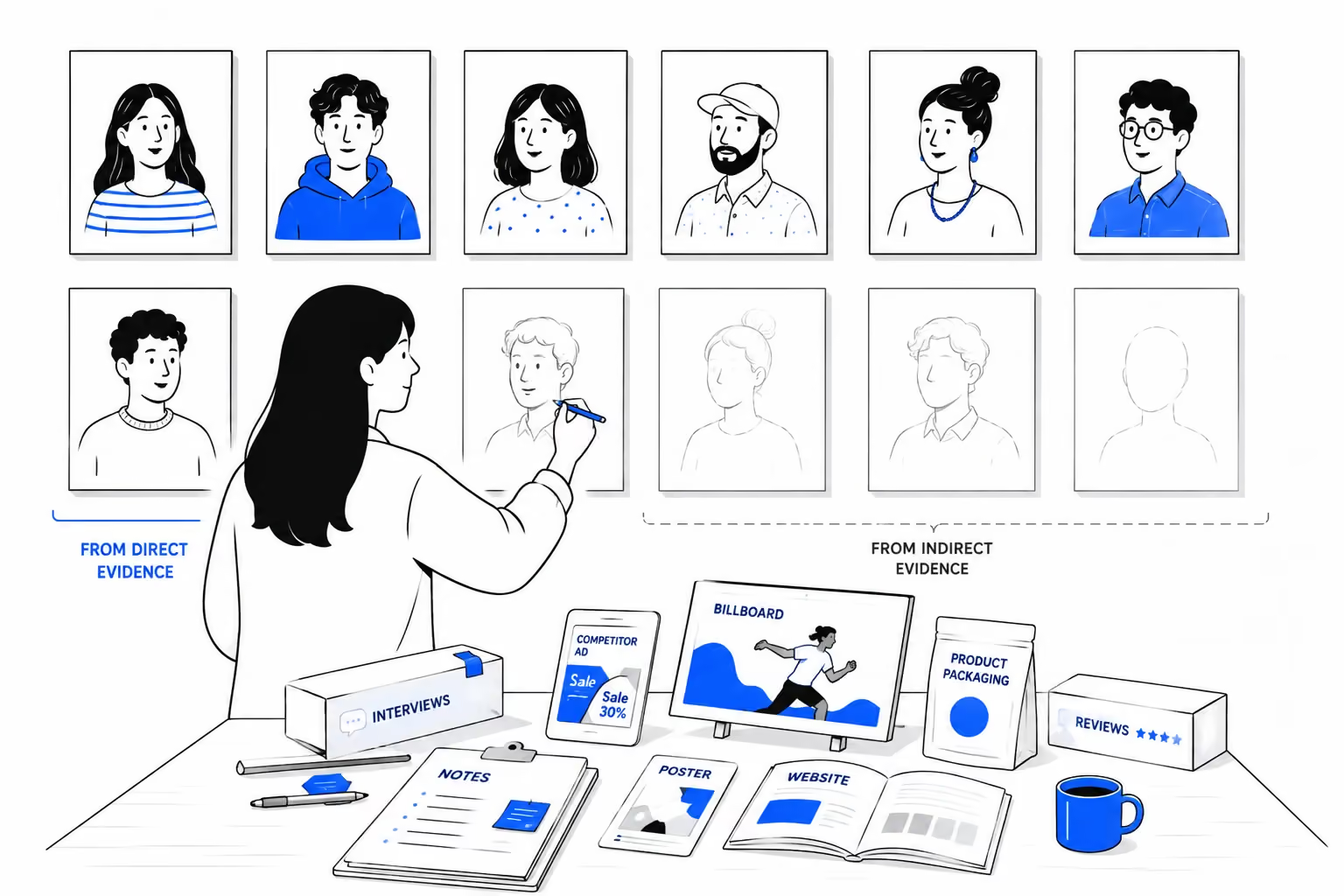
- 3–7 primary personas – built from client interviews, client data, and market research: evidence-based models of likely user segments, grounded in the sources available to the project.
- The remainder – hypothesis personas – and this is where the model becomes strategically useful.
A hypothesis persona is a segment model reconstructed from a competitor's positioning, marketing, and product behavior – our explicit hypothesis about who that competitor is building for. It is labeled as a hypothesis, never presented as validated user research. Its job is to widen the strategic field of view: it shows the client which segments the market is already fighting over, and where nobody is aiming.
Where does the data come from, if nobody hands you a competitor's strategy? From what competitors can't help publishing. Their numbers, marketing materials, the ad platforms they buy, the tone of their campaigns – together these say a lot about who a product is actually built for. Certainty stays out of reach – only the competitor's own team could confirm it – which is exactly why these personas keep the "hypothesis" label.
The same analysis regularly surfaces a quieter finding: drift. On products that haven't been redesigned in years, the marketing often targets a completely different audience than the one the original design was built for – the interface still speaks to the users of five years ago while the campaigns chase new ones.
Both findings feed one strategic decision: building adaptability in from the start. If the market map shows several segments worth serving, the branding can be designed to flex across them instead of locking onto one. Netflix and Apple TV are the reference pattern here – deliberately generic interface systems where the targeting happens through cover art and banners: the content graphics aim at different audiences while the system underneath stays the same.
On branding engagements like Dustbit and StatKing, this is the layer that turns persona work from documentation into decision support: the client sees not just "here is your user" but "here is the map of who everyone else is targeting – now choose where to stand."
What AI Can't Validate
One boundary keeps this whole system honest. AI can identify a plausible segment. It cannot turn that hypothesis into validated user research by generating more text about it.
- A synthetic persona is not an interviewed user.
- A competitor hypothesis is not the competitor's actual strategy.
- A market pattern is not a user motivation.
- AI synthesis is not evidence – it's a lens on the evidence you collected.
Every artifact in the Research Intelligence Document carries its evidence level, and nothing crosses from "hypothesis" to "validated" without something real happening in the world: an interview, a test, a shipped feature, a market response.
A Persona Is a Decision-Making Tool
None of this matters if the persona ends its life as a nicely formatted page.
If we can't walk a persona through that chain to a concrete implication – a feature priority, a tone of voice, a navigation decision – it gets cut. The ten-persona set survives because each one earns its place in an actual decision, not because AI made generating them cheap.
PDF for People, MD for Machines
Personas live in Figma during the project. At handoff, they ship in two formats:
- PDF – for humans: stakeholders, new team members, investors.
- MD (Markdown) – for machines: a clean, structured file the client loads into their own AI tools.
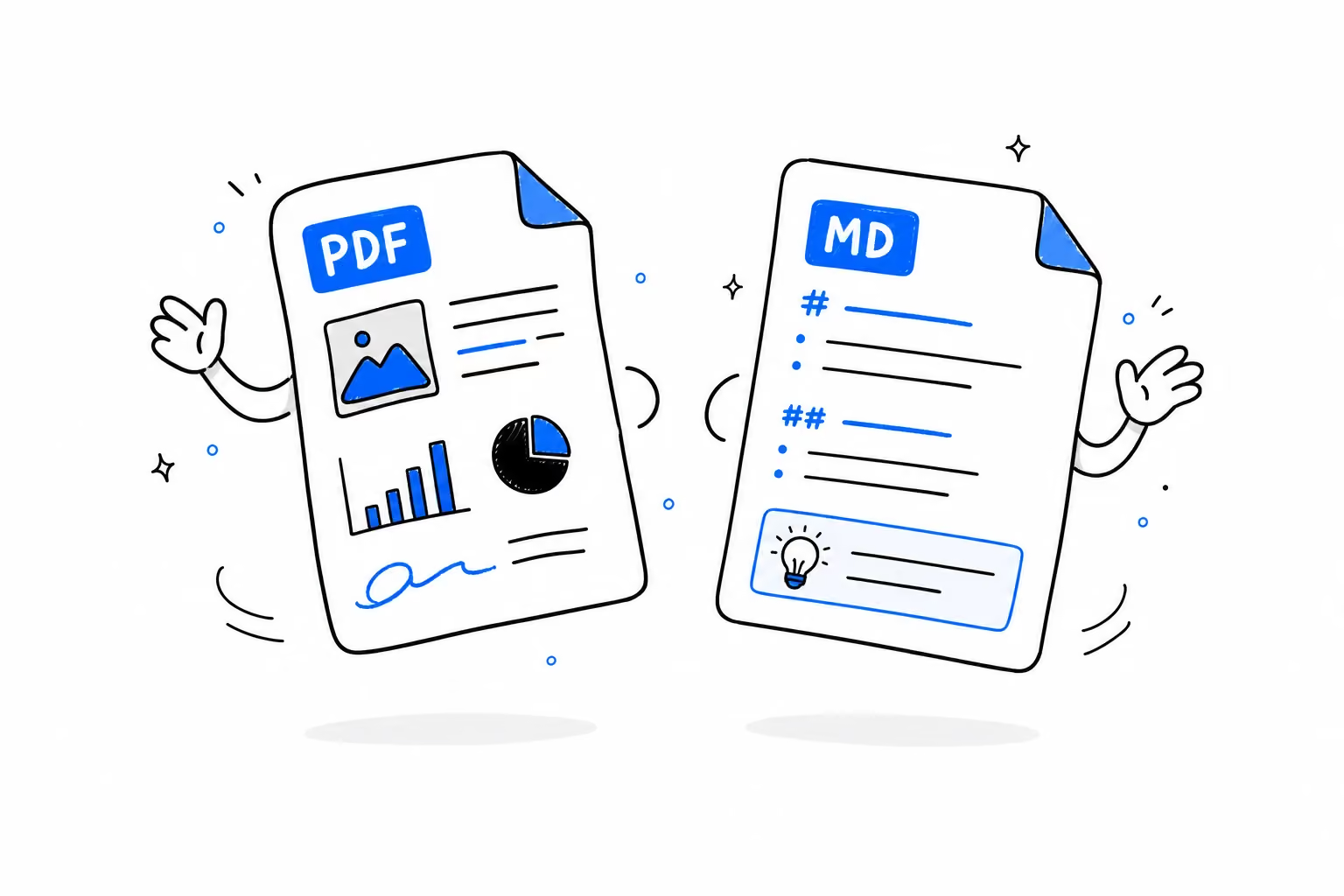
The second format is the one clients didn't know they needed. A persona as an MD file becomes a reusable asset: clients load it into the AI tools they already use and generate user scenarios, test messaging against a segment, draft copy in the persona's language, or brief a new vendor – long after our engagement ends. The research keeps working without us in the room.
We started doing this because we use the files that way ourselves. Research is not documentation. Research is input for interface generation – and increasingly, the interfaces are generated by tools that read Markdown, not PDF.
What This Changes for the Client
Everything above is method. Here is what it buys the people who hire us:
- Brand and product decisions backed by evidence, with the reasoning path preserved – so approvals stop resting on taste and memory alone.
- A wider strategic map before committing: which segments competitors are already fighting over, and where nobody is aiming.
- Research that keeps working after handoff – personas and findings in formats your team, and your AI tools, can keep using without us in the room.
- Fewer expensive reversals: contradictions between the brief and the market surface in week one, at the cost of a research phase rather than the cost of a rebrand.
In practice, this is the research and discovery phase of product design – done, documented, and agreed before the first design decision locks in.
Where This Leads
Product intelligence is the first layer of a larger system. The same logic – capture raw material, synthesize with AI, turn it into an artifact the team actually uses – runs through how we turn client conversations into briefs, and how we test design decisions as coded prototypes instead of static screens. Those are the next articles in this series.
The through-line for all of them: we use AI and code to make design more testable – not just faster.
Deciding a brand or product direction on instinct? Bring us the market. We'll turn the brief, the interviews, and the competitors into a Research Intelligence Document your team can decide from. Talk to Flatstudio

Frequently Asked Questions
What is a Research Intelligence Document?
A Research Intelligence Document is a single structured file that synthesizes everything known at project start: brief findings, interview findings, market and competitor analysis, patterns, contradictions, hypotheses, and personas. The whole team works from this one document instead of scattered decks, which keeps design decisions traceable to research throughout the project.
What is a hypothesis persona?
A hypothesis persona is a segment model built from a competitor's positioning, marketing, and product behavior – a labeled hypothesis about who that competitor targets, not validated user research. Teams use hypothesis personas to map which market segments are contested and which are open before committing to a brand or product direction.
How does AI change product research?
AI changes the economics of research. Synthesis that took two people two weeks now takes days, so teams can afford broader inputs – competitor marketing, positioning, open sources – and more analysis passes. The decisions still belong to designers and researchers; AI expands how much evidence those decisions can rest on.
Can AI replace user research?
No. AI accelerates research synthesis, but it cannot replace evidence from real users. The inputs still come from real interviews, real client data, and real market sources. The reliable gain is economic: teams can afford deeper and broader research, not skip it.
How many user personas does a product actually need?
Enough to cover every segment that affects a real decision, and no more. We typically build 3–7 primary personas from interviews and client data, plus 3–5 hypothesis personas reconstructed from competitor positioning. Every persona must trace to a concrete design or brand decision – otherwise it gets cut.
Are AI-generated personas reliable?
Only when their evidence is explicit. We separate evidence-based primary personas, built from interviews and client data, from hypothesis personas derived from competitor and market analysis. The latter are strategic models, not validated user research – and they're labeled that way in every deliverable, so no decision rests on synthetic certainty.
Why should user personas be delivered as Markdown files?
Because Markdown is machine-readable: clients load persona files into their own AI tools to generate scenarios, test messaging, or brief new vendors after handoff. A PDF serves human readers; the MD version turns the same research into a reusable, portable asset that keeps producing value after the engagement ends.
