





From Chaos to System: The Cover Builder Behind 6,000+ Casino Game Thumbnails





Written for product managers, marketing teams, and content managers at iGaming operators, e-commerce platforms, and social media teams who need to ship branded visual content at volume without a standing dependency on a design team.
A casino integrates games from dozens of providers – and inherits dozens of visual languages with them. Every provider ships its own image sizes, file formats, and asset packs. The mismatch compounds cover by cover, until the lobby looks like a folder of stock photos instead of a product.
We design interfaces for complex, data-dense products, so we treated this the way we treat any interface problem: as a system, not a queue of one-off tasks. The result is a Figma-based production system that turns raw provider assets into finished, on-brand game covers in the time it takes to paste a few images.
Every cover becomes an output the system produces – same card frame, same hierarchy, same text zone, regardless of what the provider sends. A content manager runs it. A designer built it once.
We built the system for a real production problem: roughly 6,100 casino game covers from 24 providers, processed at an average pace of 40–45 covers per day and up to 60 in a single day.
TL;DR
- One Figma system takes inconsistent raw provider assets – backgrounds, characters, logos, and game elements – and assembles them into a coherent, branded cover through five fixed layers.
- The game name renders as code, never baked into pixels, so an operator can translate a slot title for a new market without touching the artwork.
- When providers ship broken or missing assets, the pipeline recovers them: backgrounds rebuilt from demo-game sessions, character elements regenerated with AI, low-resolution art upscaled before it enters the system.
- The same input-to-output logic transfers to e-commerce product cards, social media formats, and multi-size ad banners – any workflow that needs many branded outputs from one raw asset.
What Do Providers Actually Send?
Before a cover exists, every provider sends its own asset pack – and rarely in a compatible shape. One ships a background at one size, another at a completely different one. One delivers the character as a separate file; another glues character and background into a single flat image; a third has no character at all. File formats, resolution, and even whether layers exist at all vary from provider to provider. A shared asset standard does not exist in this industry.
That inconsistency is the real problem the Cover Builder solves. Rather than standardizing providers' assets, it gives whatever arrives the same frame: the same card shape, the same character zone, and the same reserved area for text and fade.
When the Assets Don't Exist: Demo Games and AI Recovery
Years of working with the same providers means knowing in advance that some asset packs will arrive incomplete – and having a recovery path ready instead of a blocked cover.
- Missing backgrounds. When a provider sends no usable background, we find where the game runs as a demo, capture the background from the demo session, and use AI-assisted tools to reconstruct a production-ready background based on the original game.
- Missing character elements. When there is nothing to place in the character zone, we generate a matching character or game element with Gemini, using the demo game as the visual reference.
- Low-quality assets. Provider art often arrives at a resolution too low for the card. Those assets get upscaled and regenerated to production quality before they enter the input fields.
- Repeating live-casino dealers. Live games are numerous, and the same presenters repeat across a single game. At the client's request we generated additional dealer variants for different markets – which also gave the operator material for A/B tests.
None of this changes the system itself. The recovery workflow is separate from the production system – once an asset is ready, the system treats it exactly like any other input, running it through the same input fields, the same five layers, and the same export logic as anything a provider sends directly.
Two Screens, Not One Designer

The system is built around one simple separation: Input and Output. Each side has a different job. Input is where the content enters the system. Output is where the system applies the design rules.
Part 1: Input. This is where the content manager drops the raw material – the slot background, the character, a logo, or another game element – and types the name. The working example in this file is BBQ FRENZY, a Nolimit City slot.
No layer work, no component switching – copy an image, paste it into the marked field, type the names into text fields. The Character block carries a small green-and-red scale inside it, so the placement boundary is visible the moment the asset lands.
Part 2: Output. Built with Figma components, Auto Layout, and Variables, the output side maps the prepared inputs onto predefined templates. It assembles everything into export-ready parts and shows a live Preview: the cover exactly as it will sit in the lobby, both at card size and at thumbnail size – so the content manager can check the composition at reduced scale before anything reaches the live site.
The repetitive layout work happens automatically. The system adapts sizes and applies the gradient, branded frame, and badges ("Hot", "New"). The person filling the input makes content decisions only – every layout decision belongs to the system.
Three Outputs From the Same Source
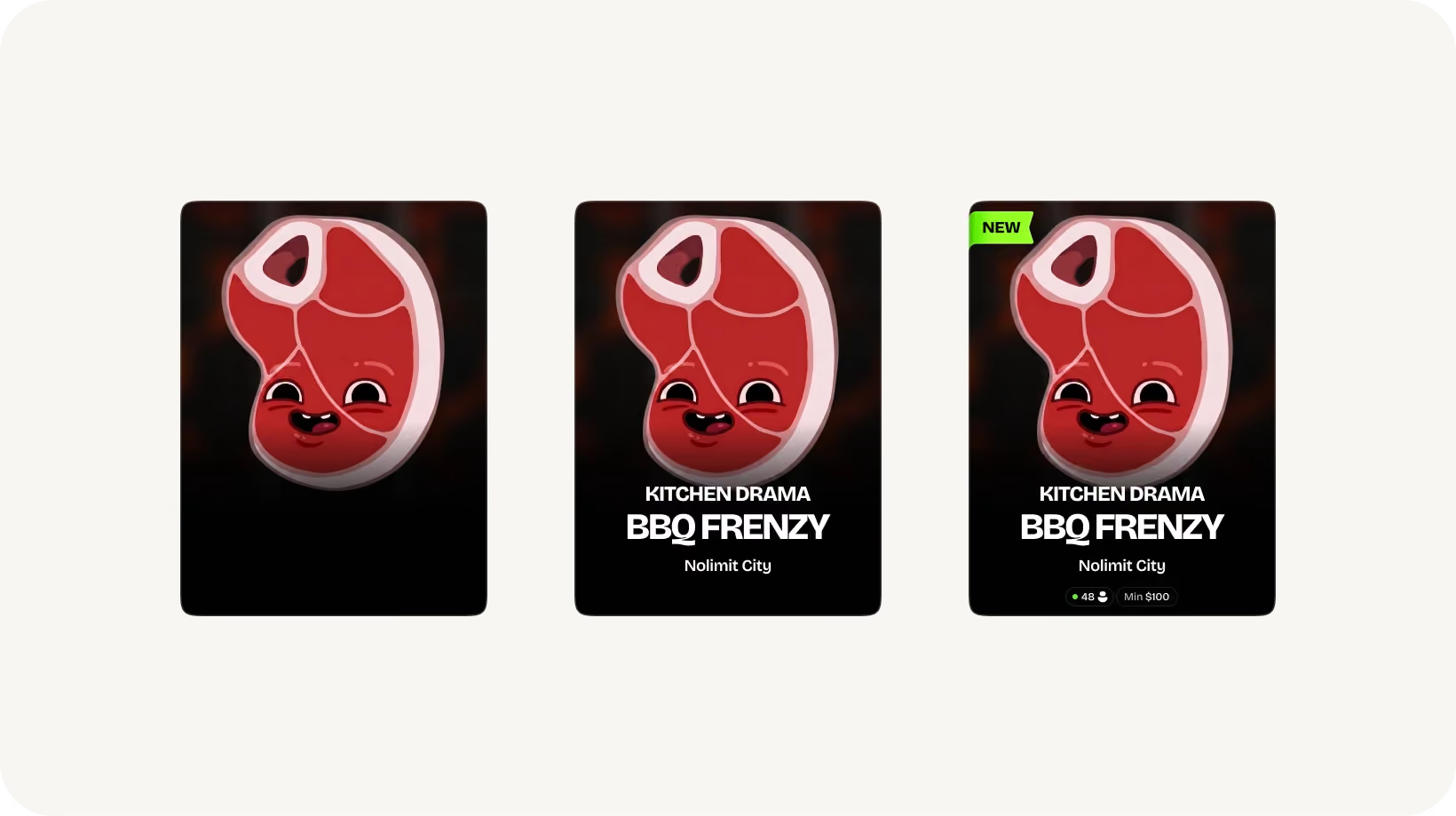
The same background and character assets can produce three different outputs, depending on where the cover will be used:
- Background + character, no text. The composition is locked, nothing is written. This variant is used when the name is added later in code rather than baked into the art – see "Text as Code" below.
- Background + character + text. Title and provider live directly in the layer. The fastest path when the cover will only ever exist in one language.
- Full live-site version – with the "NEW" badge, the RTP indicator, and the minimum-bet line. This is what actually ships to the lobby, and what the content manager reviews before calling the cover done.
Three outputs, one source, zero drift between them – all three draw from the same background and character layers.
The Five-Layer Stack Behind Every Cover
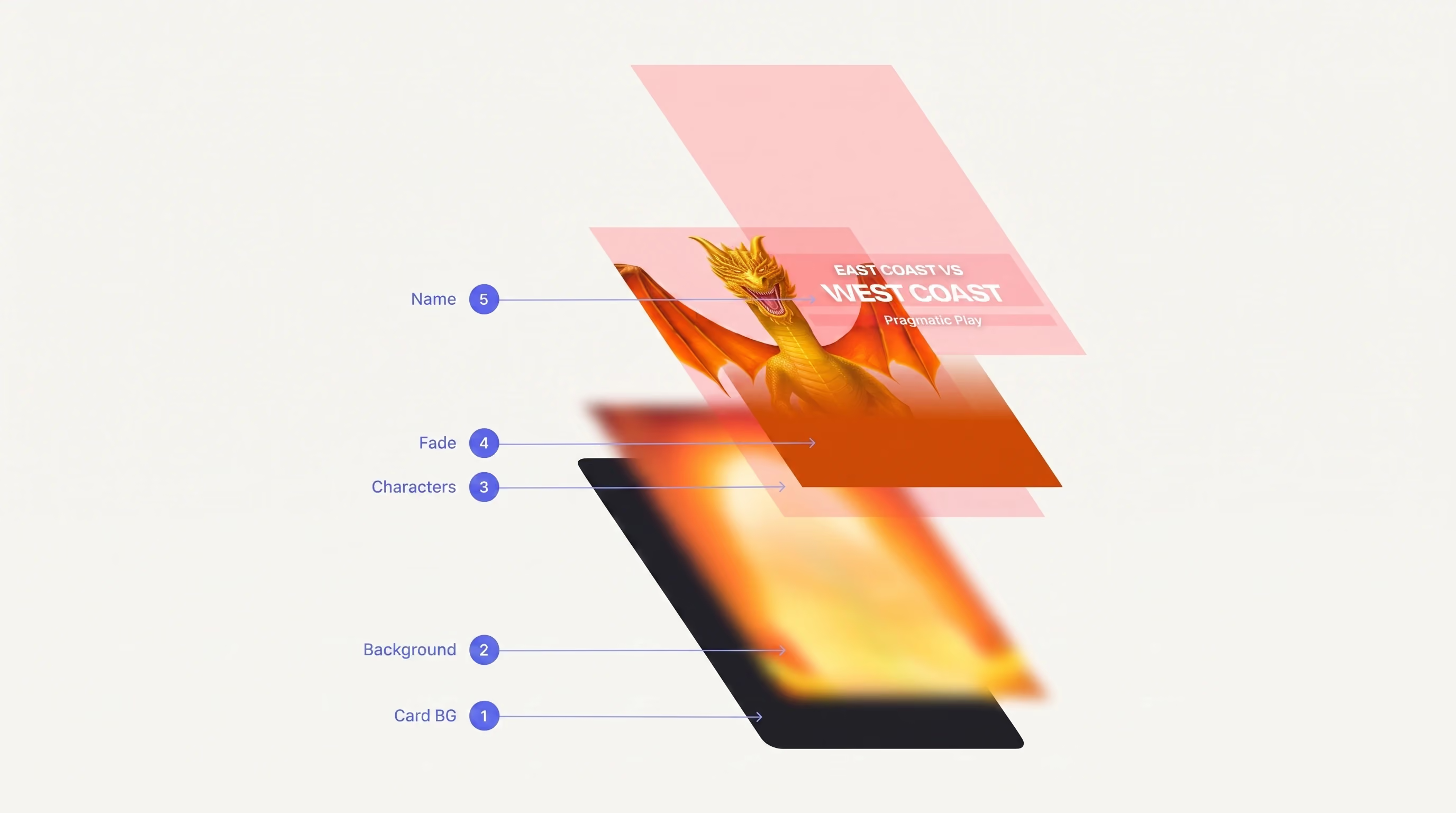
Underneath those three outputs sits a fixed layer order that never changes from game to game:
- Card BG – the base card shape and corner radius, shared across the entire platform.
- Background – the provider's background image, cropped and positioned to the card.
- Characters – the game character, symbol, live-dealer photo, or feature element, positioned within a predefined safe zone above the background.
- Fade – the lower gradient overlay that darkens the base of the card so the text stays readable no matter what sits underneath it.
- Name – the game title and provider, set last, so they always sit above the fade rather than under it.
Because the order is fixed, a content manager cannot accidentally hide the title behind a character or place a badge under the fade. The system maintains the hierarchy itself – the person filling the fields makes content decisions, never layout decisions. The approach comes straight from how we build iGaming design systems: fixed structure at the system level, freedom at the content level.
A Safe Zone for Every Character
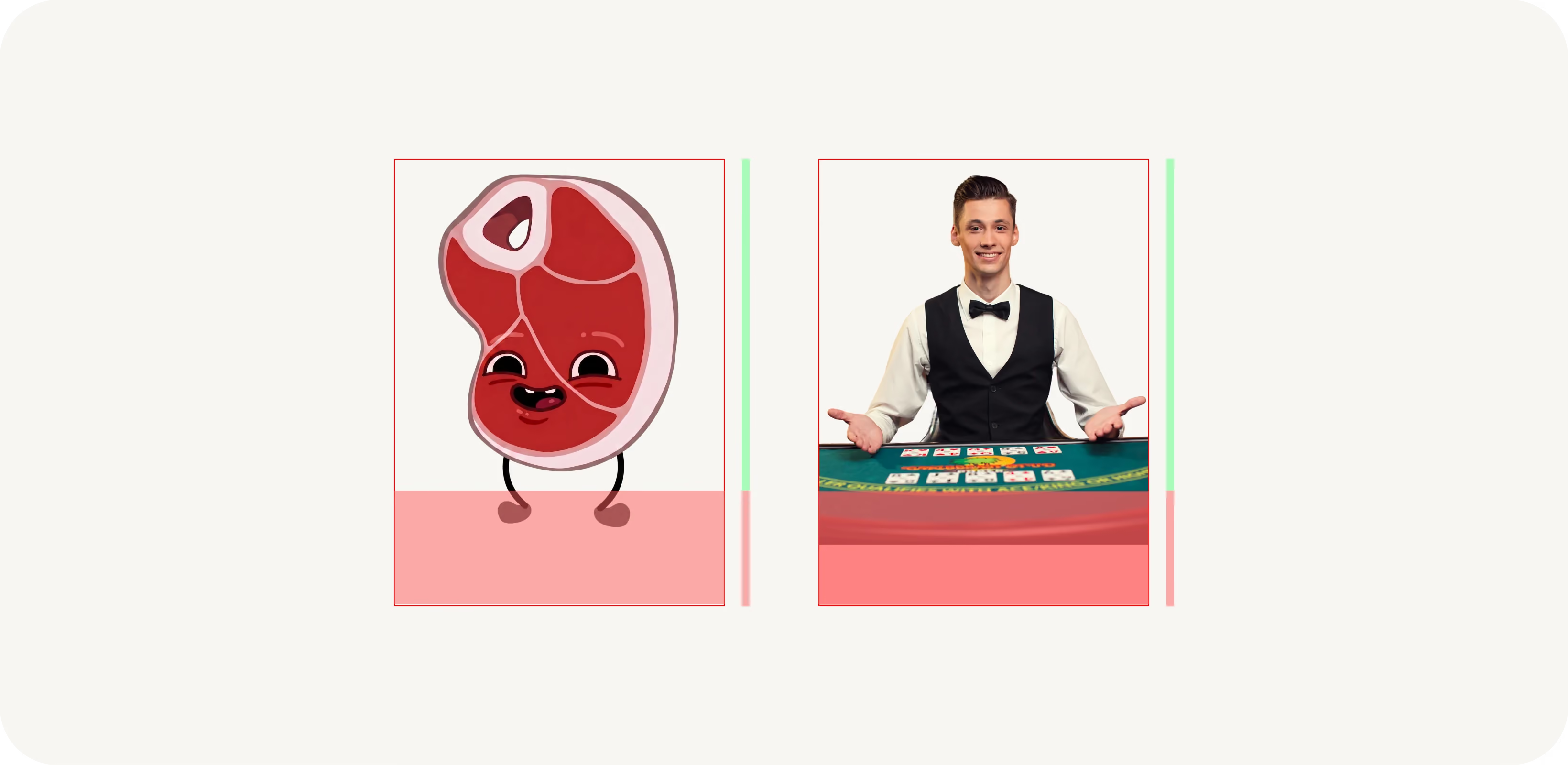
Placing a character or a live-dealer photo on the card is a bounded decision. A simple scale next to the card holds the line: the green zone marks where a character or dealer can stand, the red zone at the bottom marks the space permanently reserved for fade and text – and that proportion stays identical regardless of what is on the card.
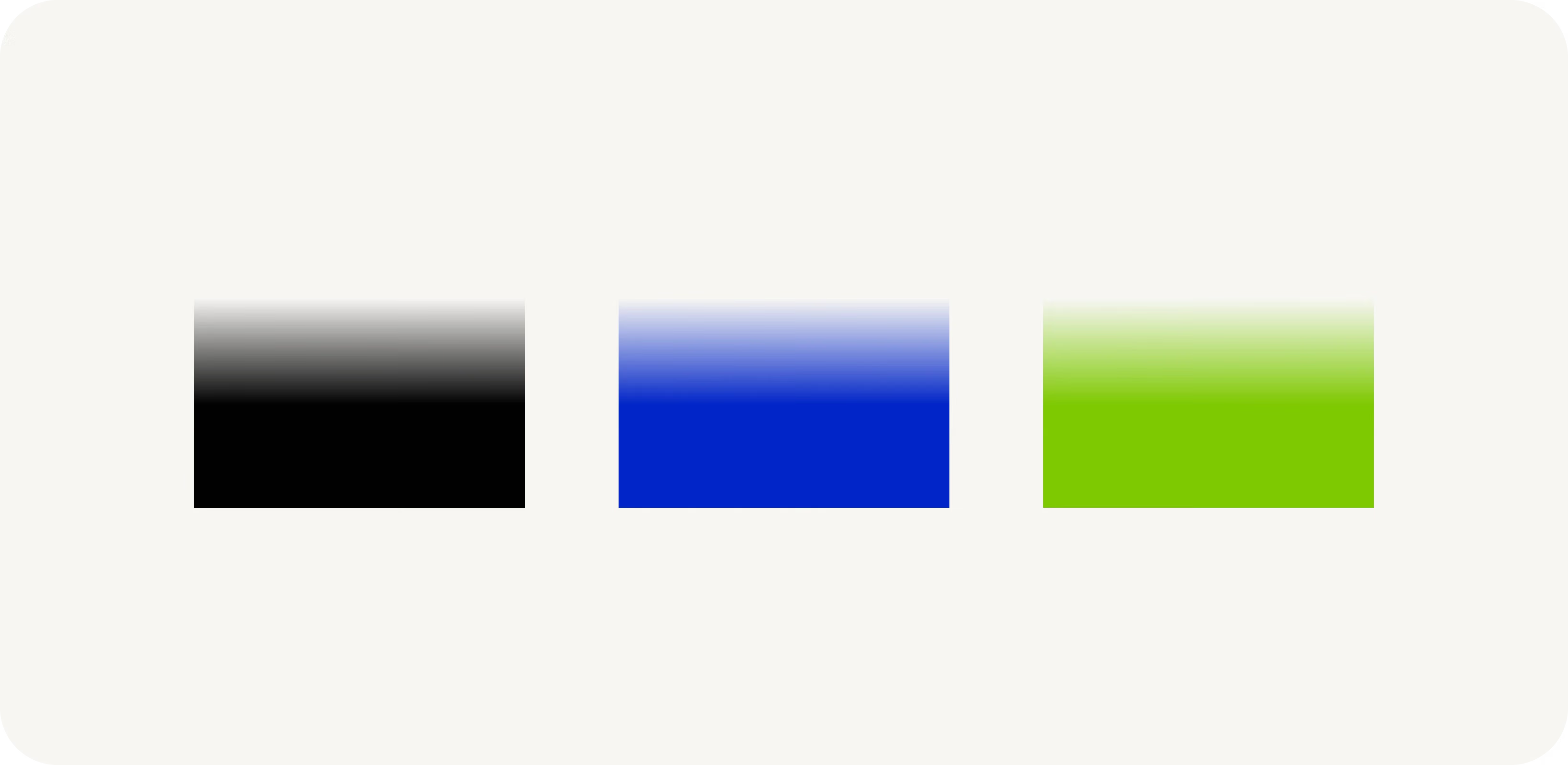
To keep the text readable on any background color a provider sends, the content manager picks the gradient color – so the cover stays visually coherent, with no hard seams between the art and the text zone.
Seven Export Elements From One Cover
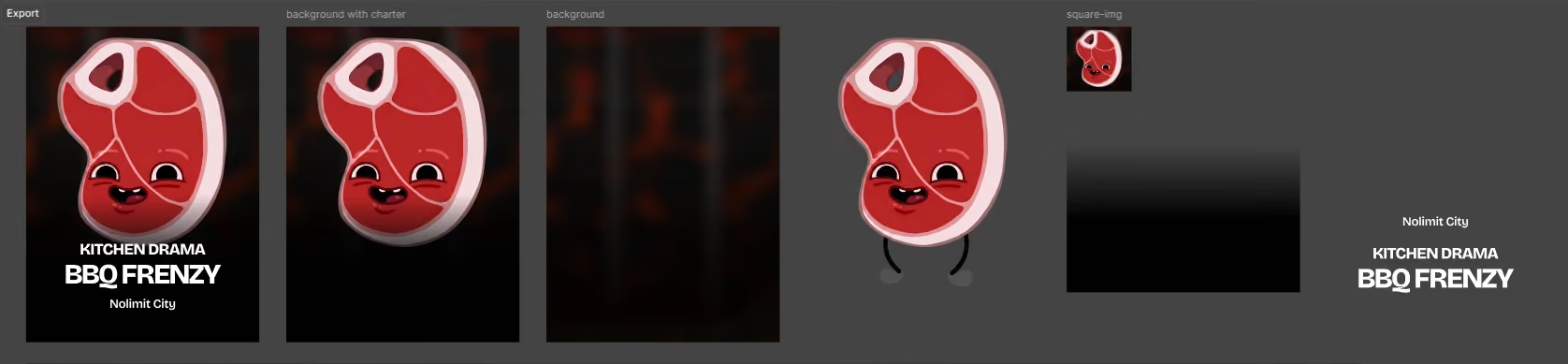
A finished casino game thumbnail is not always a single flat image – in this system, a cover exports as a set of parts, each implemented the way it actually needs to work on the site. The example in this file, BBQ FRENZY by Nolimit City, splits into exactly those parts.
The split exists because the parts belong to different implementation methods. A static background can be loaded once and cached. The fade overlay can ship as a CSS gradient instead of a flattened image. Text can be delivered separately from the raster artwork – either as SVG or as frontend-rendered text, depending on the implementation. That separation is exactly what powers the localization described below.
Text as Code, Not Pixels: Localizing Game Names Without Touching the Art
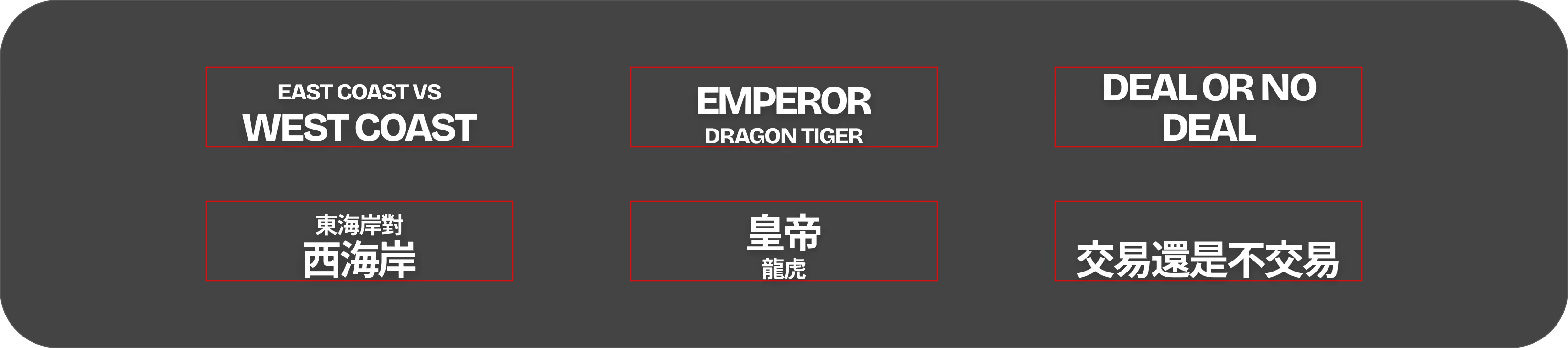
For localized casino lobbies, the preferred approach is to render the game name directly in code rather than as part of the image – and that is what makes it possible to localize a slot title for different markets without reassembling any cover that ships to more than one market. When a player switches the site language, the titles on every card switch with it – English, Chinese, Japanese, Korean, and German – with no re-export from the design file.
What This System Produces
The numbers are the reason the system exists.
- Roughly 6,100 covers produced through the system to date.
- 40–45 covers per day on average, with a peak of 60 in a single day.
- Assets from 24 providers, each with its own formats and quality.
- Every game shipping in multiple card formats – vertical, horizontal, square, with and without text – plus smartphone variants and open-game-page backgrounds, all from one input.
At that volume, the goal is to stop spending designers' time on repetitive layer work rather than to replace them. The system removes repetitive production work and keeps designers focused on design. This is the kind of production line we run inside a dedicated product team engagement – the system gets built once, then the team operates and evolves it.
Beyond the Casino Lobby
The input-to-output logic that solved this for slot covers is a reusable production pattern that applies far beyond iGaming:
- E-commerce and marketplaces: paste a product photo – get a branded card with the house shadow, badges, and the same shape and spacing as every other card on the site.
- Social media teams: paste a photo and a headline – get a square post, a vertical story, and a Reels cover from a single input.
- Performance marketing: paste one key visual – get every ad size a campaign needs, with the composition preserved rather than stretched.
The mechanism stays the same: separate the raw asset from the presentation rules, lock the rules into the system, and let anyone – not only a designer – operate the input side. We used the same template logic to keep BoxBet's eight promo mechanics speaking one visual language across an entire iGaming ecosystem.
Need to produce thousands of casino game thumbnails?
If your platform receives game assets from multiple providers, the challenge is bigger than creating another cover: it is keeping thousands of covers consistent across formats, devices, languages, and markets.
That is what we build at Flatstudio: scalable visual production systems for iGaming platforms – from raw provider assets to responsive casino game thumbnails, localized game covers, mobile assets, and game-page visuals.
6,000+ covers processed. 40–45 per day on average. One system behind them.

Frequently Asked Questions
What is a Figma cover builder and how does it work?
What is a Figma cover builder and how does it work? It is a Figma system with a fixed input zone (raw background, character, logo, title) and an automated output zone built on Auto Layout and Variables. A content manager pastes raw assets; the system applies the approved template – size, badges, typography, fade – with no manual layout work per game.
Can you produce thousands of casino game thumbnails?
Yes. We built this system specifically for high-volume casino game thumbnail production. It has already processed roughly 6,100 covers from 24 providers at an average pace of 40–45 per day, with a peak of 60 in a single day – every one passing through the same five-layer template.
Can casino game thumbnails be localized?
Can casino game thumbnails be localized? Yes. Game names can be separated from the artwork and rendered as frontend text, so the same visual asset supports multiple languages and markets without rebuilding the artwork. On this platform, switching the site language swaps every title instantly – English, Chinese, Japanese, Korean, and German.
Can one casino game cover work across mobile and desktop?
Yes. The system generates different outputs from the same source assets: vertical, horizontal, and square covers, smartphone variants, and game-page backgrounds. Because all of them draw from the same background and character layers, the formats stay consistent instead of drifting apart over time.
Can you work with incomplete provider assets?
Can you work with incomplete provider assets? Yes. When provider assets are missing or unusable, we recover backgrounds from demo games, generate missing visual elements with AI-assisted tools, and upscale low-resolution art before it enters the production system. The recovery workflow stays separate from cover production, so output quality never depends on the source.
