





Flat Odds Tables Rank Fine. We Redesigned BestOdds Around Deeper Pages Anyway





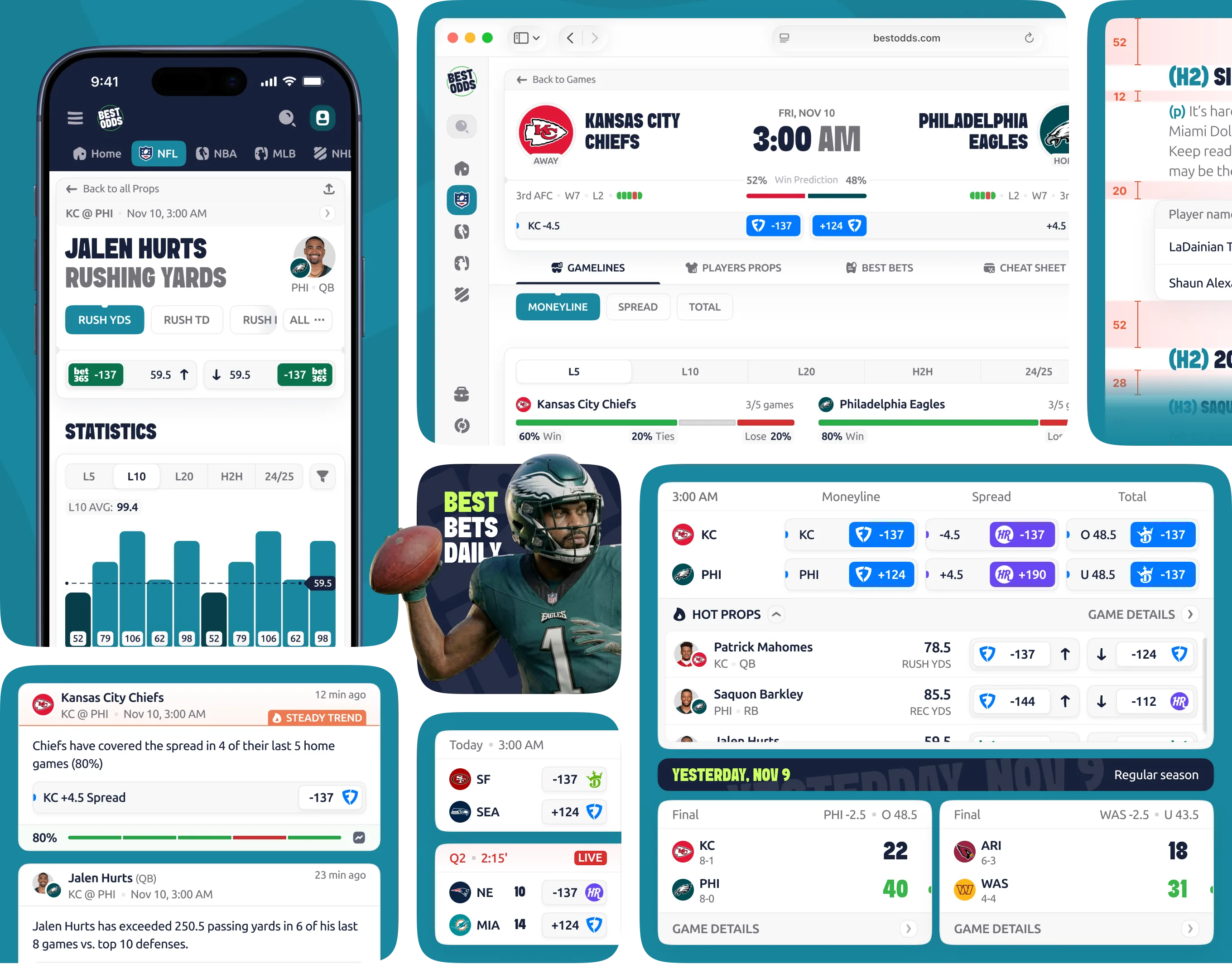
Written for owners of traffic-dependent odds, betting, and affiliate platforms weighing a redesign against the organic rankings that pay for it.
An odds comparison platform is really two products. The first is the interface bettors use – games, lines, props, sportsbook reviews. The second is the SEO structure that brings those bettors in. On an affiliate model, the second product is the revenue. BestOdds asked us to improve odds discovery and conversion paths – without compromising the organic traffic the existing site already earned.
That constraint shaped every decision. We couldn't treat the redesign as a blank canvas, because the canvas was already earning. Instead, we treated existing ranking assets and affiliate conversion paths as load-bearing walls – while reworking the information architecture and rebuilding odds discovery around them.
TL;DR
- BestOdds is a US sports betting odds comparison and intelligence platform that monetises organic search traffic through affiliate partnerships.
- We redesigned navigation and discovery, built deeper player and match pages, and added a dedicated US props section – while preserving the ranking assets and the organic traffic they earn.
- We kept odds comparison at the core, but built deeper player and match pages around it – and the approach proved efficient.
- We later reused the BestOdds product logic for a different product, adapting the structure and UX for another brand.
Odds Comparison at the Core, Depth Built Around It
Most comparison platforms compress everything into tables: one row per game, one column per sportsbook, done. That structure exists for a reason – it's cheap to maintain and it ranks. It also optimises for the platform's convenience, not the bettor's decision. A table tells you which book has the best line. It doesn't help you decide whether the bet is worth taking.
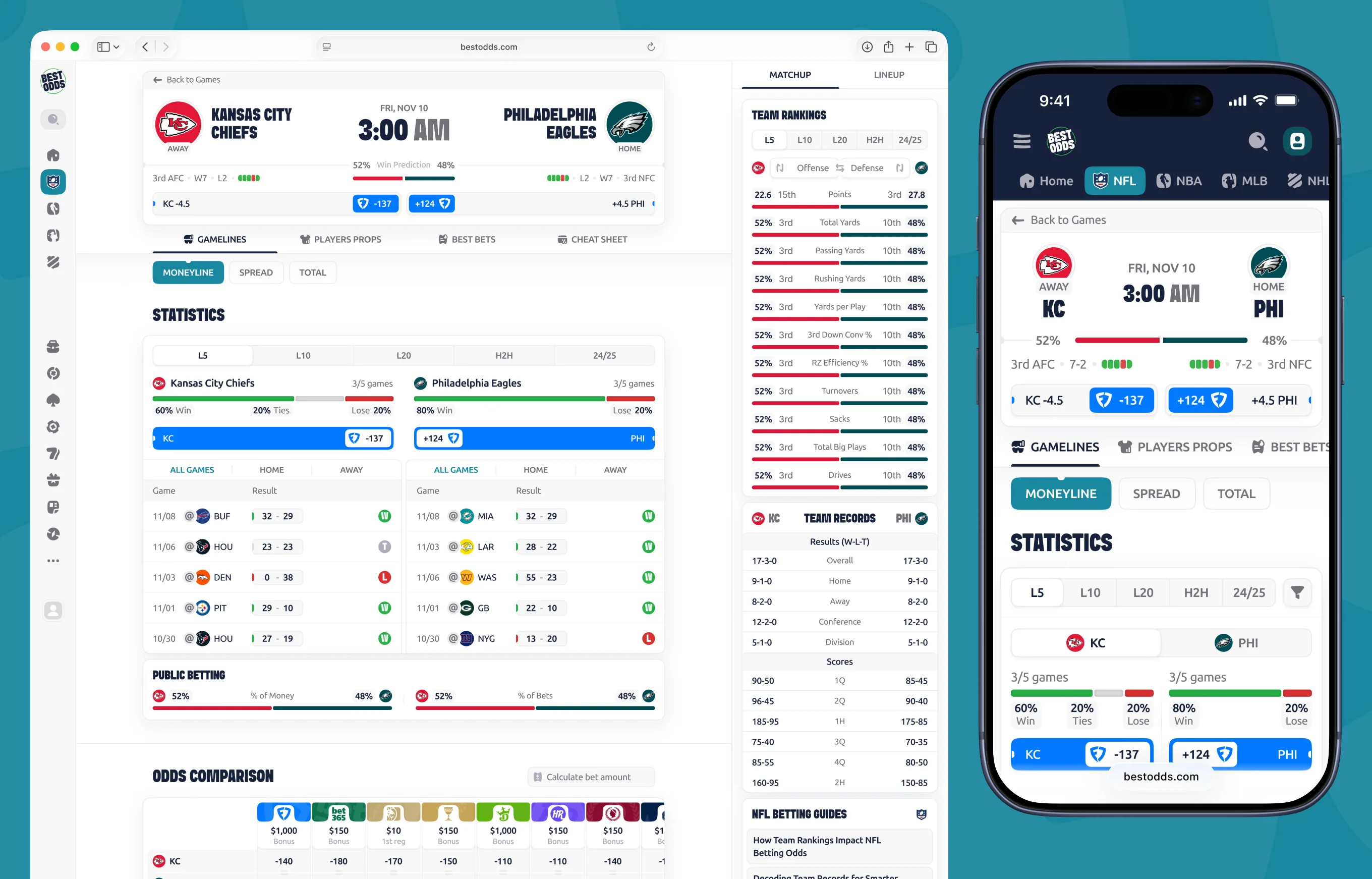
We kept odds comparison at the core, but built deeper player and match pages around it: scoreboards, game pages with props, best bets, and cheat sheets, and player stat pages that give a single athlete's markets room to breathe.
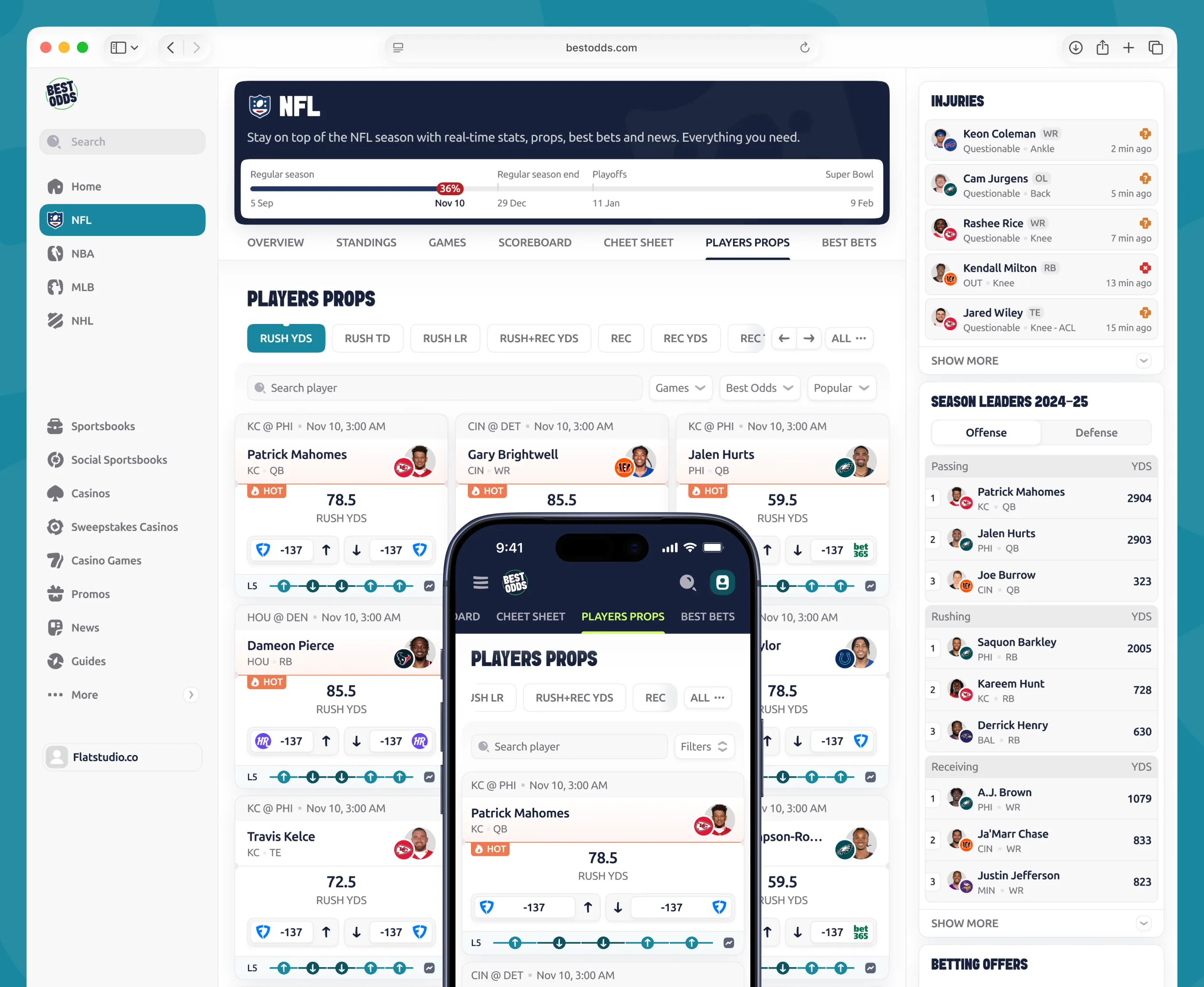
We'll be honest about the trade-off: deeper pages cost more. More templates, more states, more editorial upkeep, more edge cases – a baseball game page doesn't behave like a basketball one, and an empty state on a quiet Tuesday needs as much design as a Sunday slate. But depth is what lets an odds product become an intelligence product, and for BestOdds the approach proved efficient – engagement mechanics finally had somewhere to live.
How Do You Redesign a Website Without Losing SEO?
You keep what ranks and redesign inside it. In practice that means three moves: identify the pages and URL structure earning organic traffic and treat them as constraints, not candidates for reinvention; redesign templates, discovery, and conversion paths within that structure; and stage changes so search engines see a consistent site throughout, not a new one overnight.
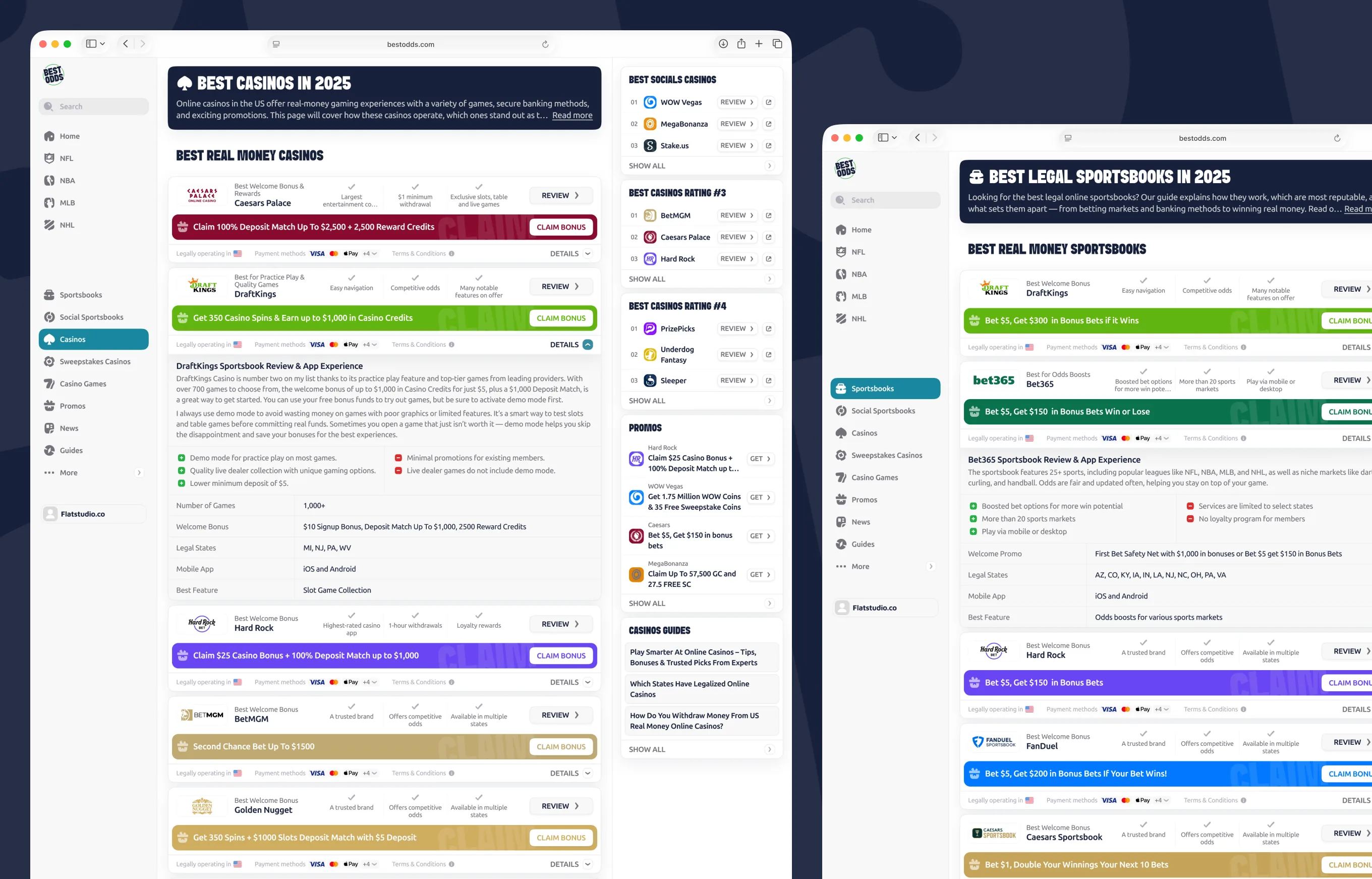
For BestOdds, the ranking assets were clear: editorial content, guides, and sportsbook and casino reviews – page types that had earned authority over years. The conversion assets were the affiliate modules woven through them. We didn't rebuild those page types from zero. We restructured how users move between them, how odds data surfaces inside them, and how a reader travels from a guide or a review to a live comparison – improving discovery and conversion paths without breaking the structure that funds the platform.
This is the part most redesigns get wrong. The visual layer is the cheapest thing to change and the least likely to move revenue. Structure is where redesigns create value – and where they destroy it.
A Design System the Content Team Can Ship With
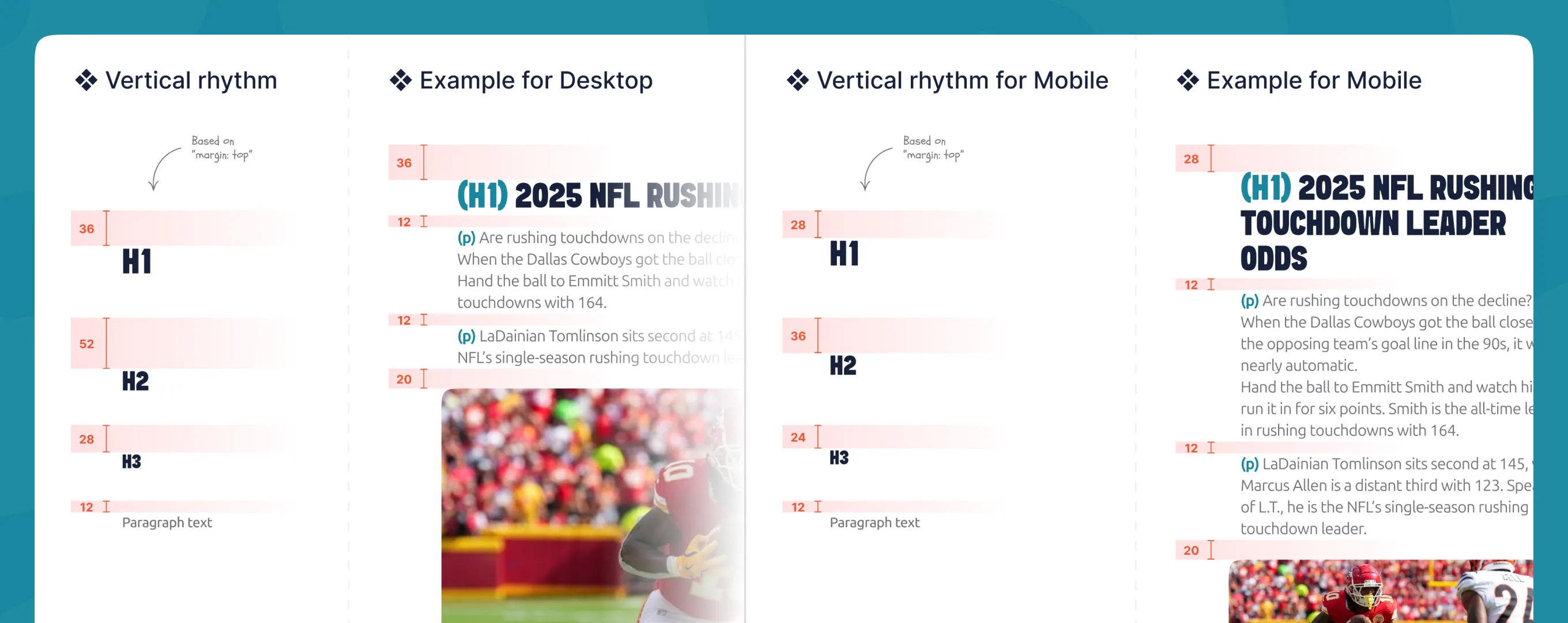
The redesign spans a wide surface: home, sports sections, scoreboards, best bets, props tables, casino and sportsbook reviews, casino game pages, promos, news and articles, author pages, guides, glossary, search, and the unglamorous rest – empty states, 404s, contact pages. On a traffic-dependent platform, that breadth is the point. Template consistency is what lets a content team ship new ranking pages without a designer in the loop, and typography and colour systems are what keep thousands of data-dense pages readable instead of chaotic.
A Product System Built to Evolve
The same client later asked us to reuse the BestOdds product logic for another platform. We used the existing structure and UX as a starting point, while adapting the navigation, visual system, and content hierarchy for the new product. Reusing a working product system is a very different job from designing a second product from scratch – and considerably cheaper than building twice.
This engagement runs as ongoing product work rather than a one-off facelift – the model we use for live products that can't stop earning while they evolve. If your platform is in the same position – live, ranking, and structurally stuck – that's exactly what our Dedicated Product Team model exists for. When the root cause of underperformance isn't clear yet, a UX Audit & Product Discovery engagement is the safer first step. We work in this vertical constantly – more on our sports analytics product design page.
The full visual breakdown – design system, props tables, game pages, and the rest – is in the BestOdds case study. If your platform earns its traffic and you're weighing a redesign, talk to us before you touch the structure.

Frequently Asked Questions
Does redesigning a website affect SEO?
Yes – almost always, and in both directions. Changing URLs, deleting ranking pages, or restructuring content without a migration plan can drop rankings within weeks. A redesign planned around existing SEO assets can preserve rankings and improve engagement signals. The risk isn't the redesign itself; it's redesigning without knowing which pages earn your traffic.
How do you redesign a website without losing SEO rankings?
Treat ranking pages and URL structure as constraints. Benchmark organic traffic before starting, keep URLs stable where possible, preserve the pages and URLs that rank, and redesign templates and navigation around them. Stage changes rather than launching everything at once, so search engines see consistent signals throughout the process.
Can you redesign an odds comparison or affiliate platform like BestOdds?
Yes. Betting and iGaming platforms are our strongest vertical – odds comparison, player props, sportsbook reviews, and affiliate products included. We design within SEO and affiliate monetisation constraints rather than around them, which is the difference between a redesign that grows a traffic-dependent business and one that resets it.
Can you reuse an existing product's structure for a new platform?
Yes. The same client later asked us to reuse the BestOdds product logic for another platform: the existing structure and UX became the starting point, while navigation, visual system, and content hierarchy changed for the new product. Reusing a working product system is substantially faster and cheaper than designing from scratch.
How long does a redesign like this take?
It depends on scope, and we'd rather scope it than guess. Work like BestOdds runs as an ongoing retainer, redesigning section by section so the live product keeps earning throughout. A structured audit first gives you a prioritised backlog and a realistic timeline before committing to a full engagement.
