


















We designed it as a social forecasting hub, covering user research, information architecture, and a full design system. Users without advanced crypto or finance knowledge needed to understand tips, forecasts, and portfolio logic – and the platform made that monetisation model understandable without live trading risk.
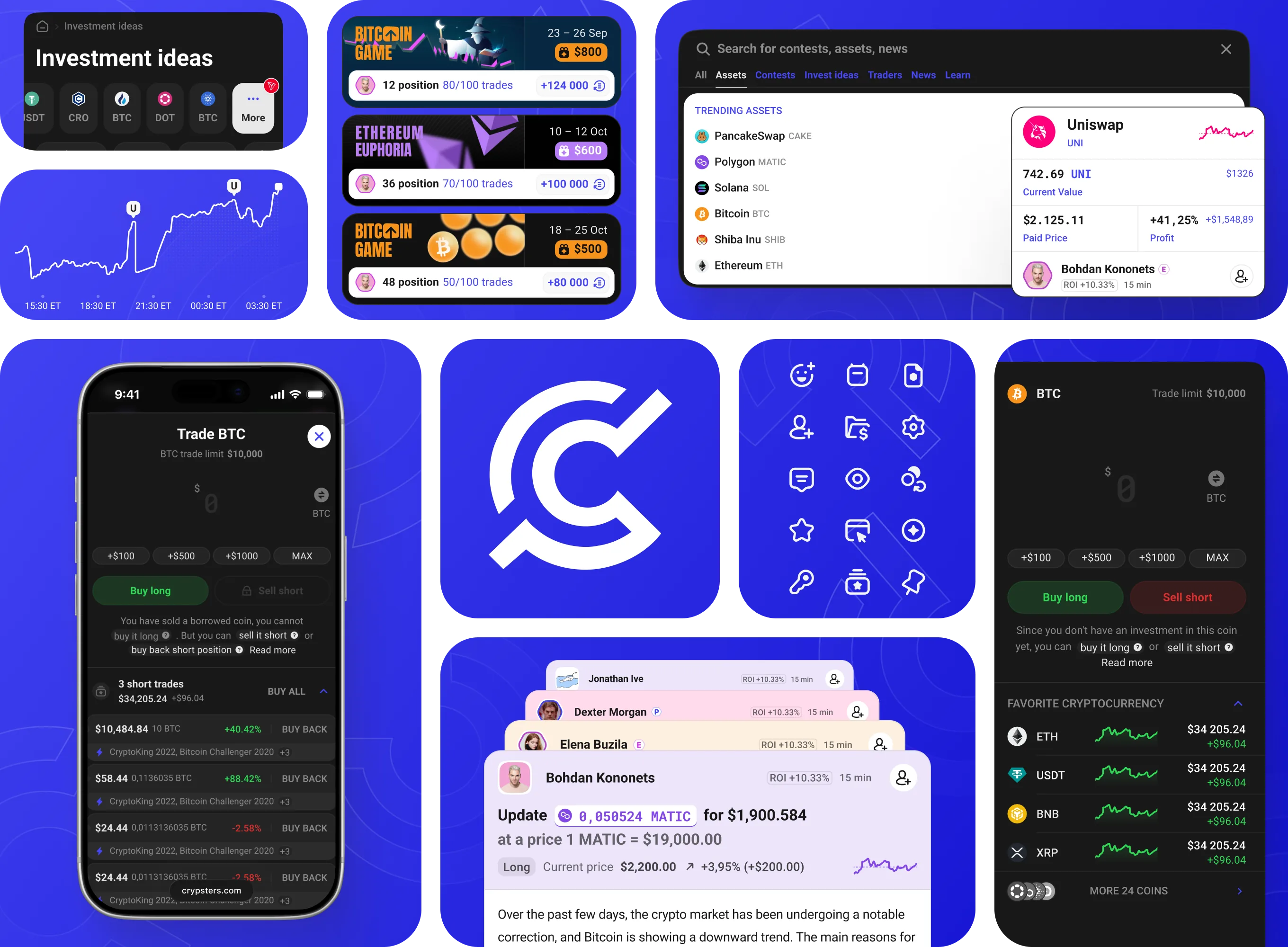
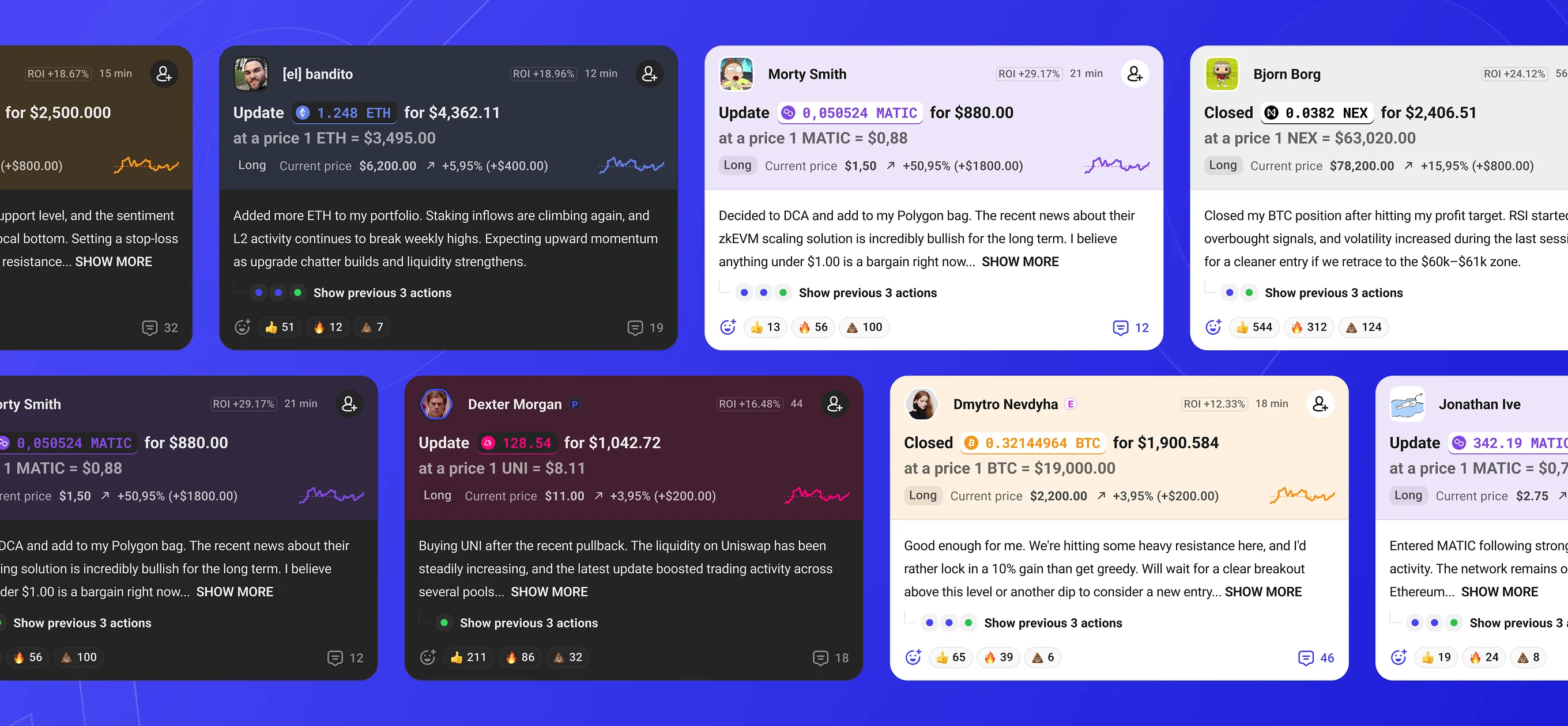
A collage of Crypsters' core screens — investment idea cards, contest entries, trade modals, and the trader feed. Together they form the social forecasting hub for crypto insights at the center of this Fintech product.
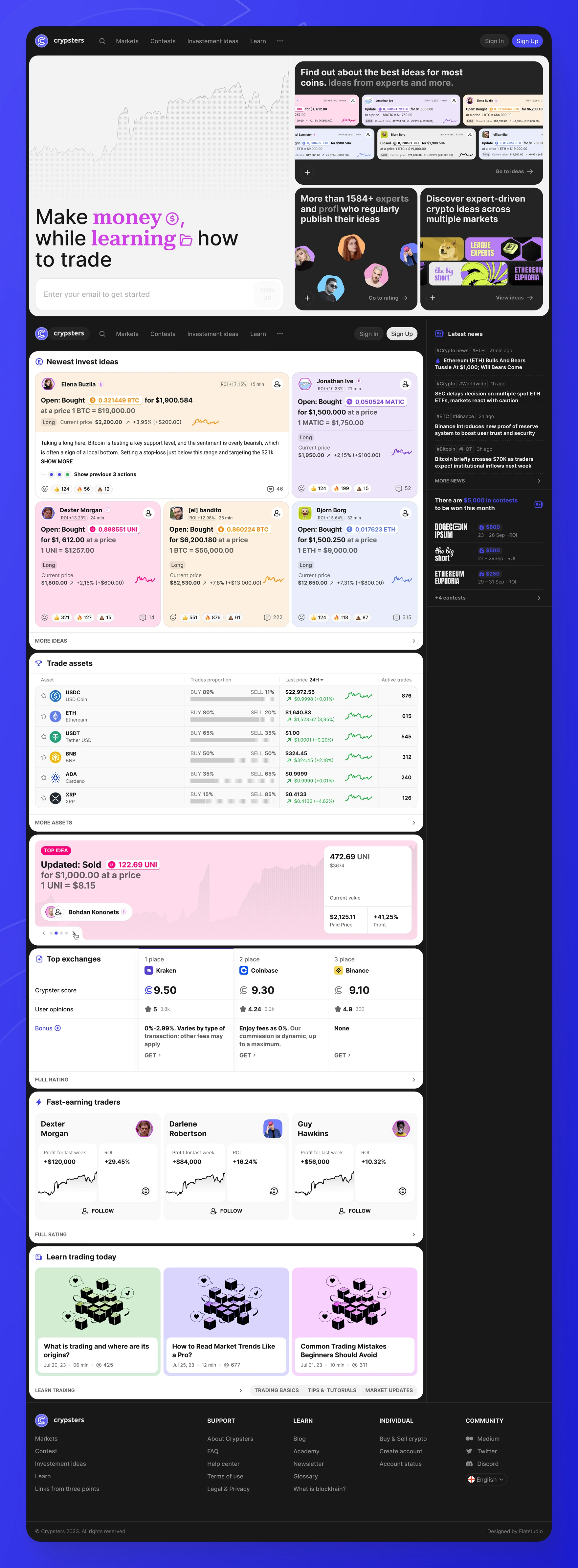
The public homepage before sign-up, showing live investment ideas, a top exchanges comparison, and beginner trading articles. Real activity is visible up front, so new traders see value before creating an account.

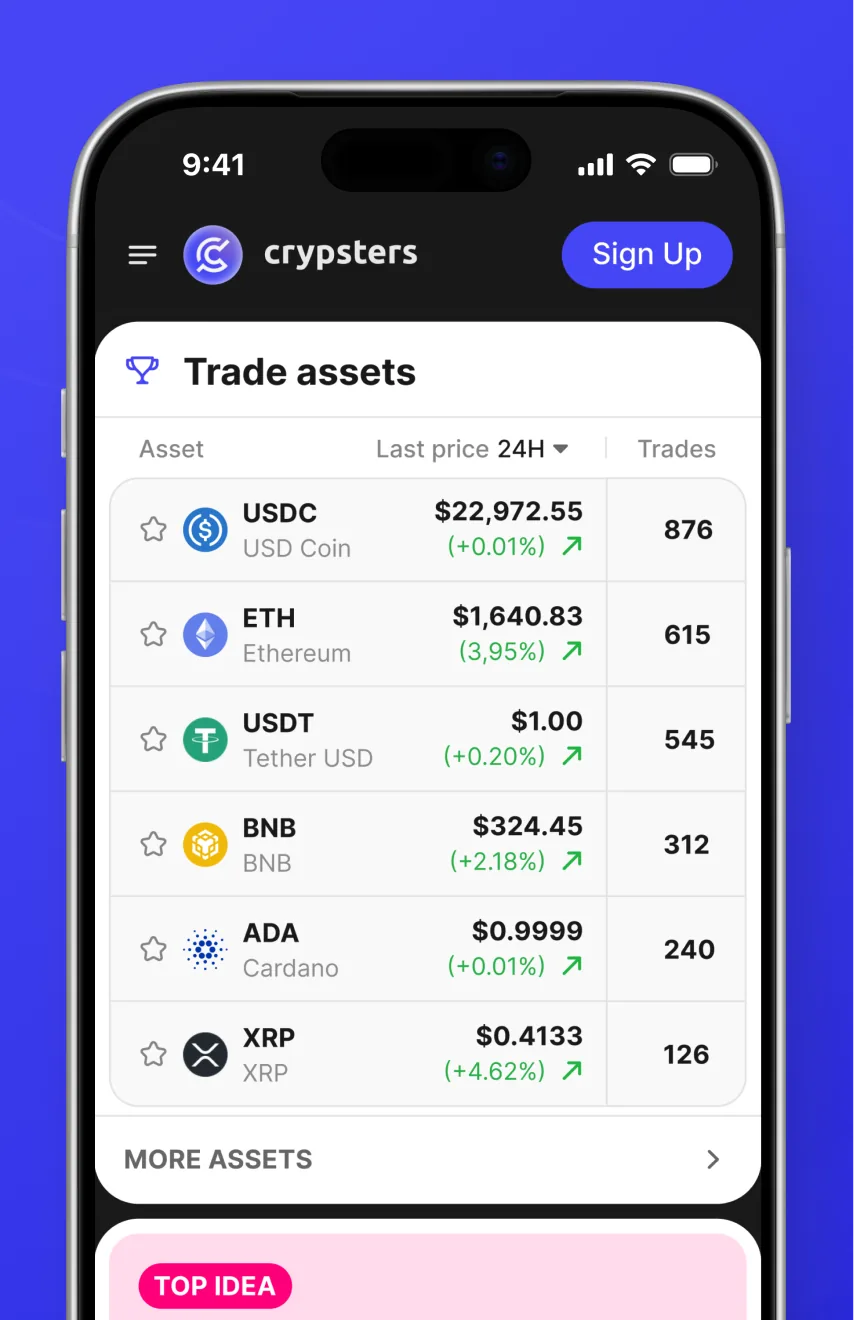
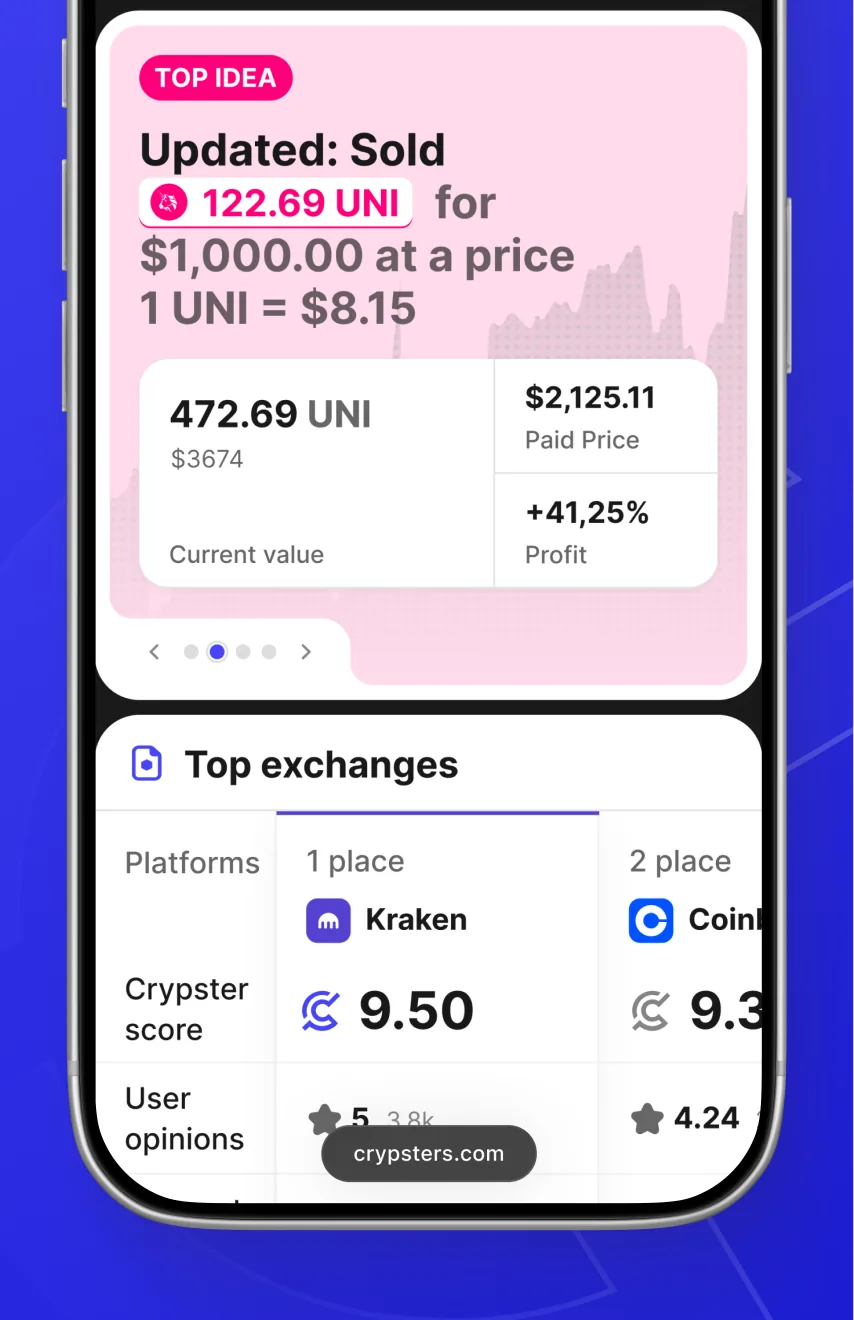
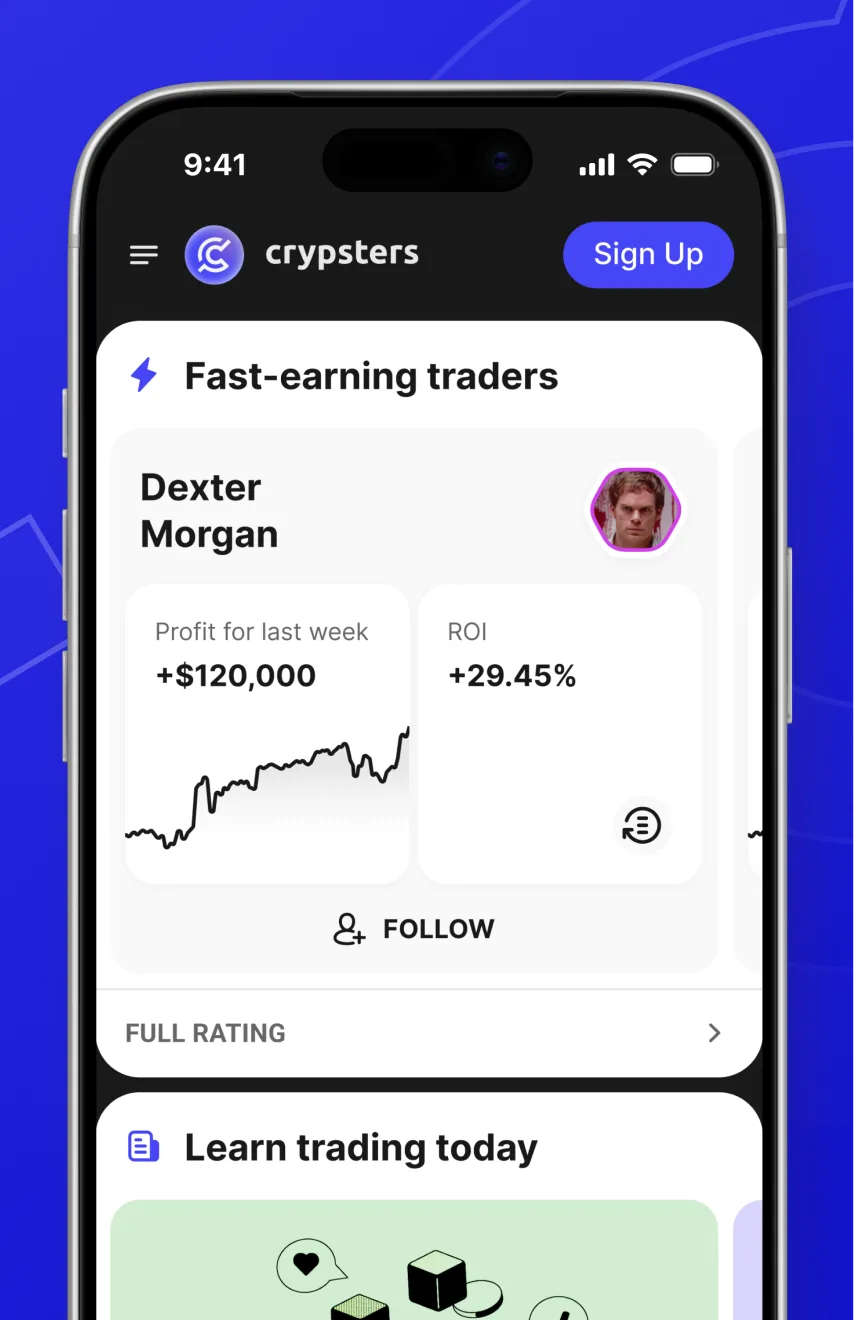
The same guest homepage restructured for mobile: trade assets, the top idea callout, and fast-earning traders stack into a single scrollable column instead of the desktop's multi-panel layout.
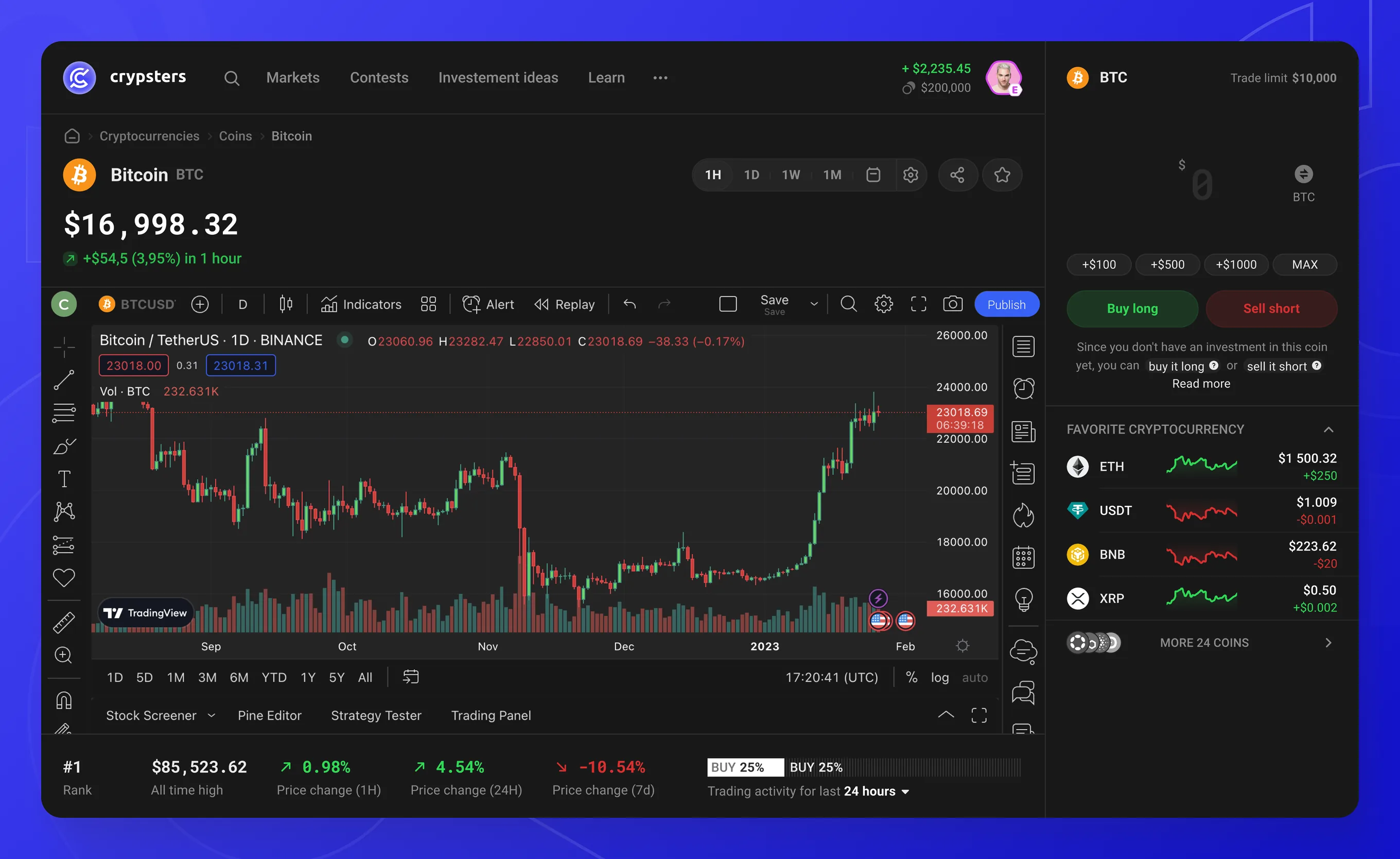
Each cryptocurrency in Crypsters gets its own page pairing a live price chart with a written market prediction. Contests tied to that specific coin surface directly below the chart.

A Trading View chart sits beside the buy long / sell short panel, so a trade can be placed without leaving the price view. An inline tooltip explains short selling for first-time traders.
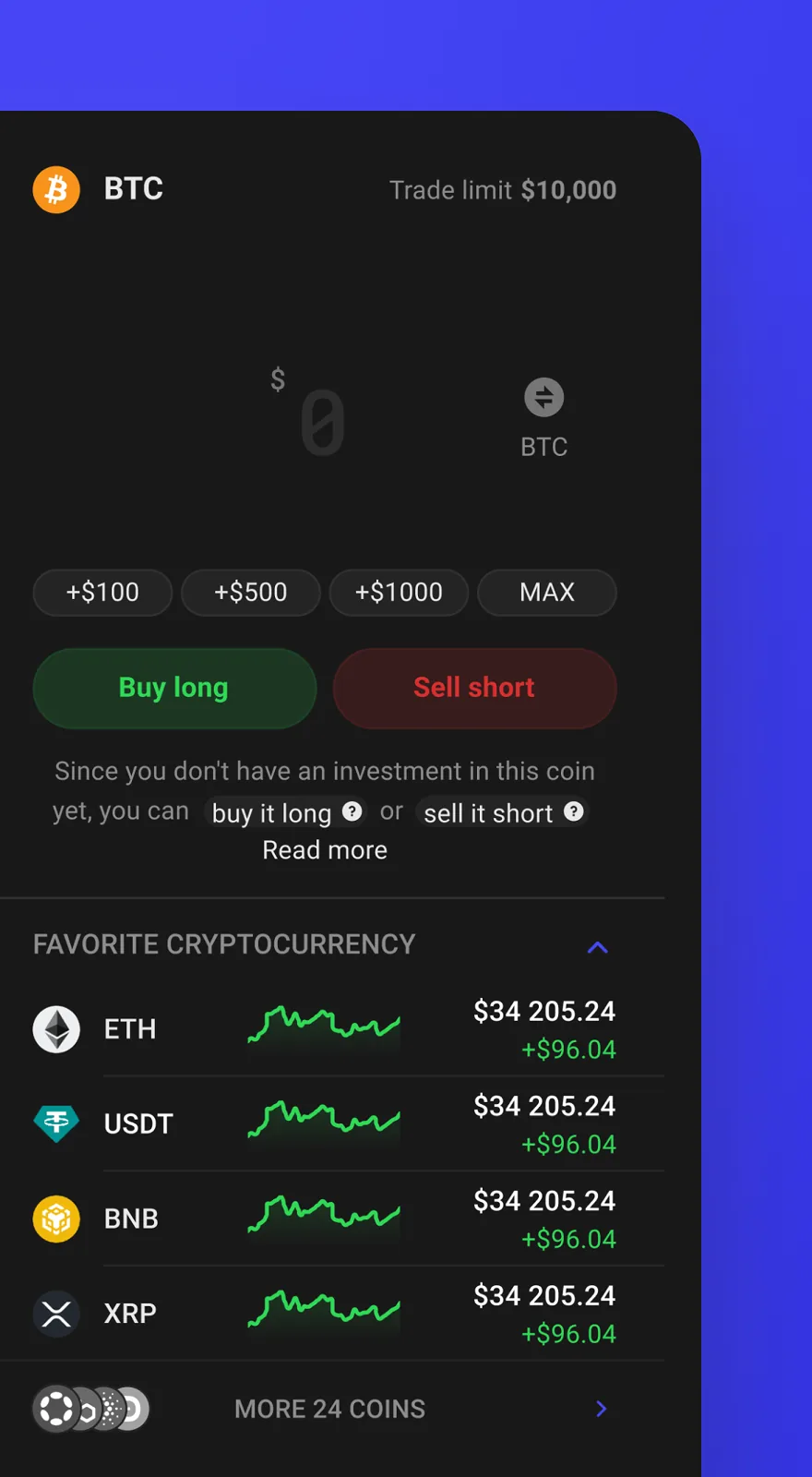
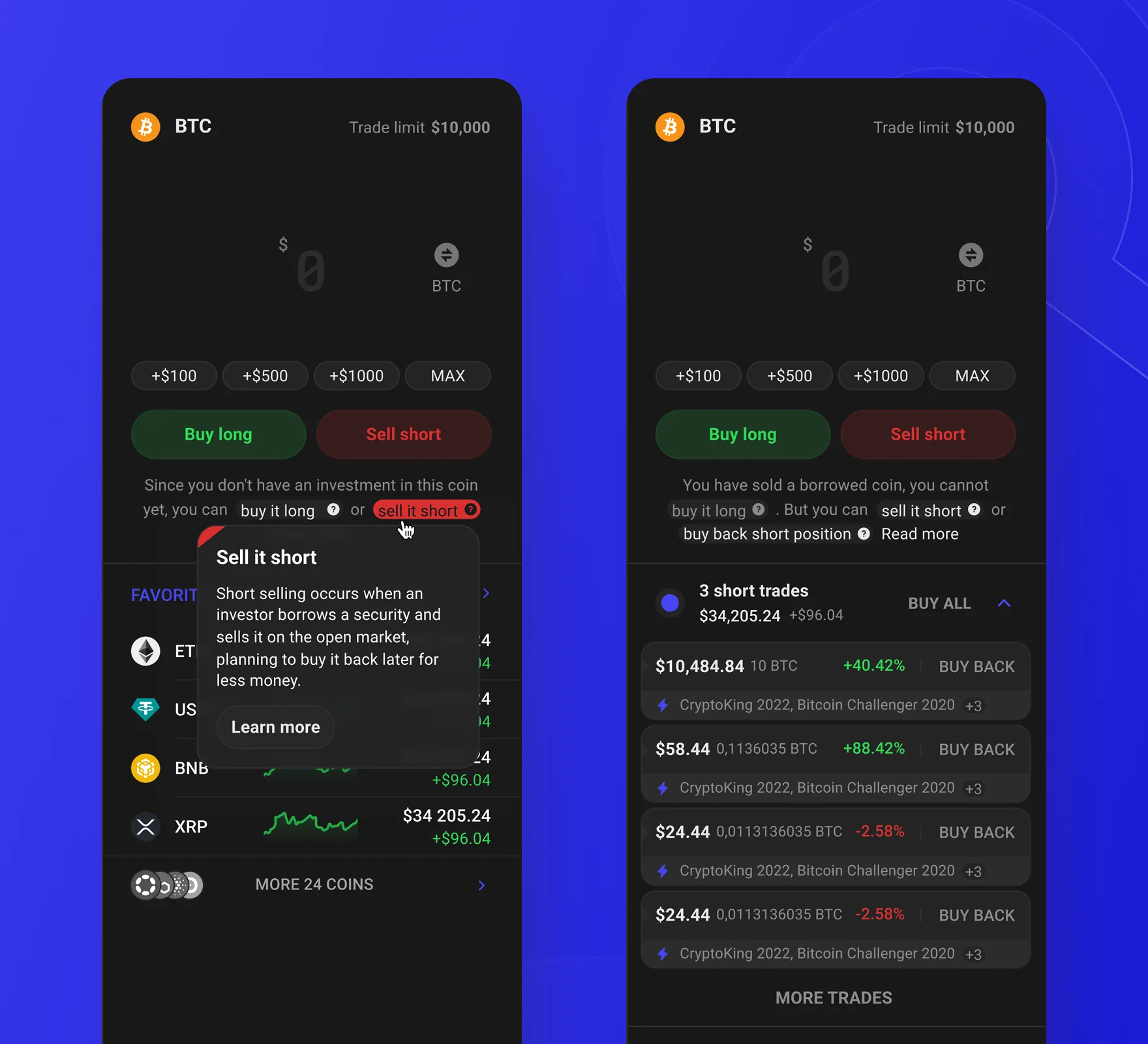

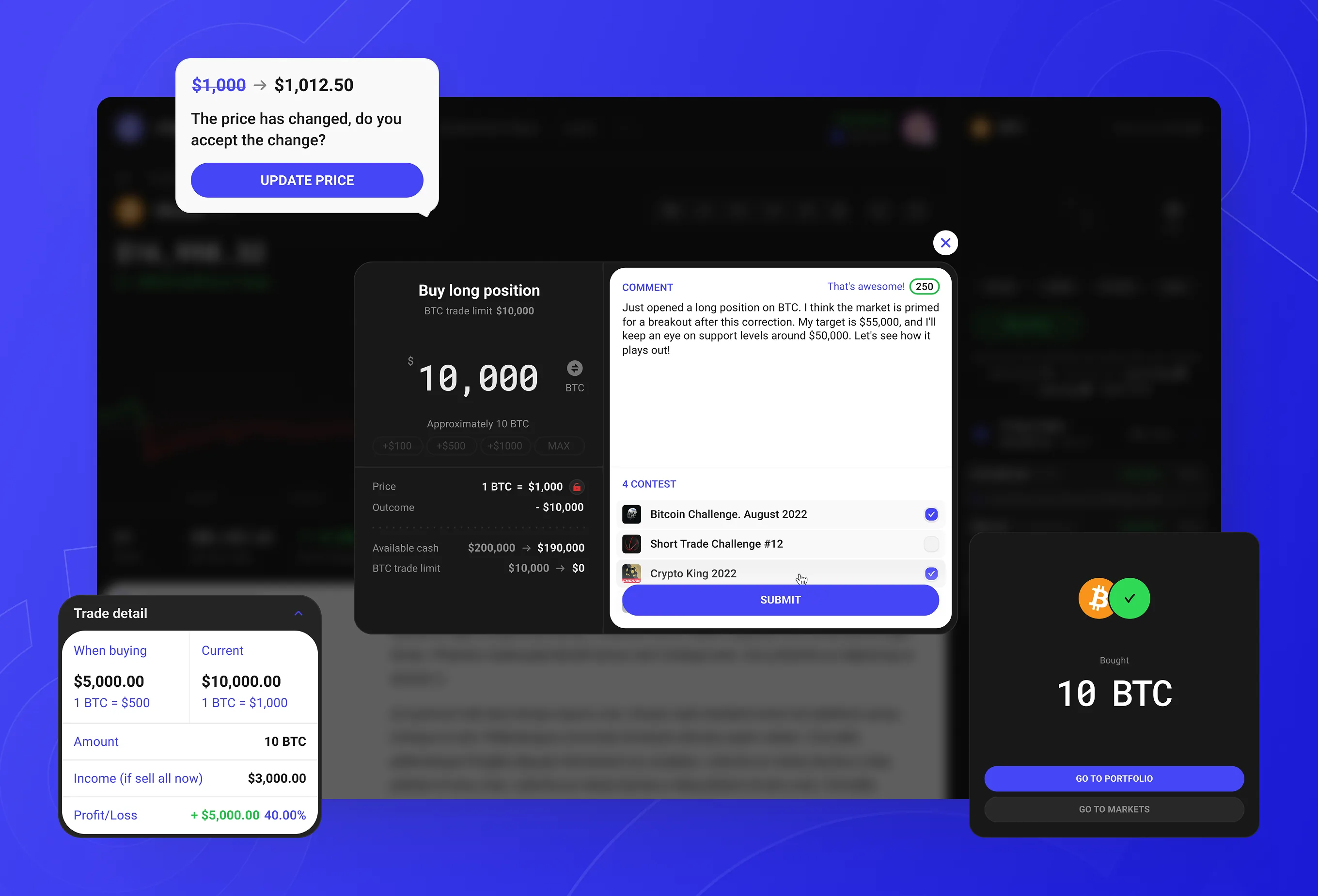
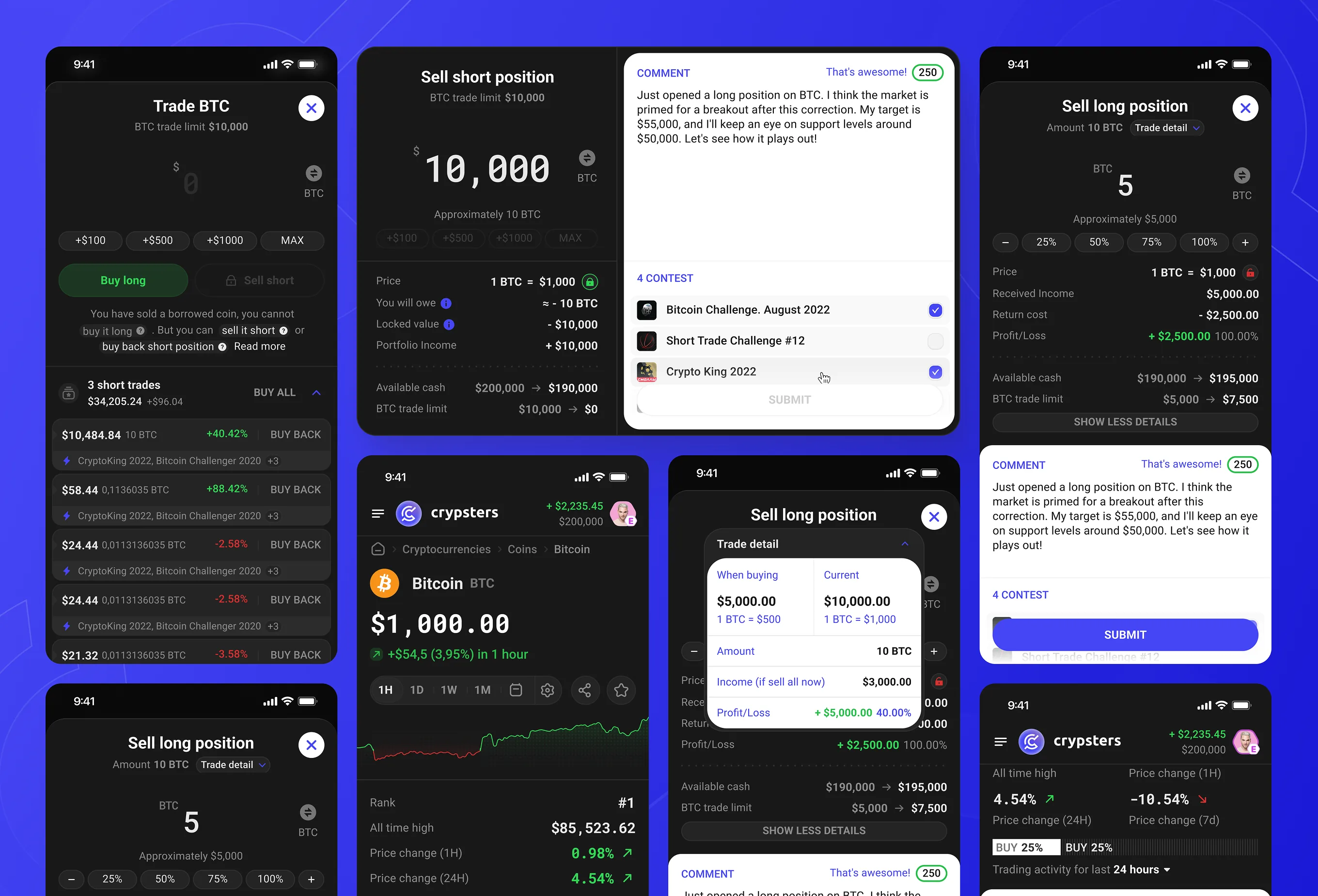
Placing a trade opens a price-change confirmation, then an amount entry with an optional comment tagged to active contests. A trade detail modal shows entry price, current value, and profit or loss before submission.
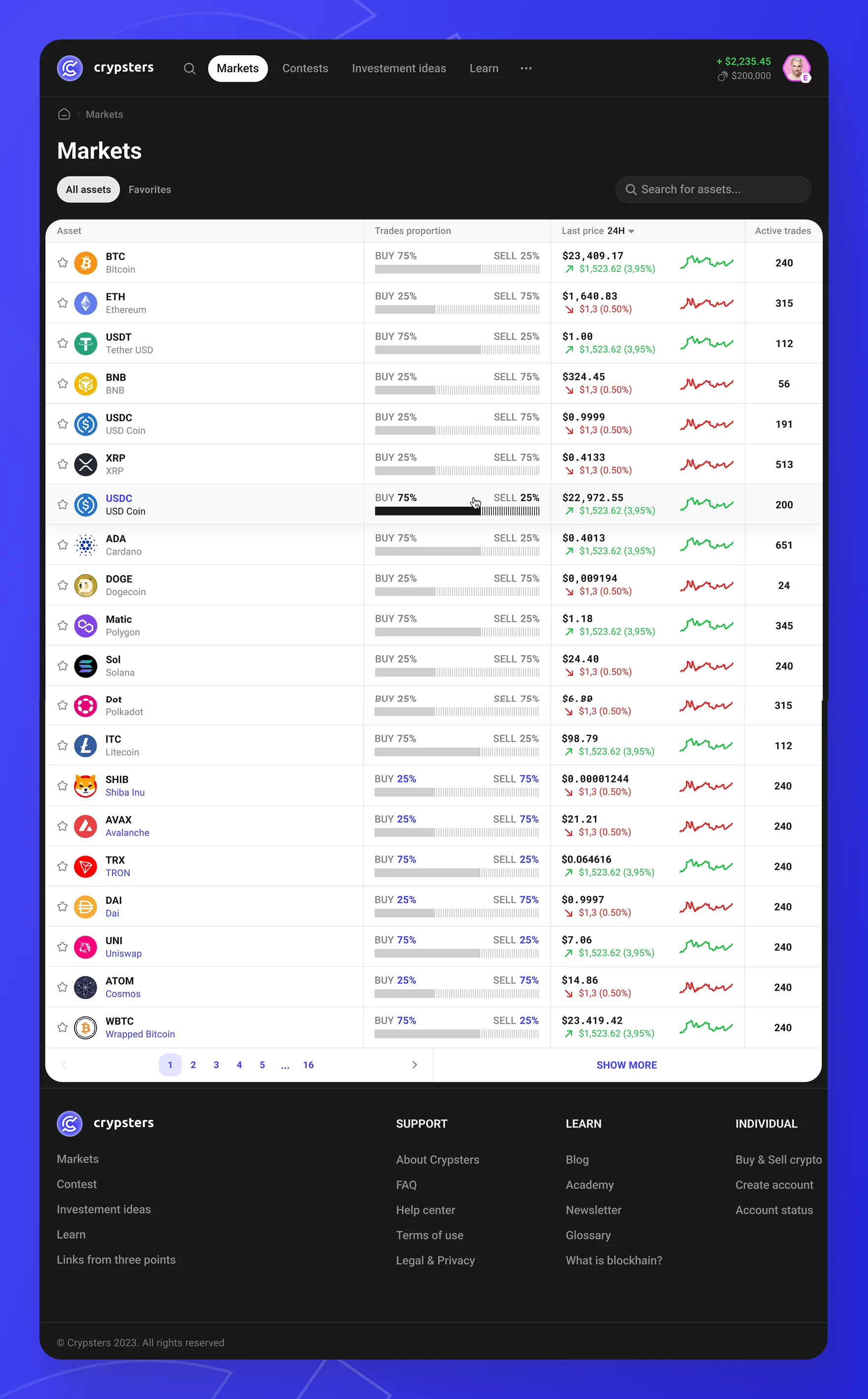
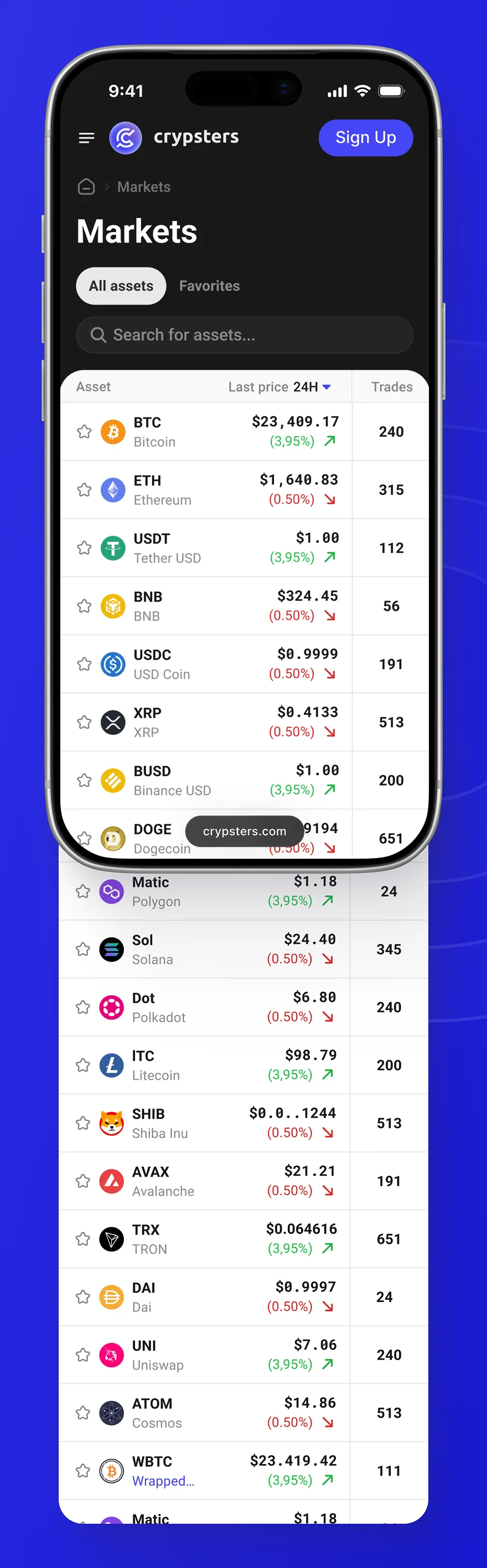
A sortable table lists every tradeable asset with 24-hour price change, buy/sell split, and active trade count. Search and a Favorites tab narrow dozens of coins down to what a trader actually follows.
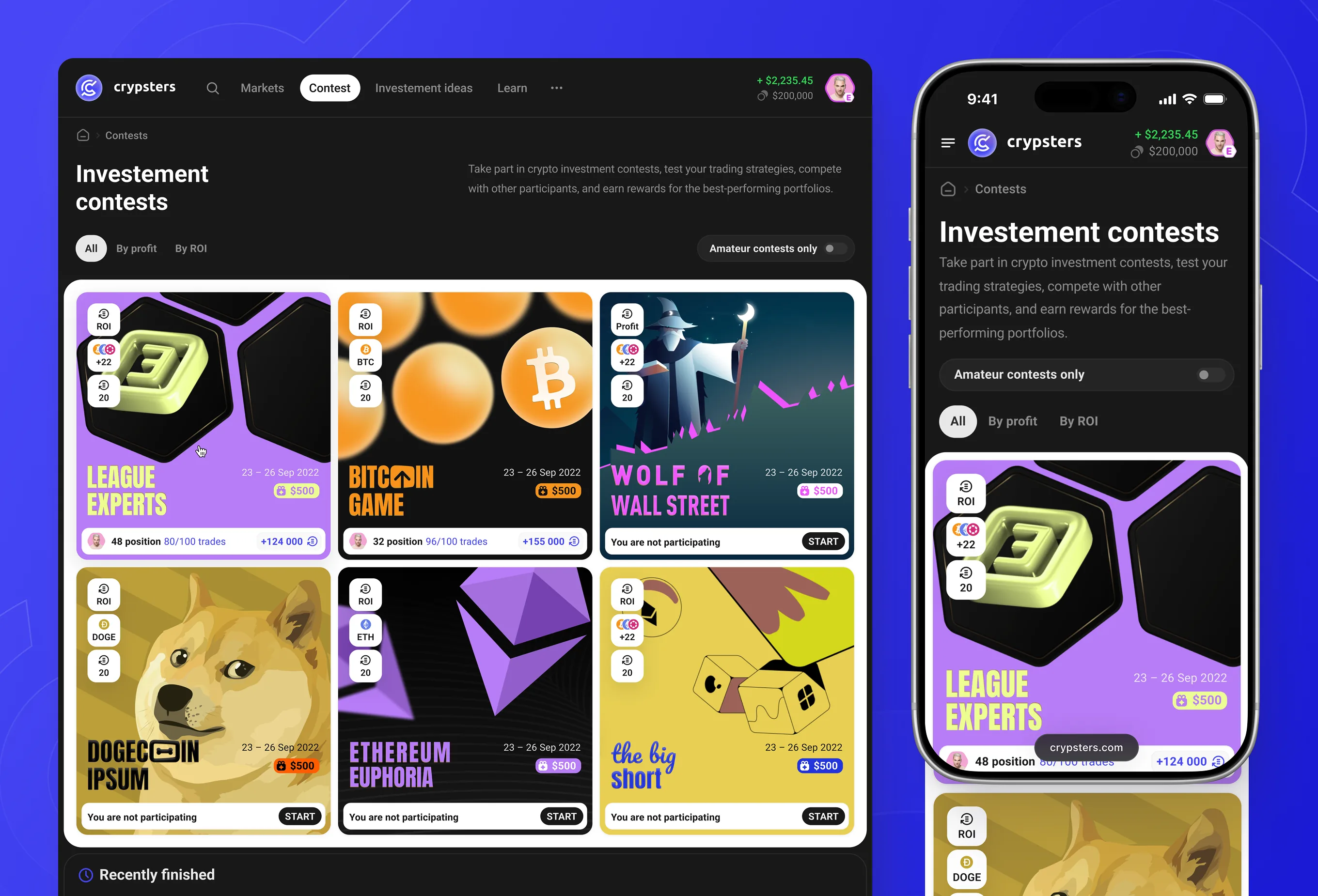
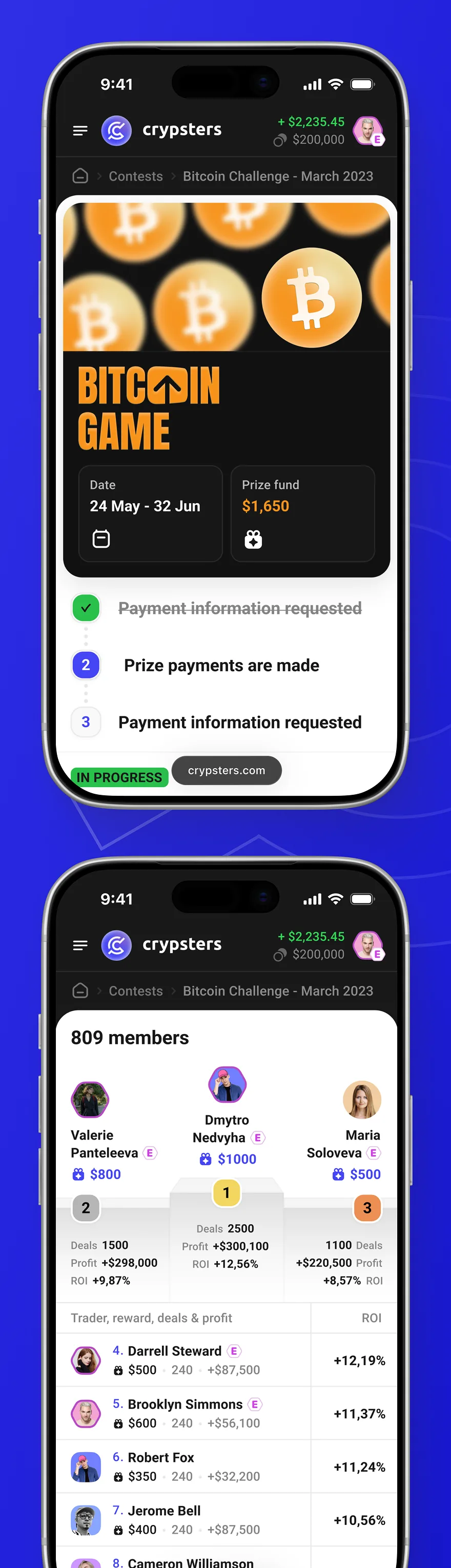
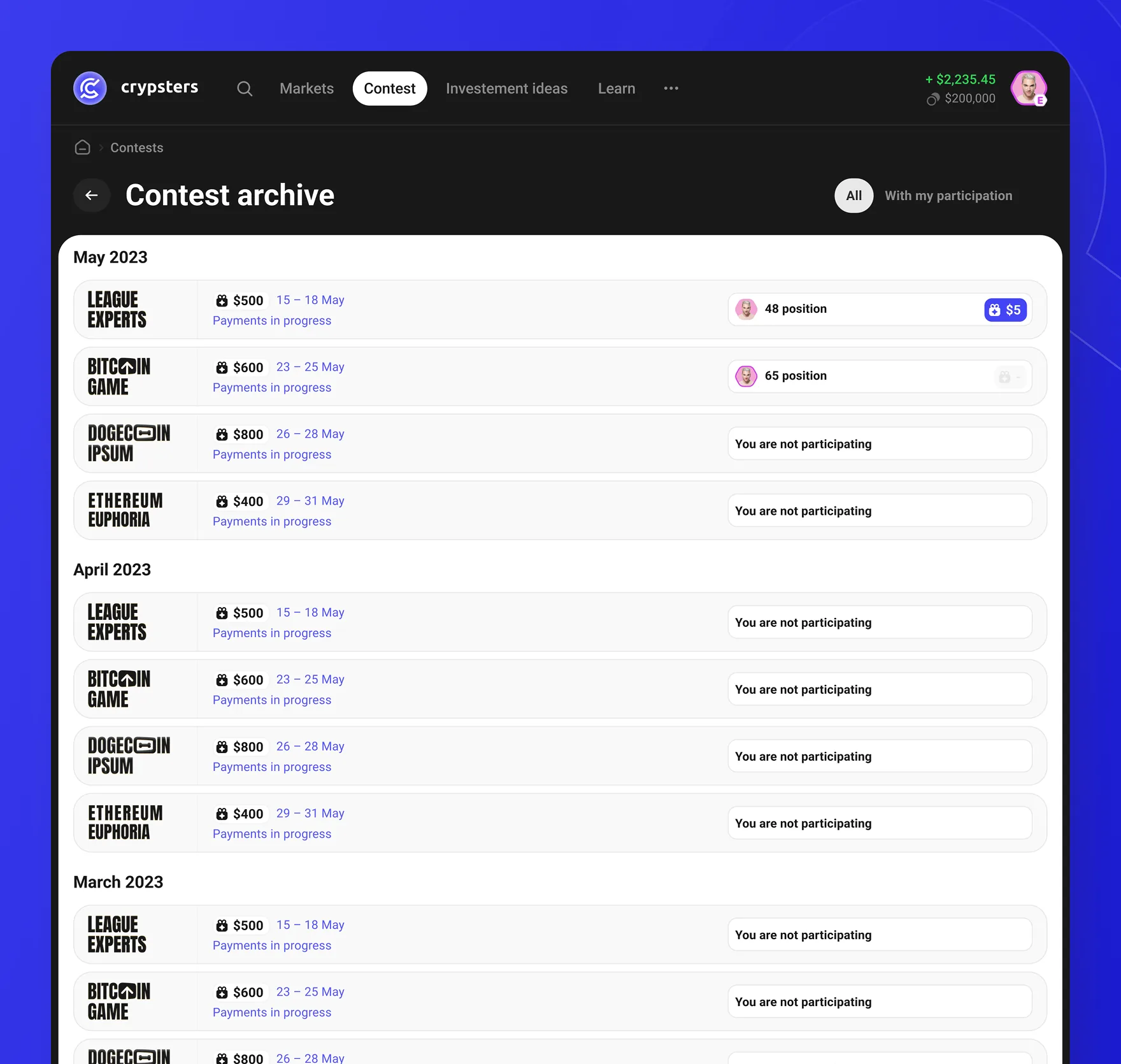
Time-boxed contests let traders compete on ROI within a fixed prize pool, ranked on a live leaderboard by profit and deals closed. A searchable contest archive keeps past rounds visible after they end


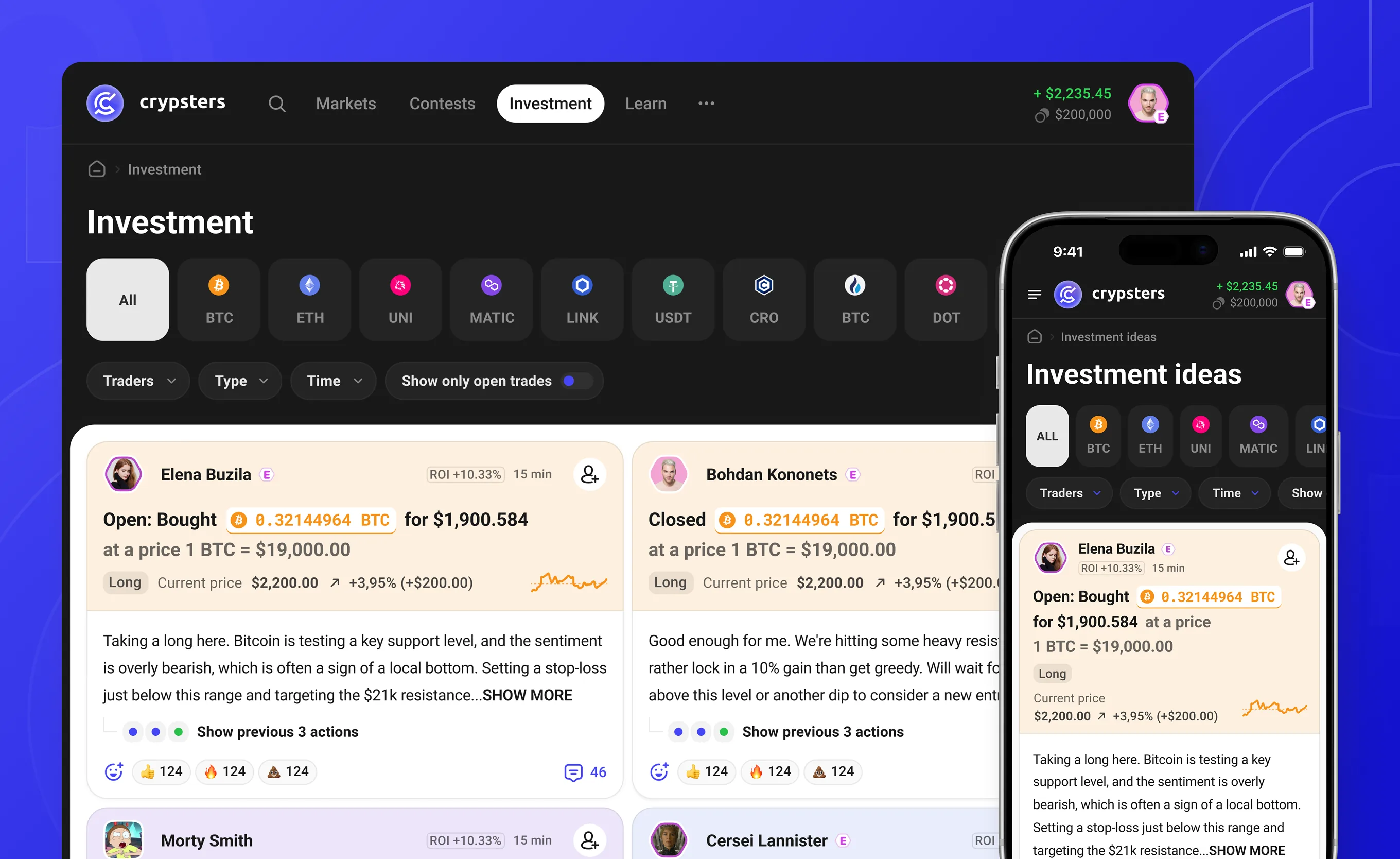
A public feed streams every trader's open and closed positions with their written reasoning, filterable by trader, asset, or open-only status. This feed is the social forecasting hub for crypto insights in daily use.
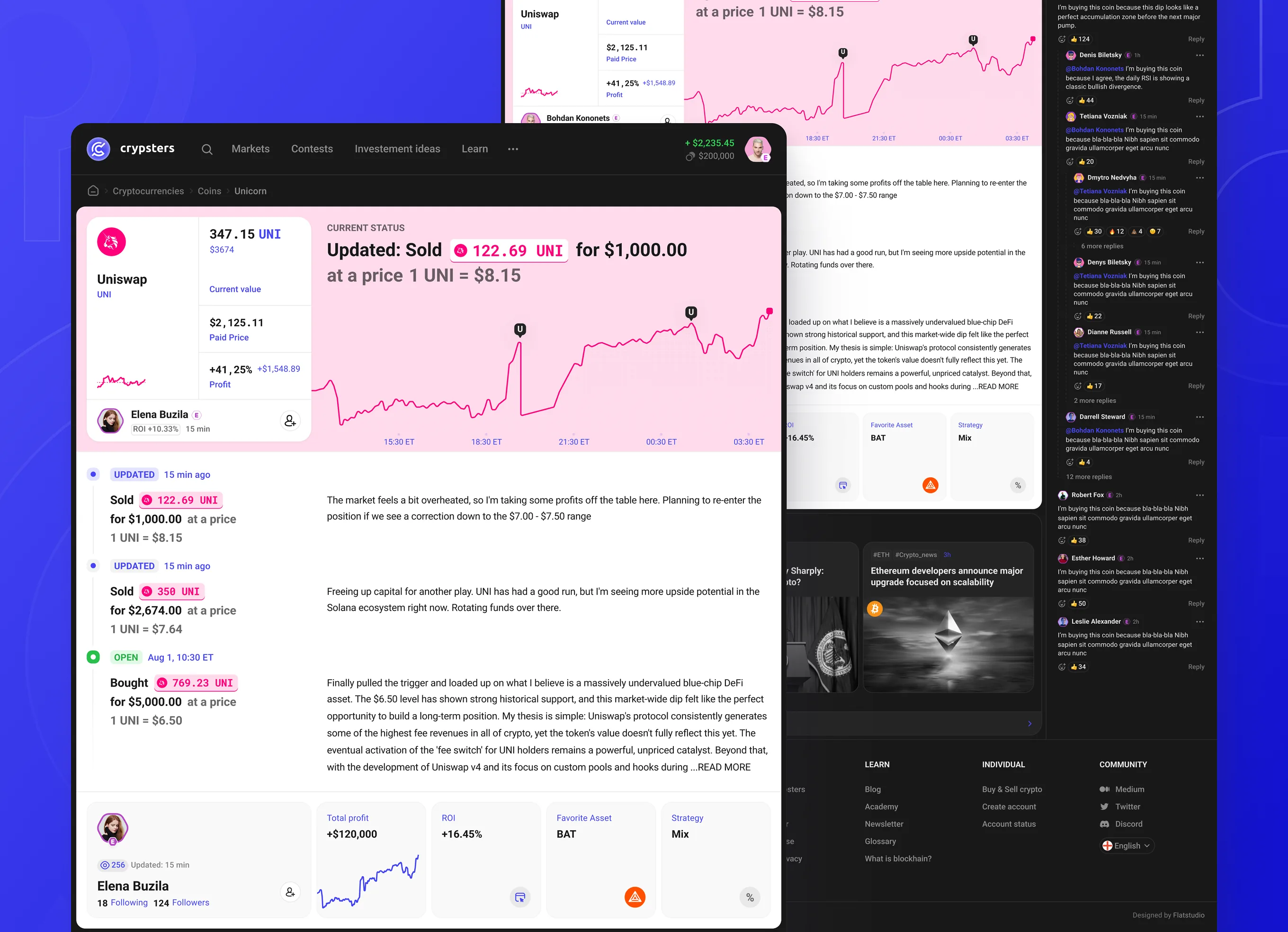
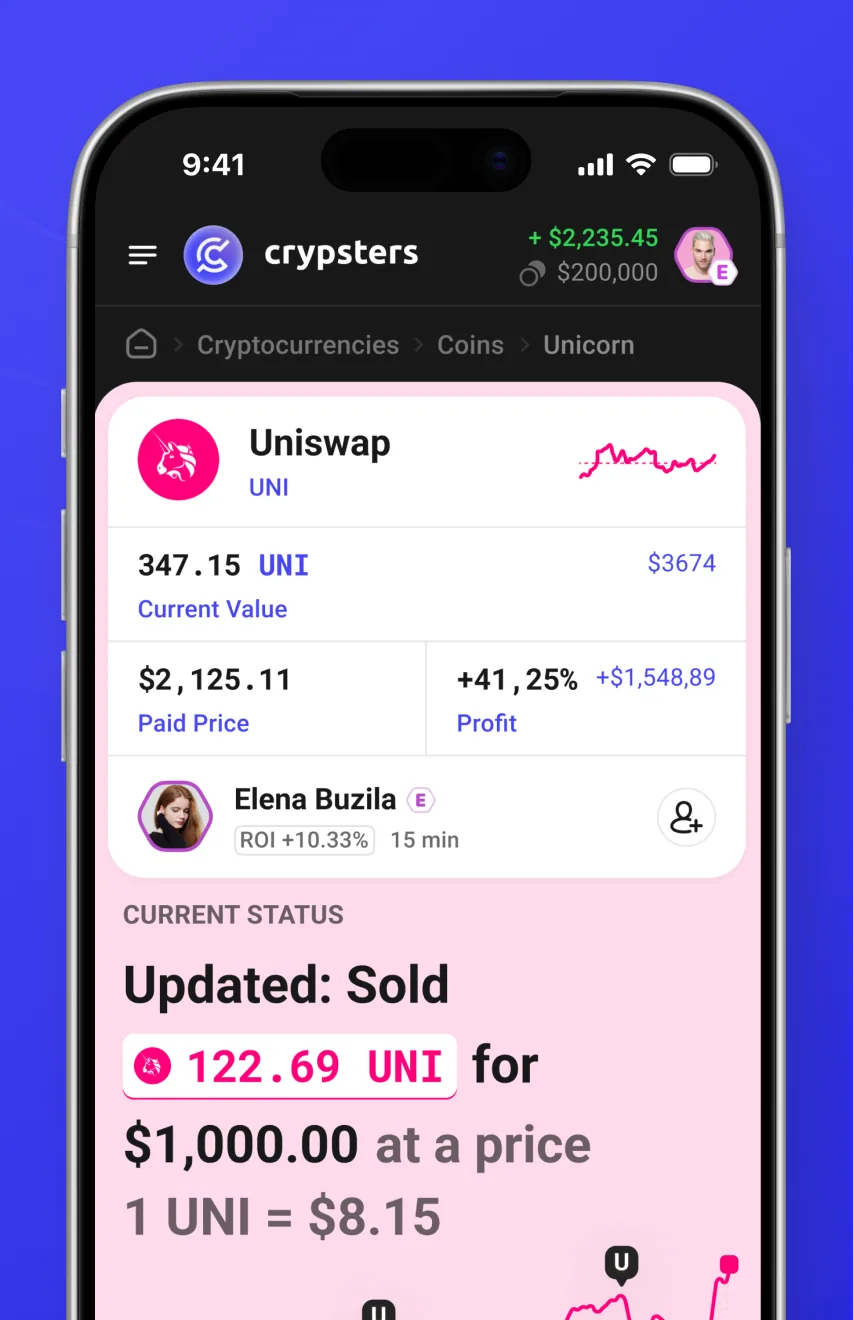
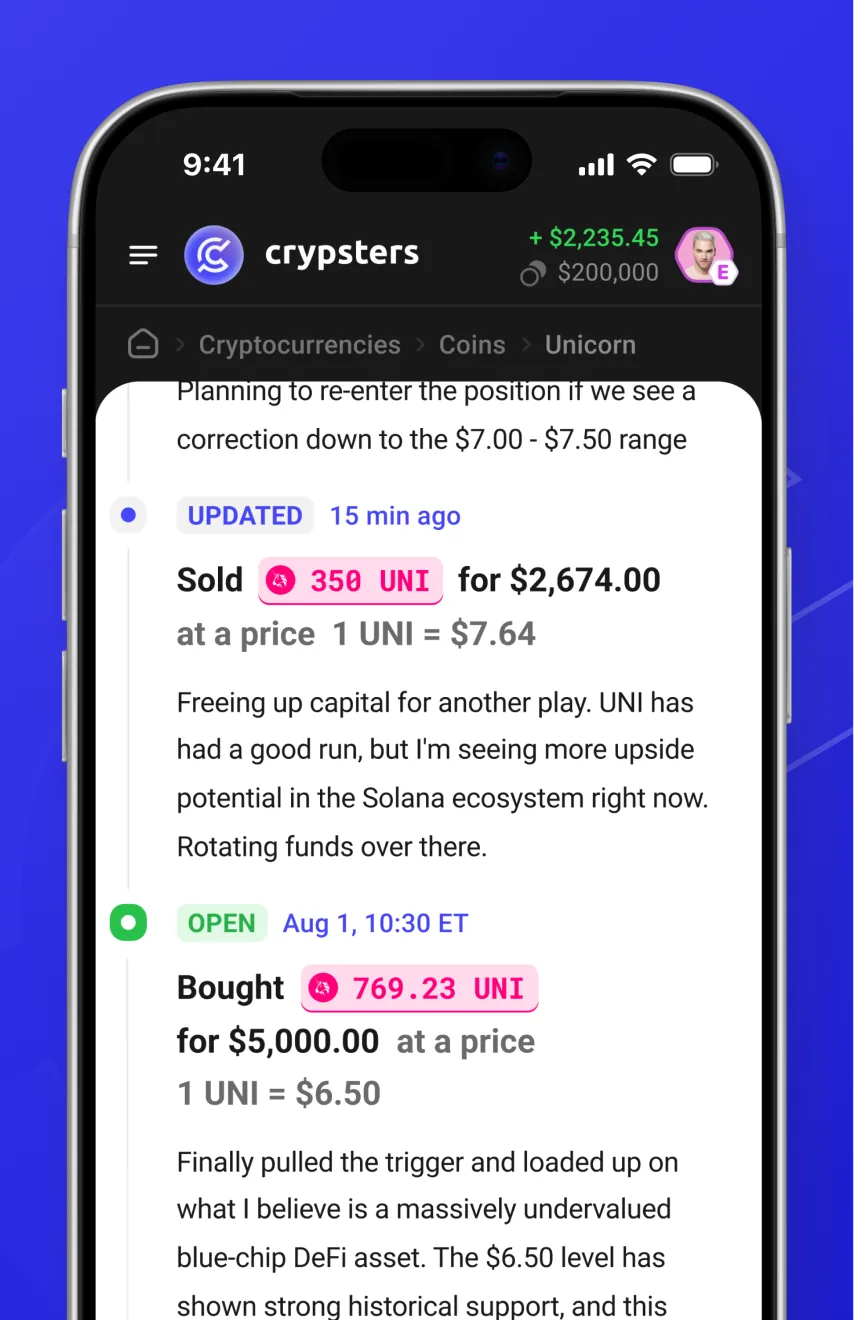
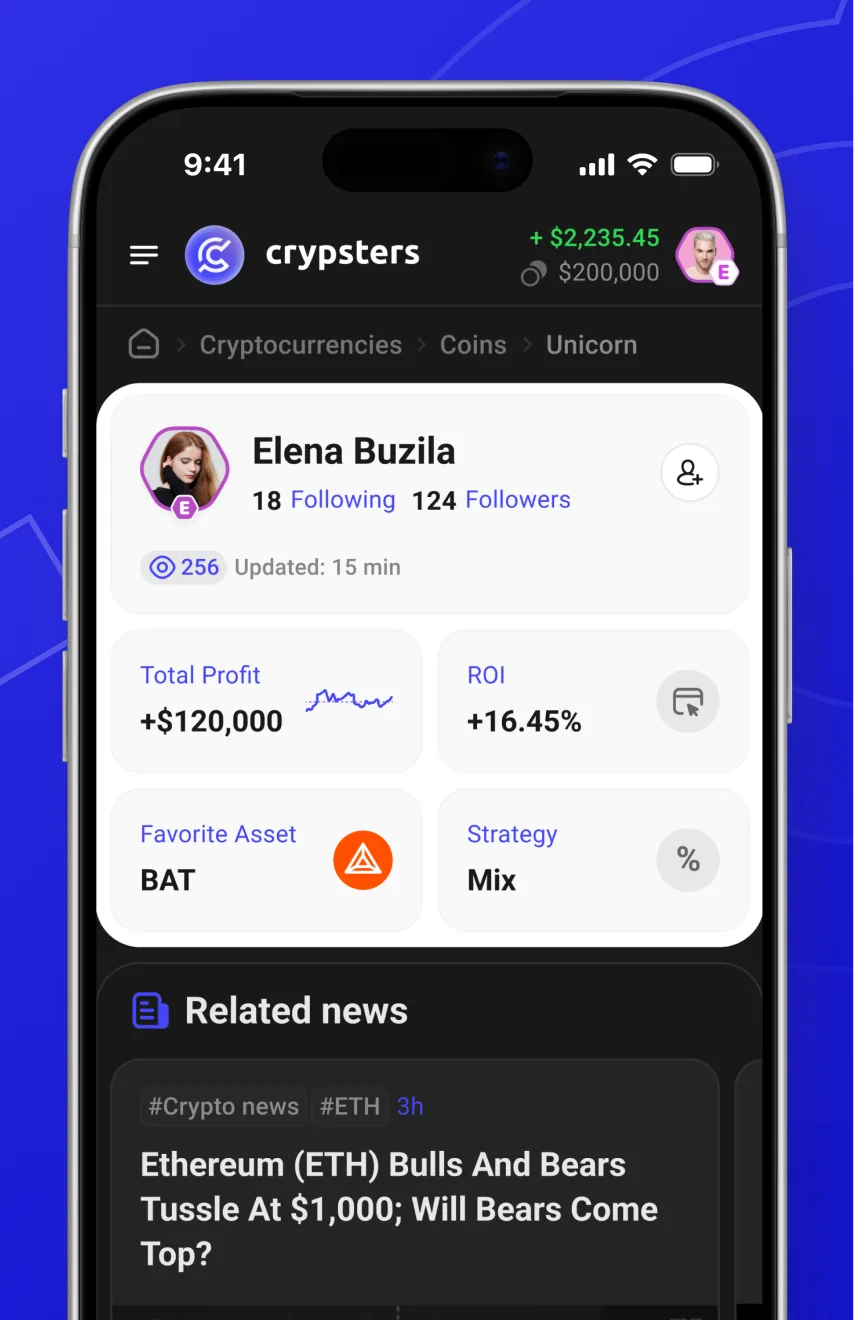
A coin page pairs the price chart with the expert's own trade log — every buy and sell marked on the timeline with the reasoning behind it. Profit, ROI, and strategy sit next to the tips, so followers judge advice by a visible track record, not a screenshot.
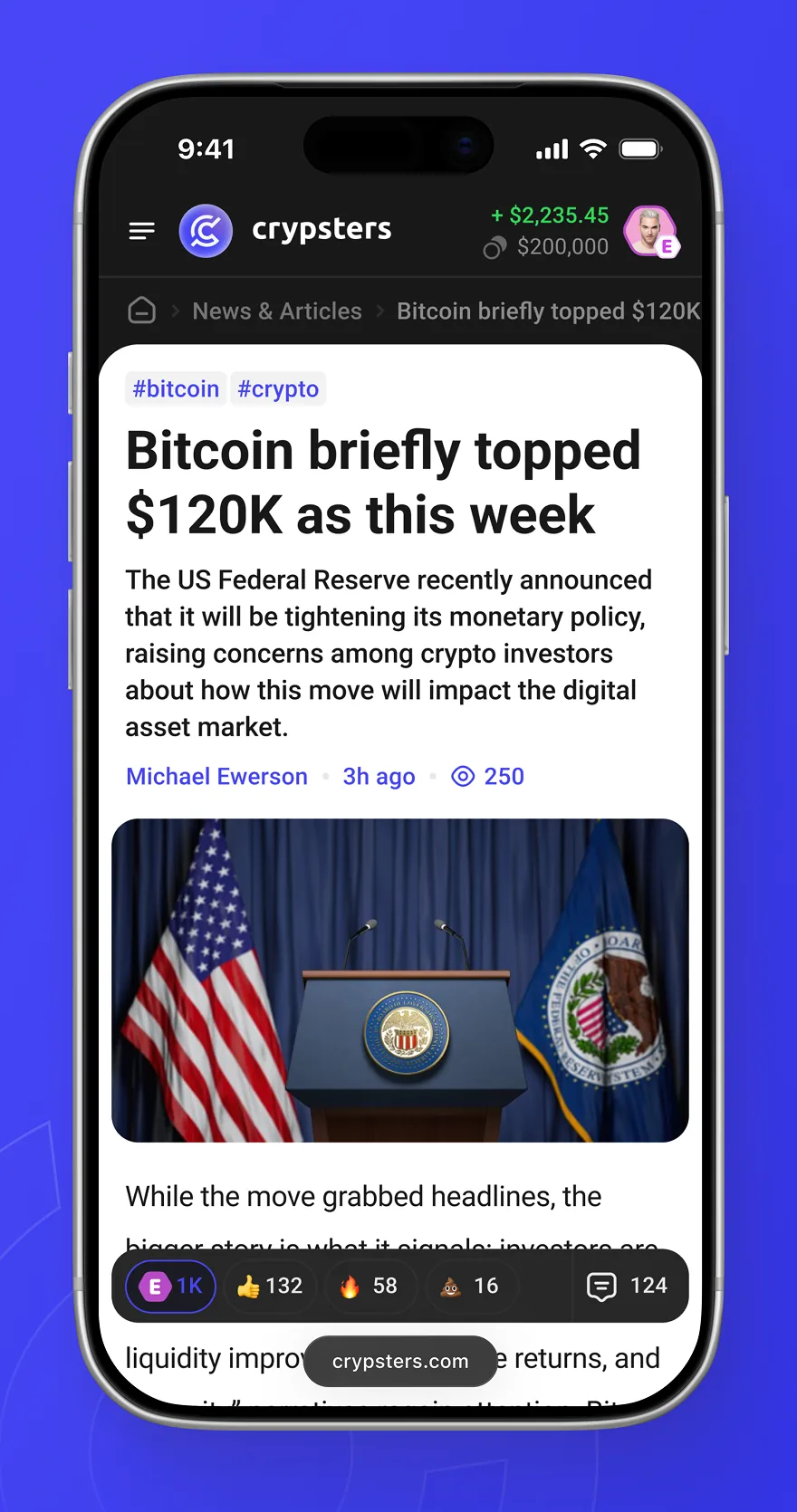
Editorial content lives inside the same product as trading and contests, split into crypto news, market analysis, and company updates. Each article carries its own comment thread, extending the feed's social layer to reading.


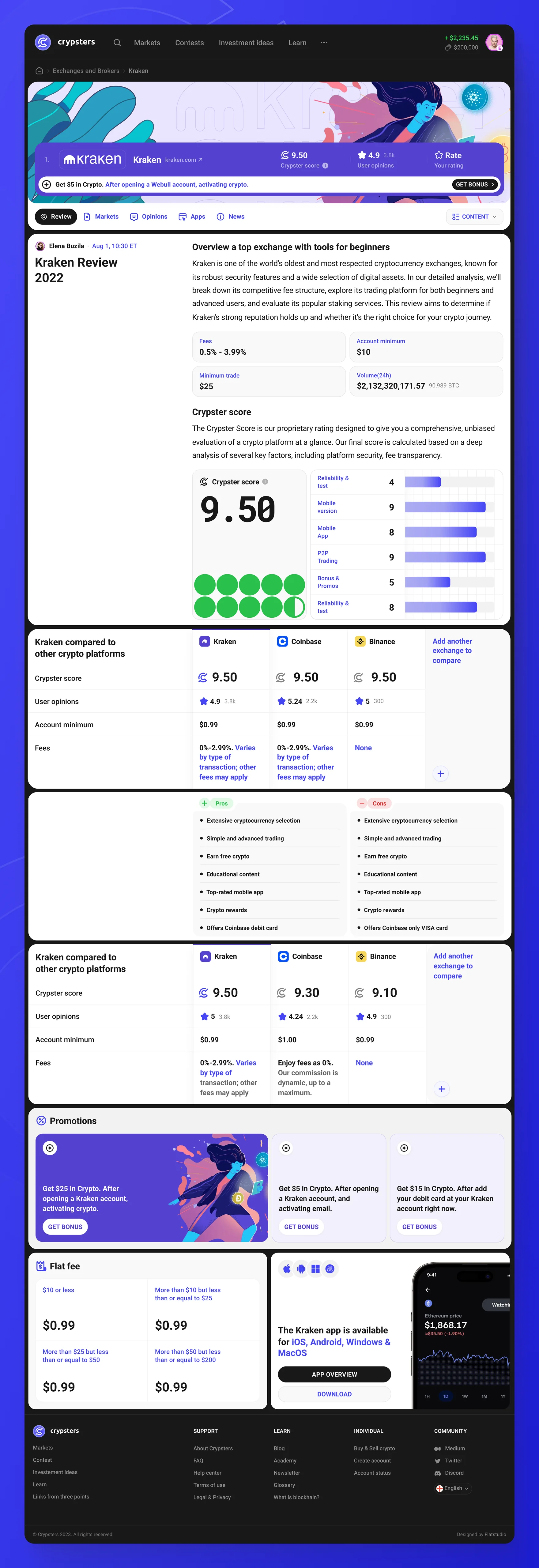
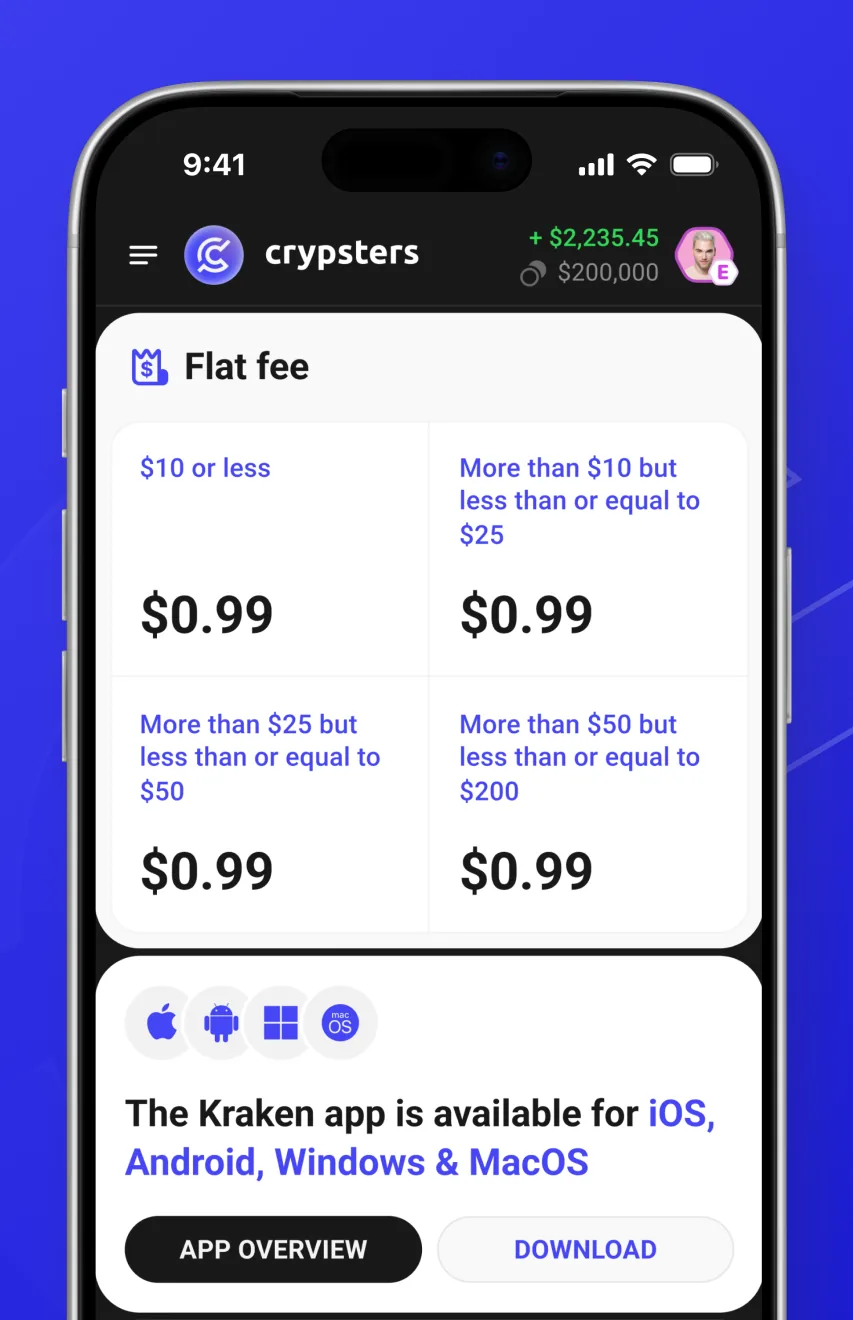
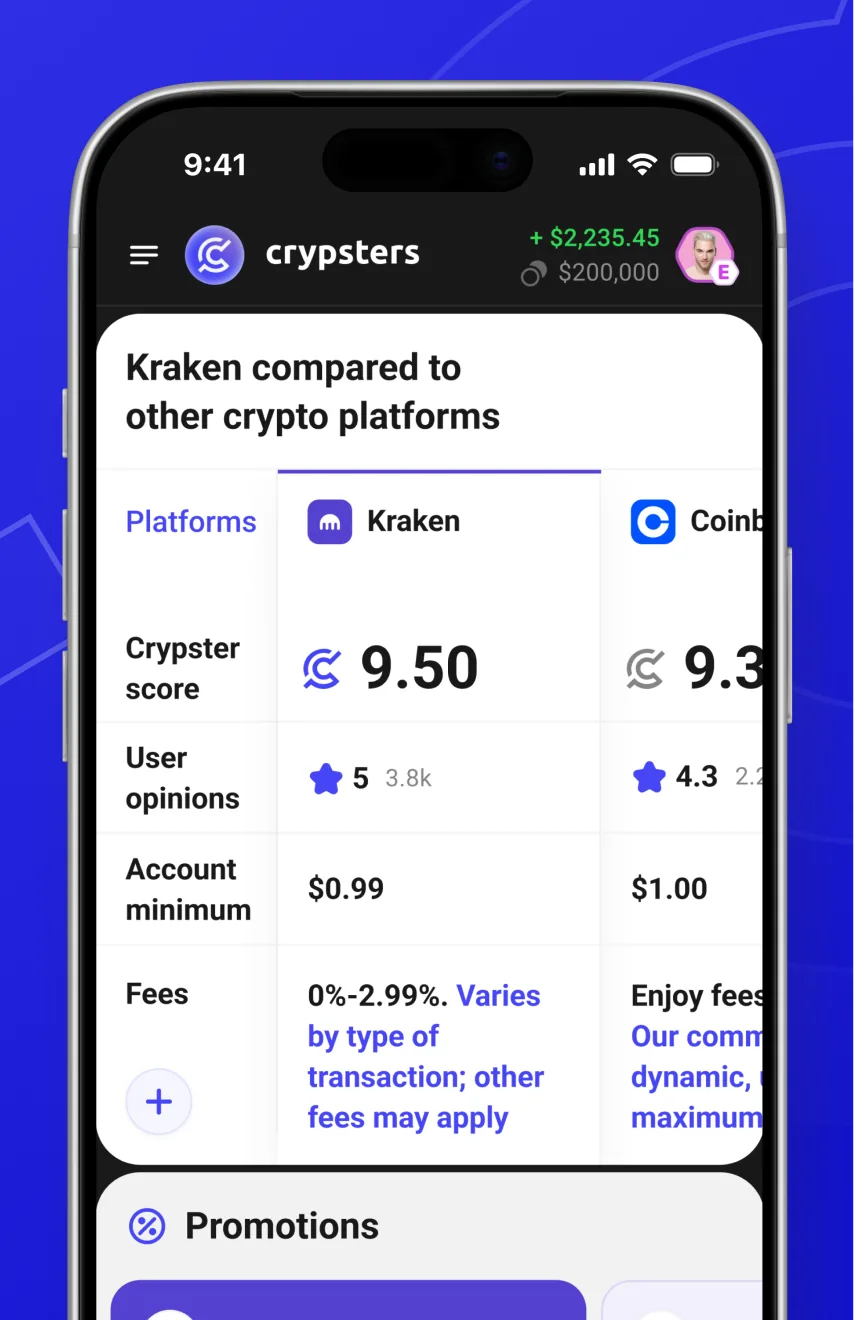
Each exchange gets a review page built around a proprietary Crypster Score, broken into reliability, mobile app, and fee sub-scores. A side-by-side table compares brokers directly against each other.

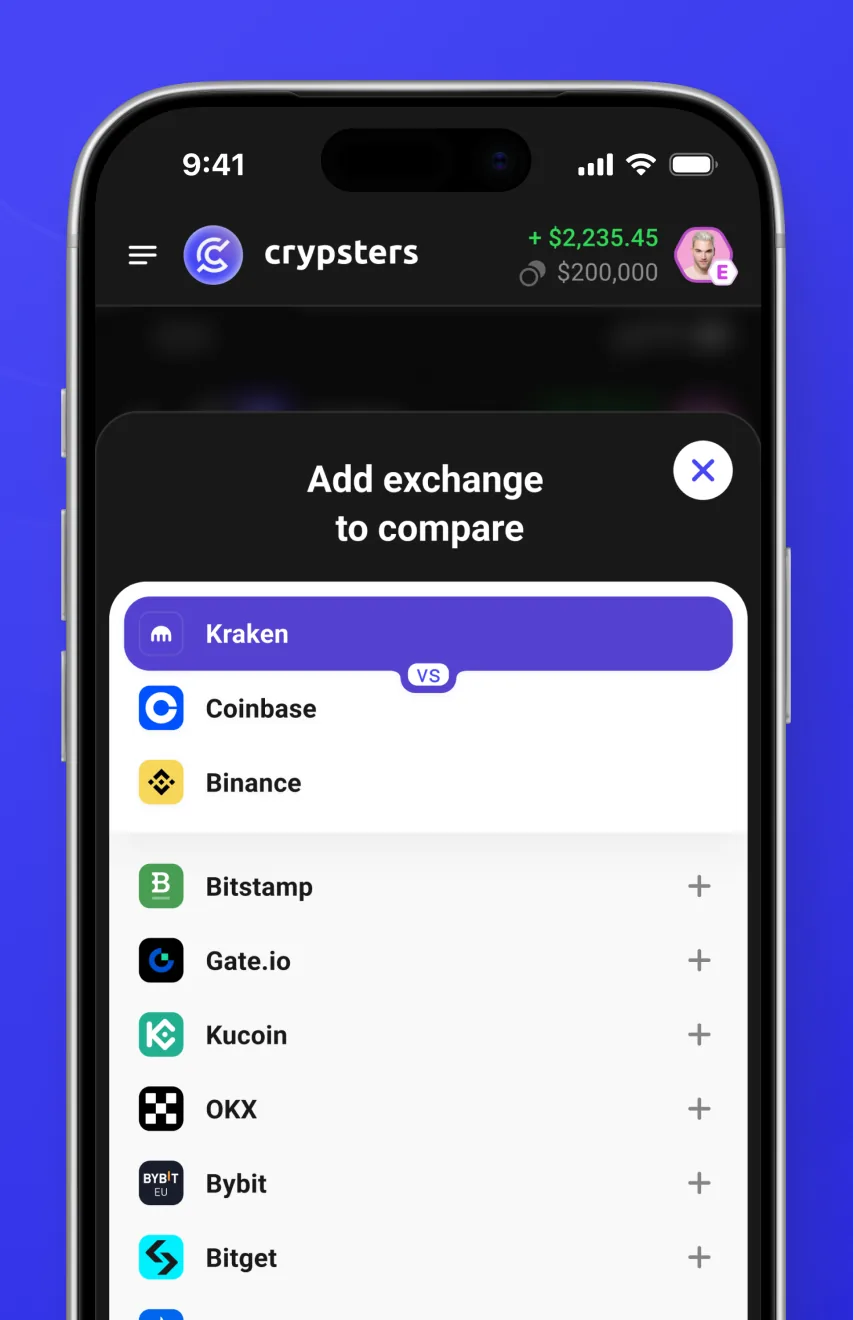
The same broker comparison collapses into stacked cards on mobile, letting a user add exchanges to compare one at a time. Fee schedules and app download links stay one tap away.
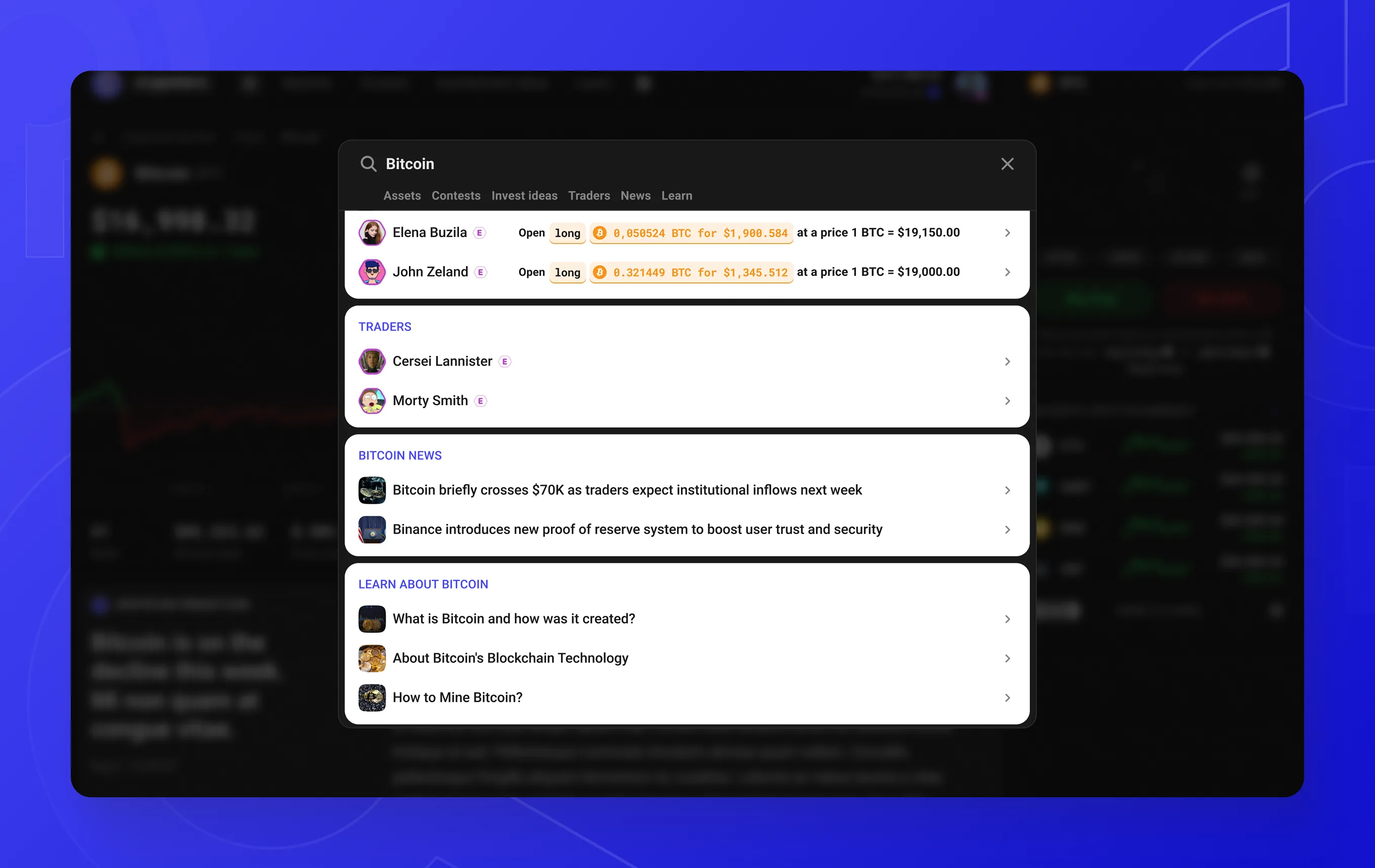
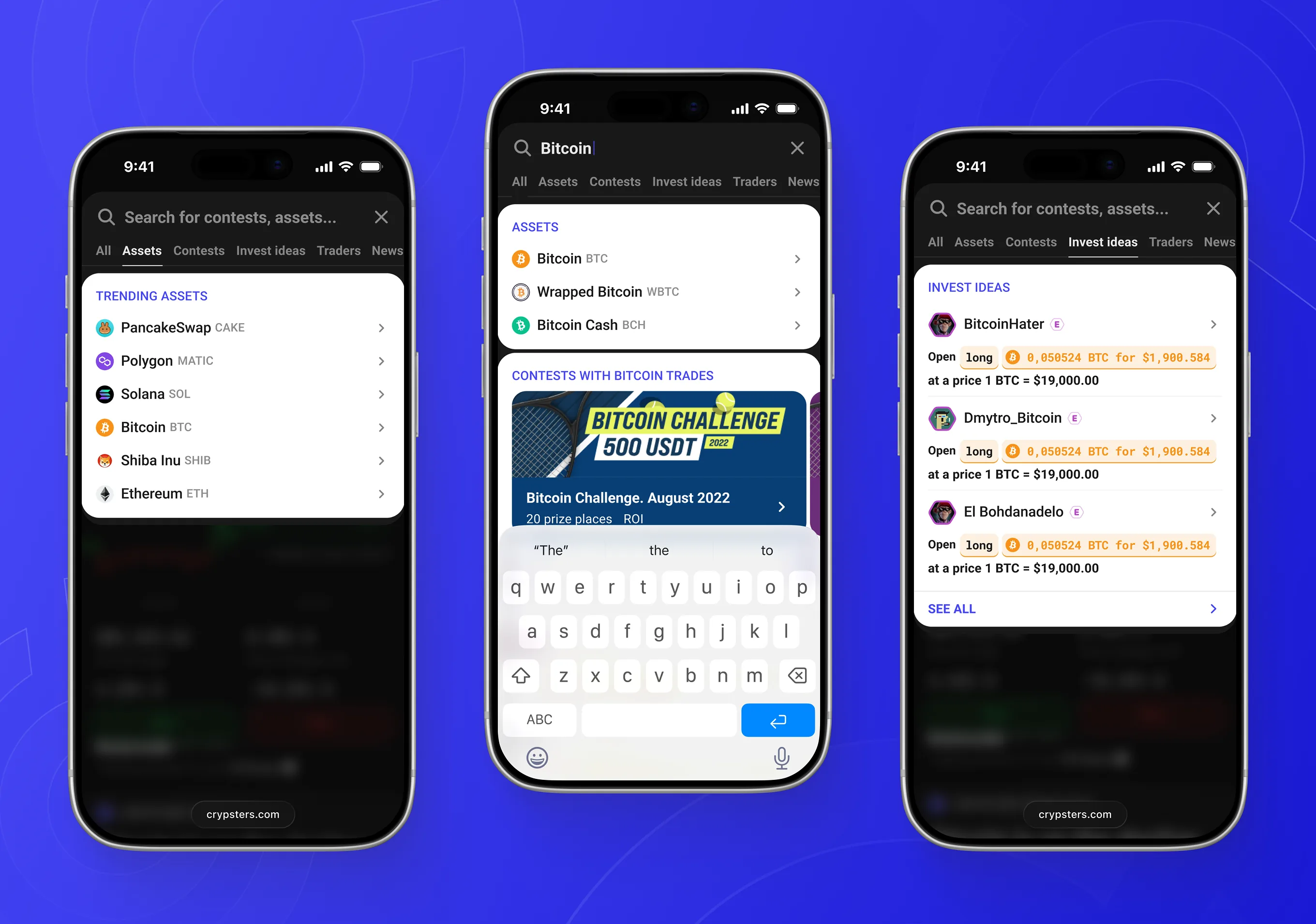
One search bar spans assets, contests, investment ideas, traders, and news instead of a separate search per page. A query like Bitcoin returns matching trades, articles, and traders grouped by type.
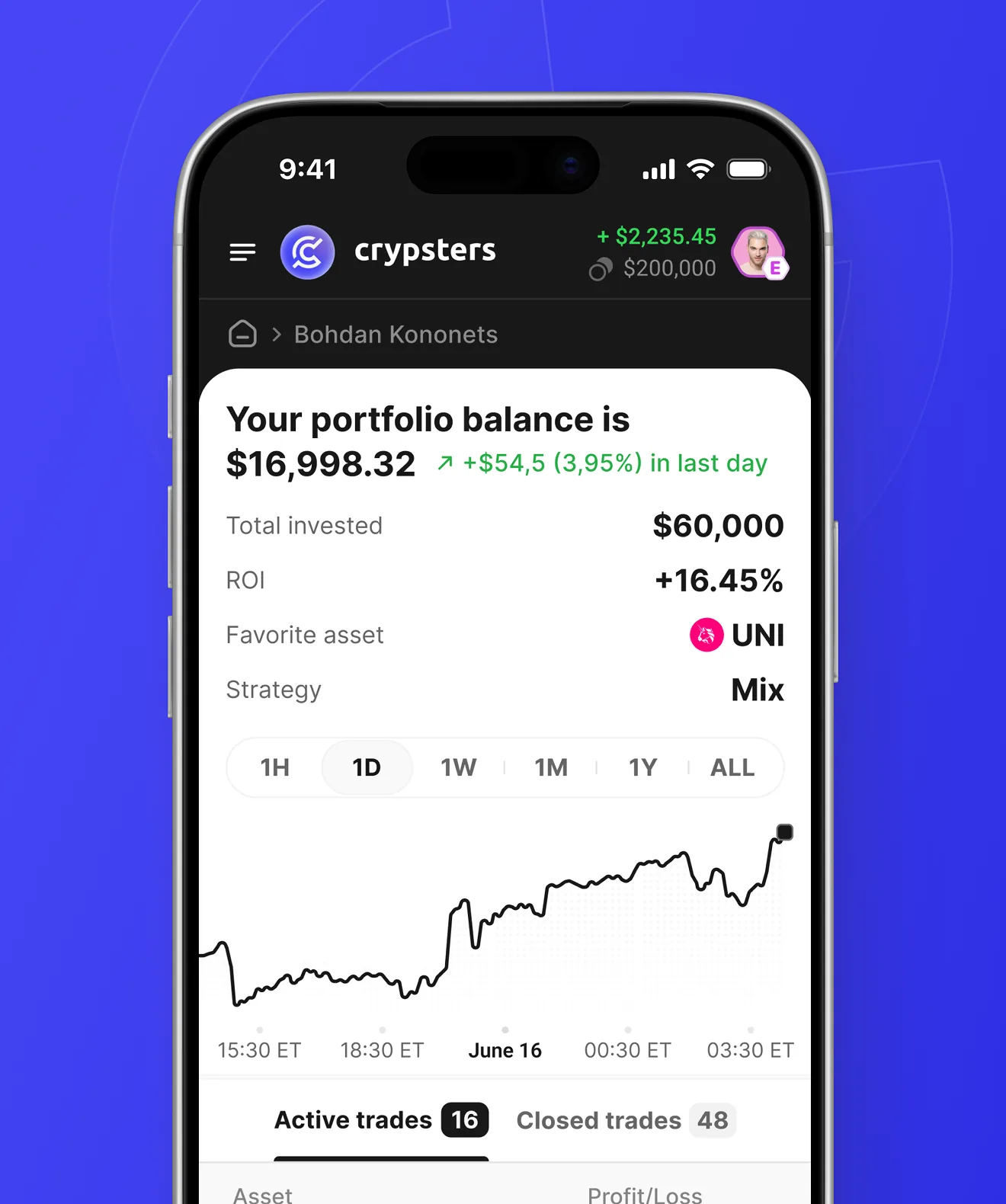
A public profile shows total portfolio balance, follower count, and a short bio next to a table of individual holdings and their profit or loss. Other traders can follow directly from this page.
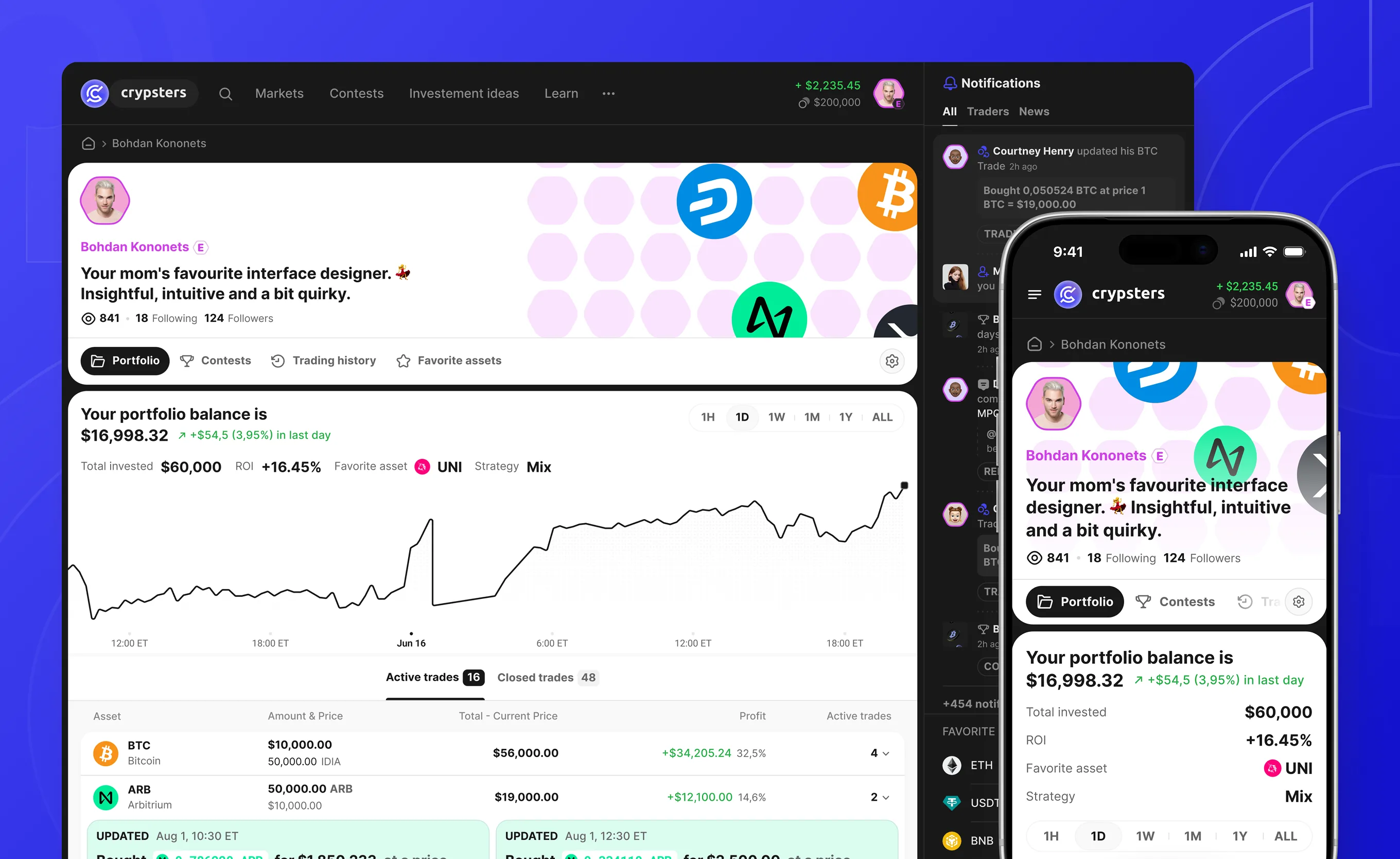
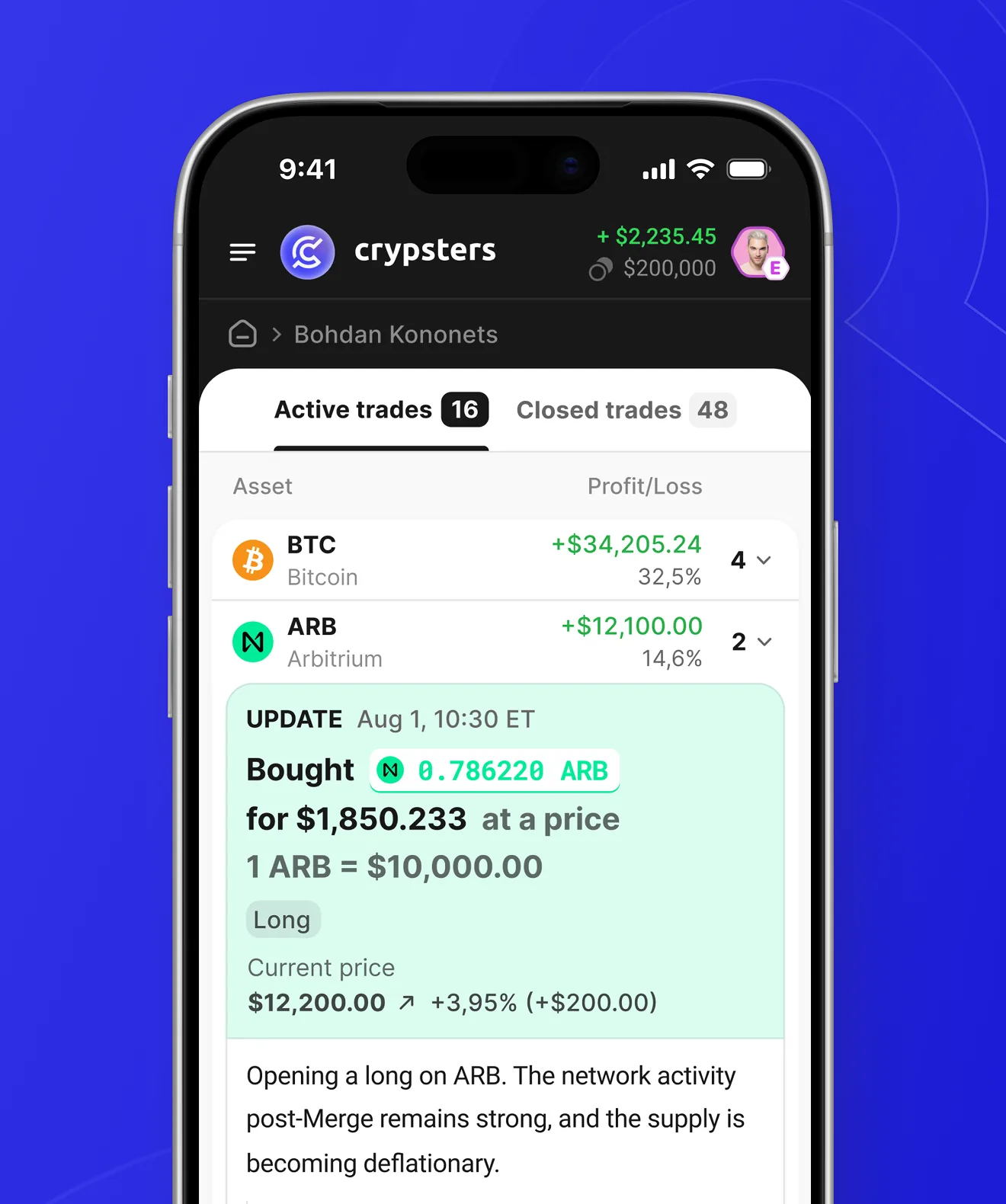
Inside the profile, a holdings table lists each asset's invested amount, current value, and profit, split into Active and Closed trade tabs — built on the same design system used across the markets and contest tables.

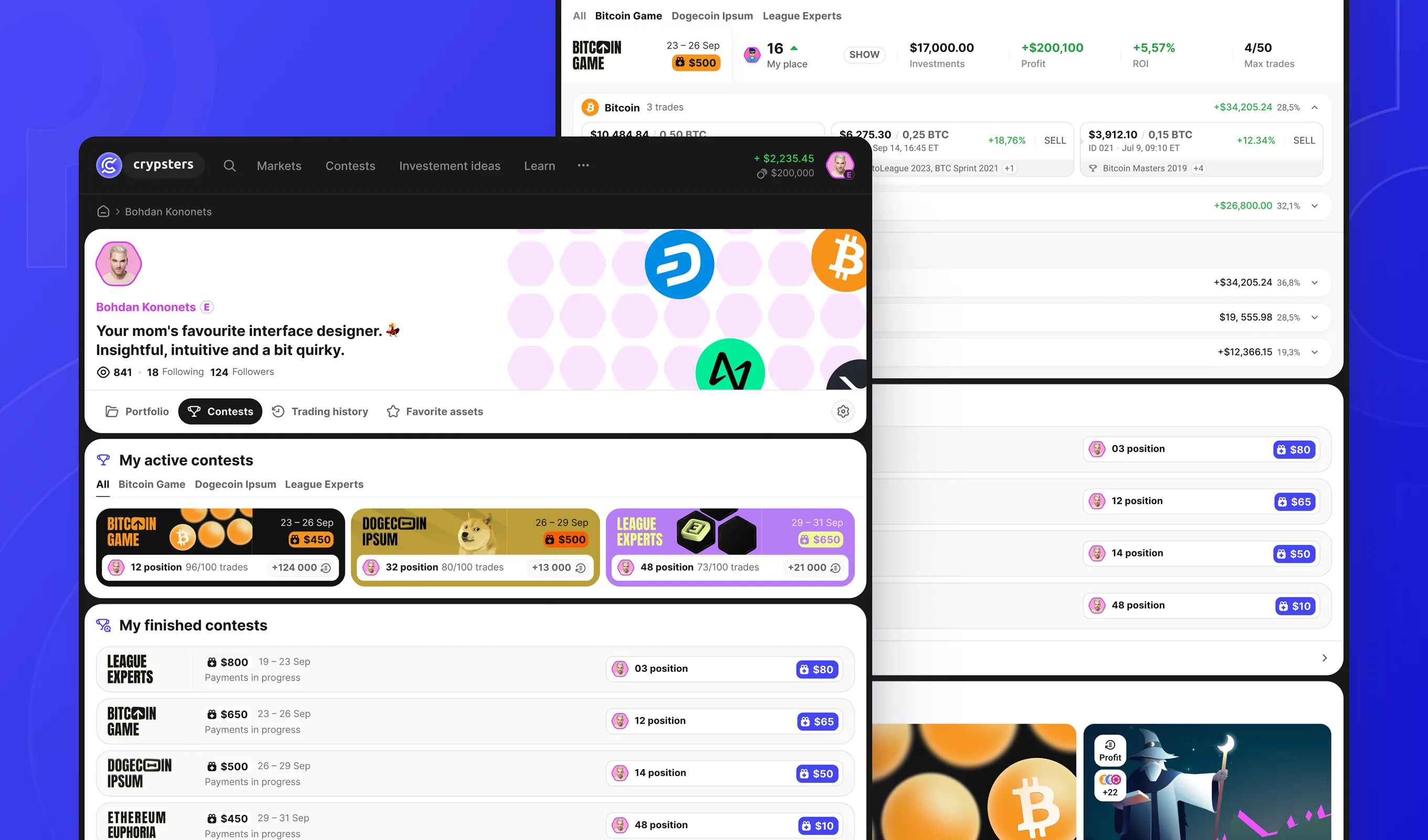
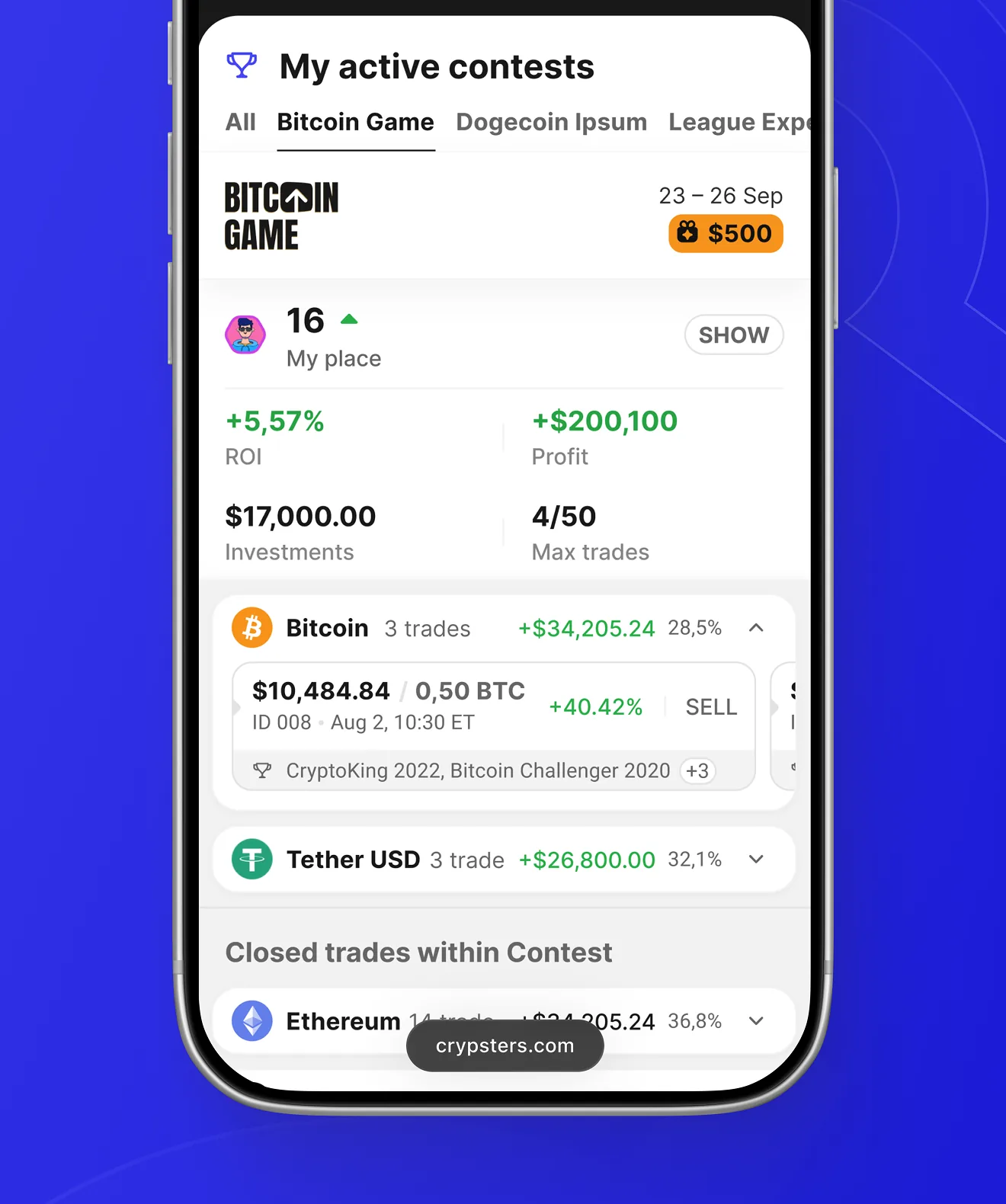
A dedicated profile tab lists contests a trader has joined, split into active and finished, each showing rank, ROI, and prize amount. Competition history stays attached to the trader's own record.

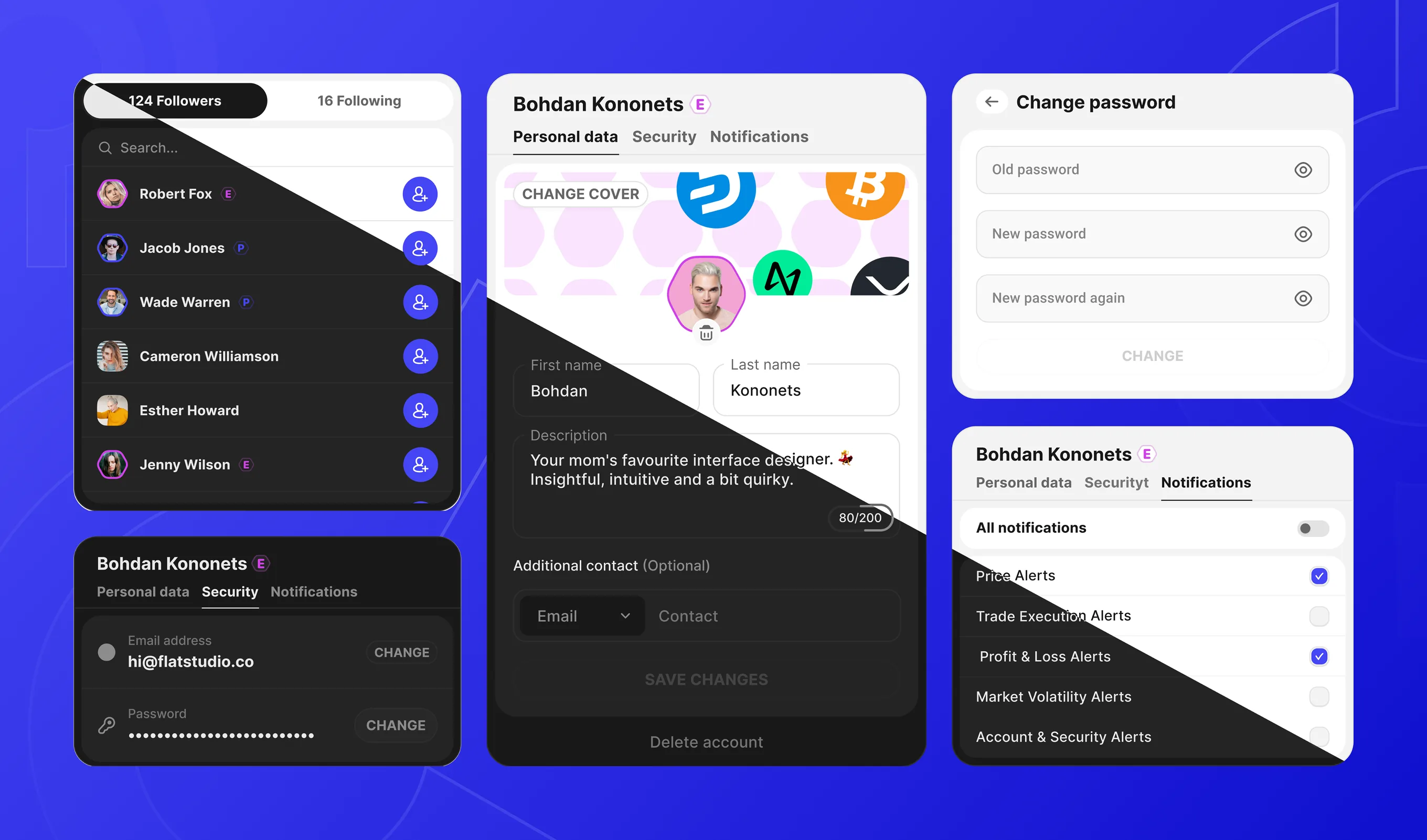
Settings cover personal data, password, and a granular notification list — price, trade execution, profit/loss, and market volatility alerts toggle independently. Followers and following lists sit in the same screen
If your fintech product only makes sense to people who already understand finance, you're capping your market at experts. Making it legible to everyone else is design work. Reach out.
