










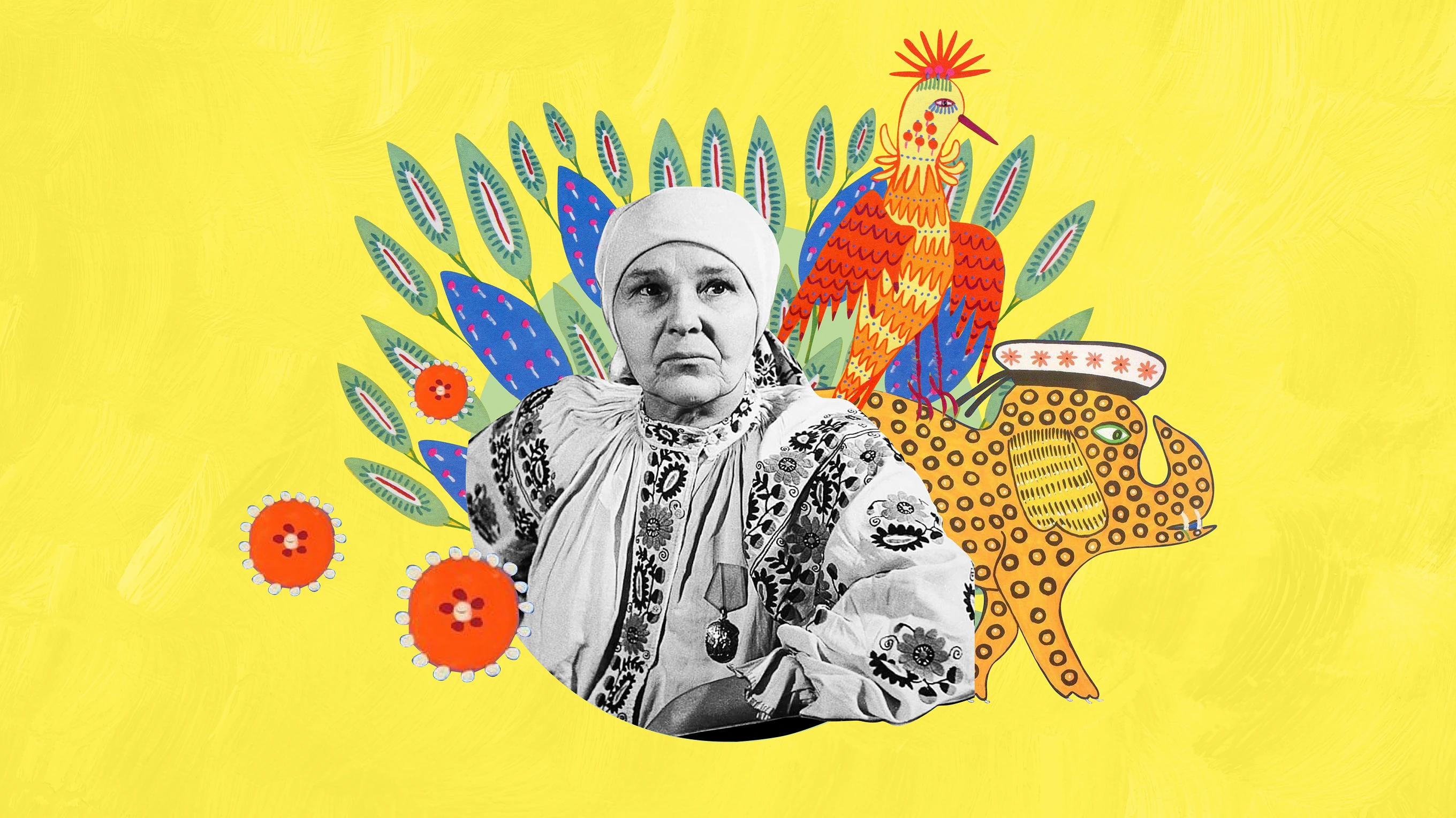
We designed a biographical narrative structure, artwork presentation flows, and a curated museum experience. The challenge was to guide visitors through Prymachenko's life, work, and cultural importance without feeling like a static archive.
Maria Prymachenko was a self-taught Ukrainian naive artist whose fantastical paintings drew on folk tales and rural life. Her legacy spans a large body of imagined animals, florals, and symbolic scenes rendered in bold pattern and color.
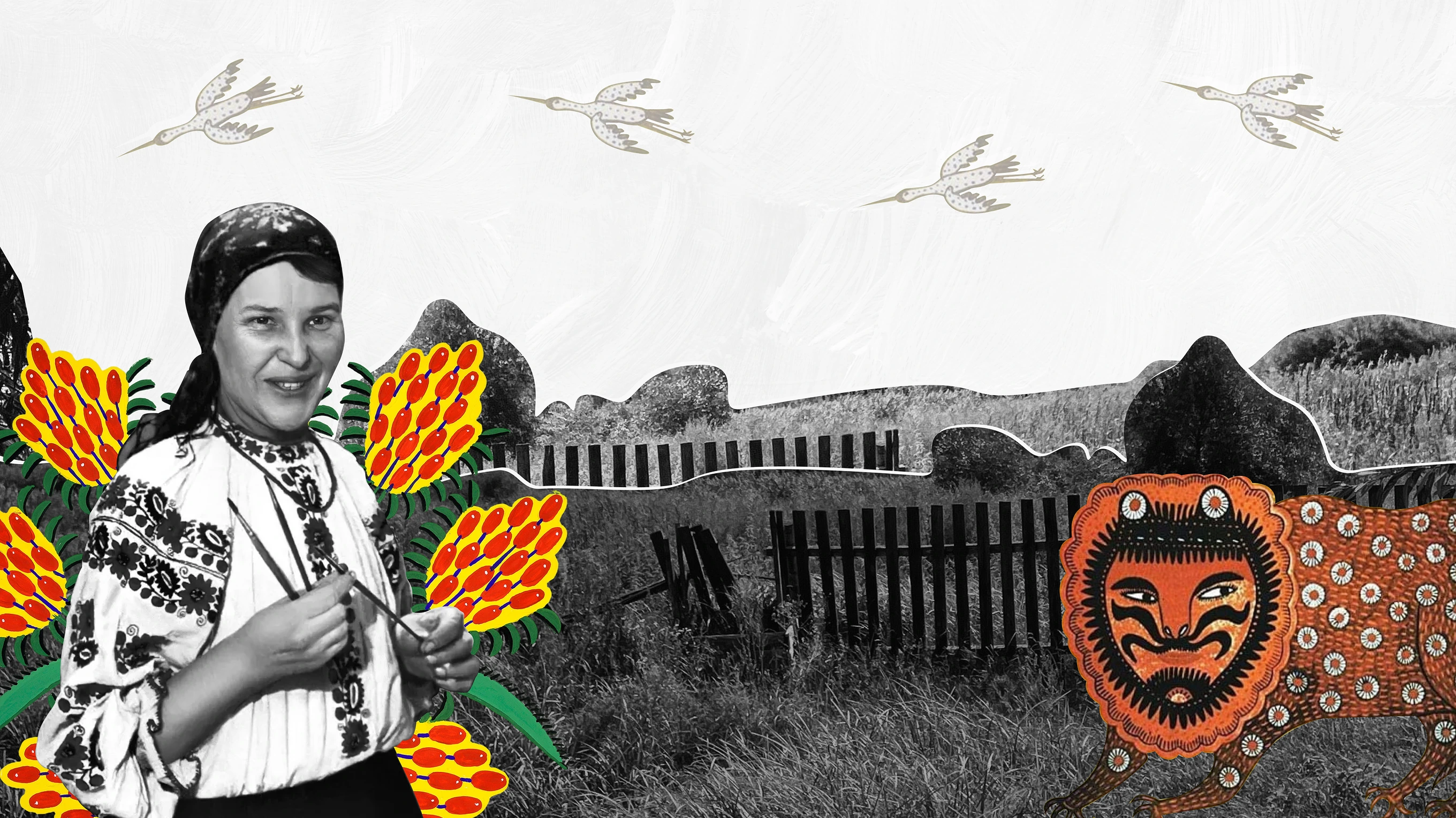
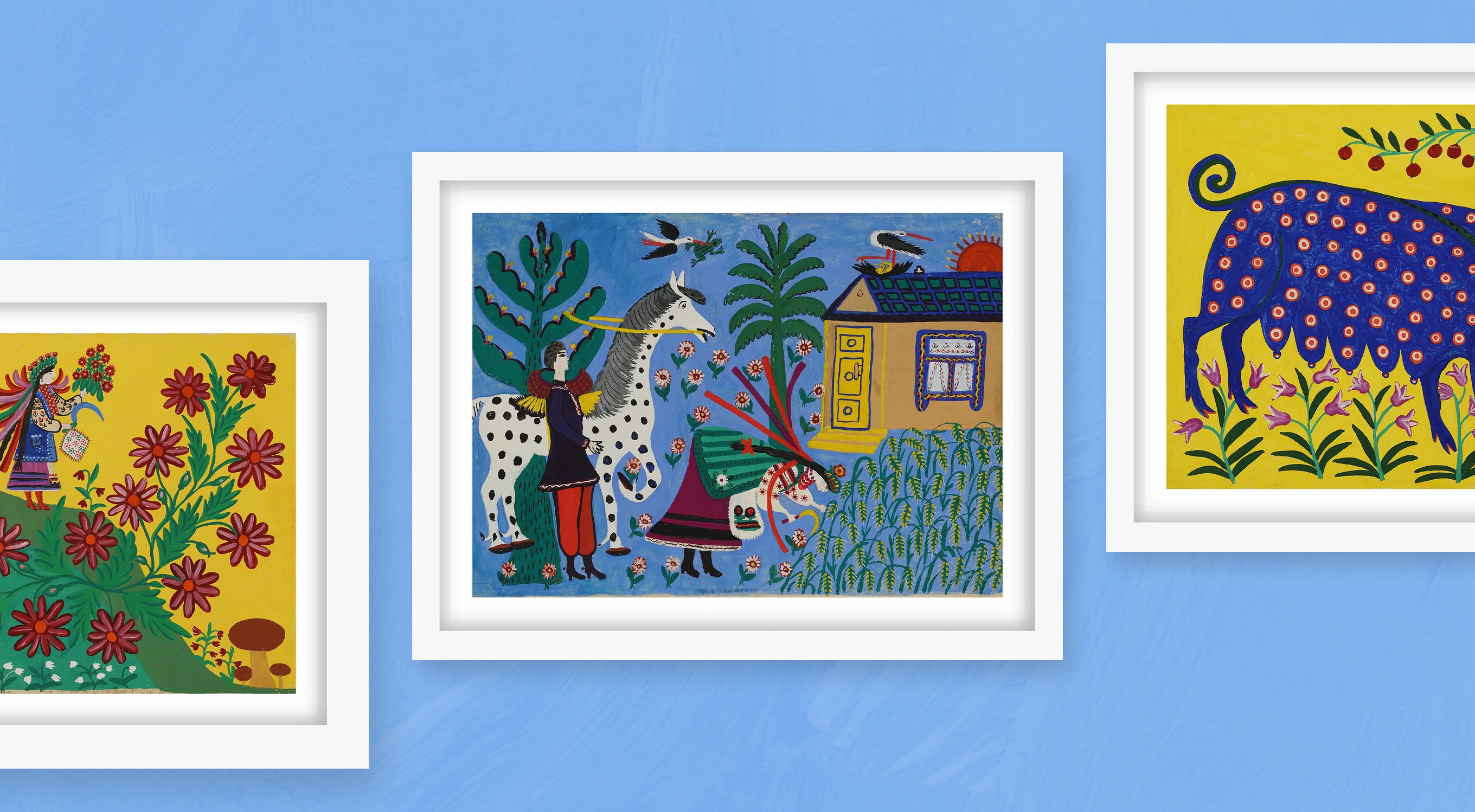
Maria Prymachenko turned village life into a fantastical world of symbols, drawing on Ukrainian folklore, embroidery motifs, and childhood memory. The photos beside her paintings trace her shift from a village girl to that painter.
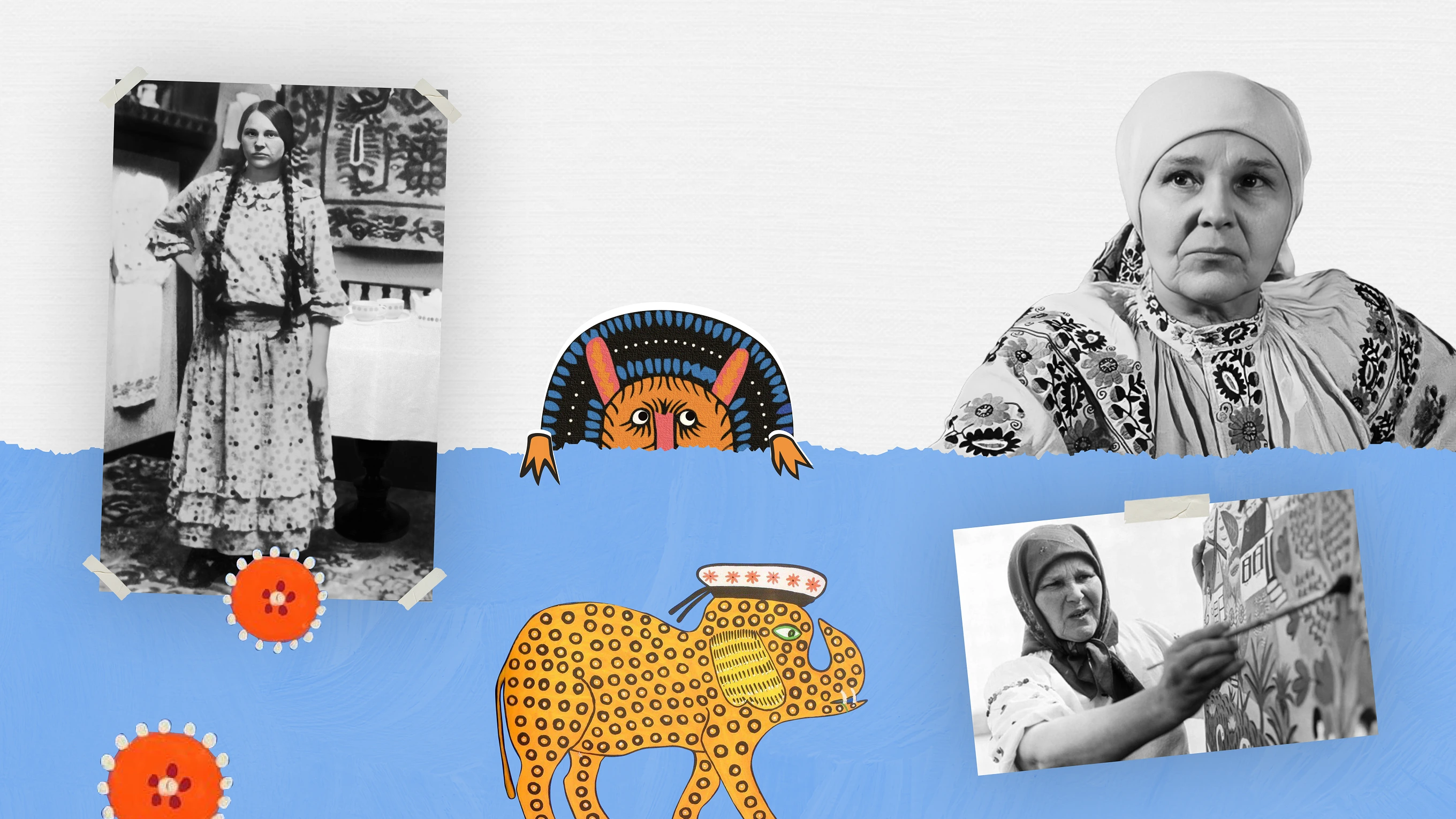
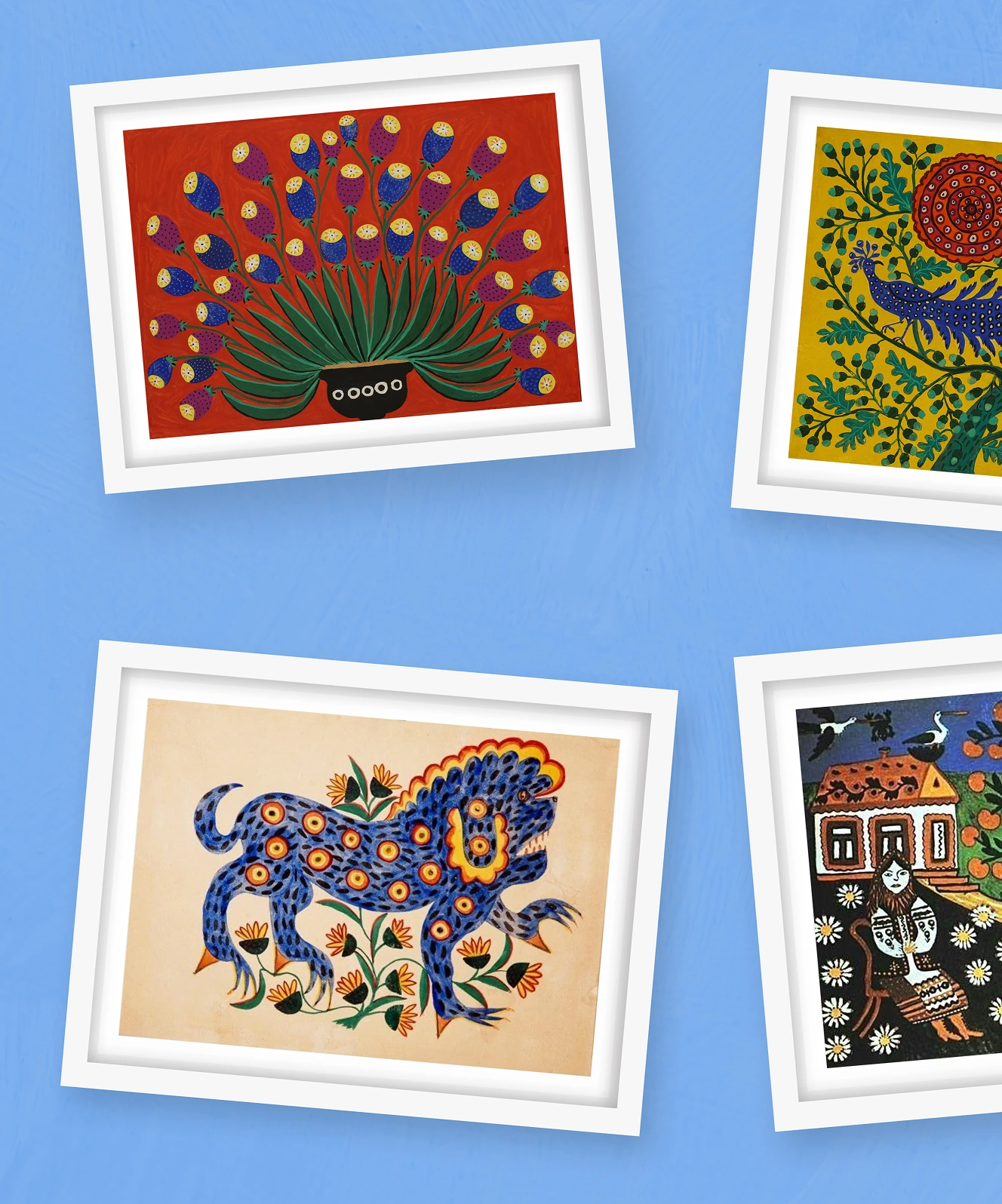
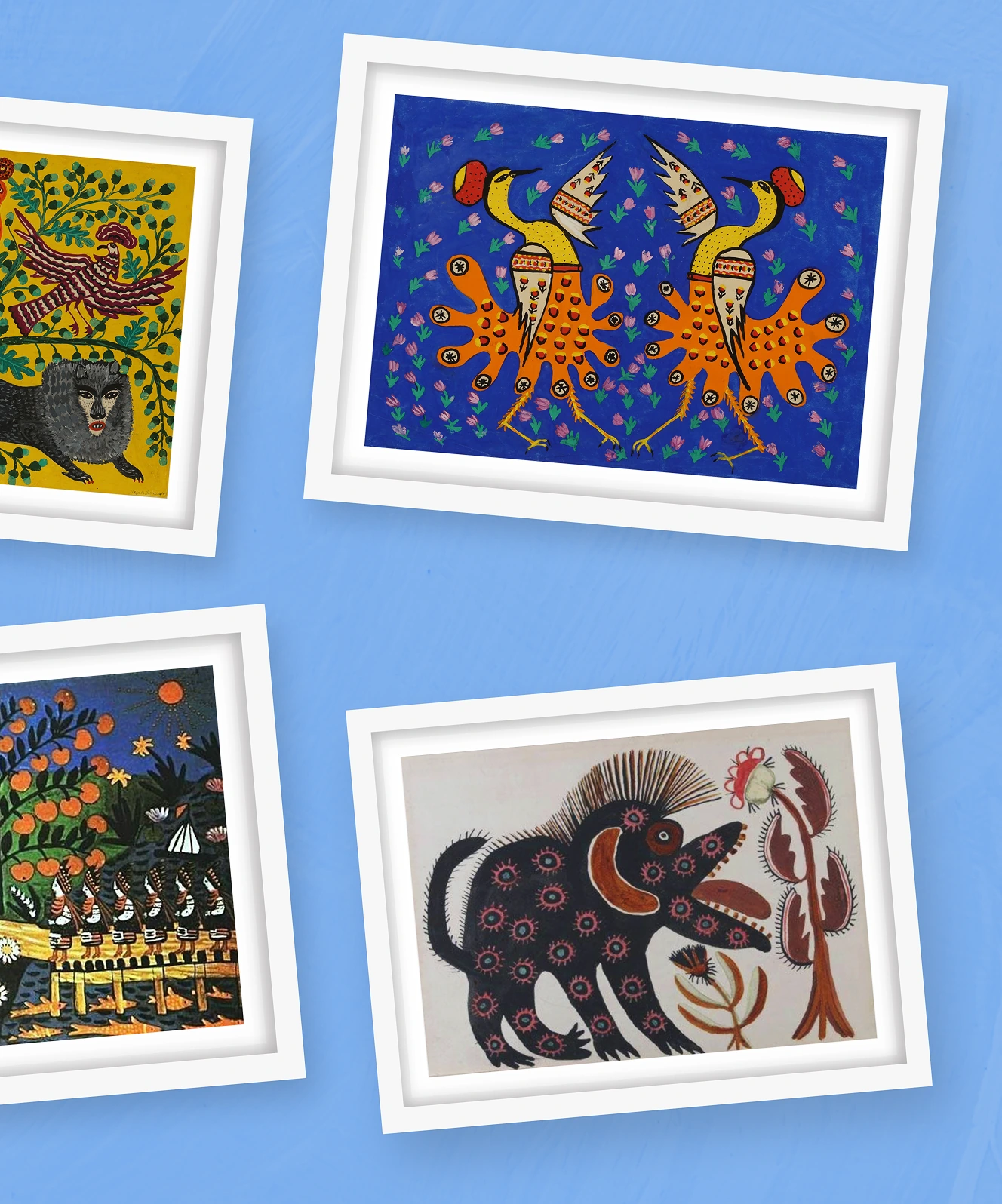
Her animal and plant motifs, rooted in Ukrainian folklore, recur throughout these works. Rendered in bold colors and patterns, each piece captures her vivid, imaginative vision of rural nature and folklore.
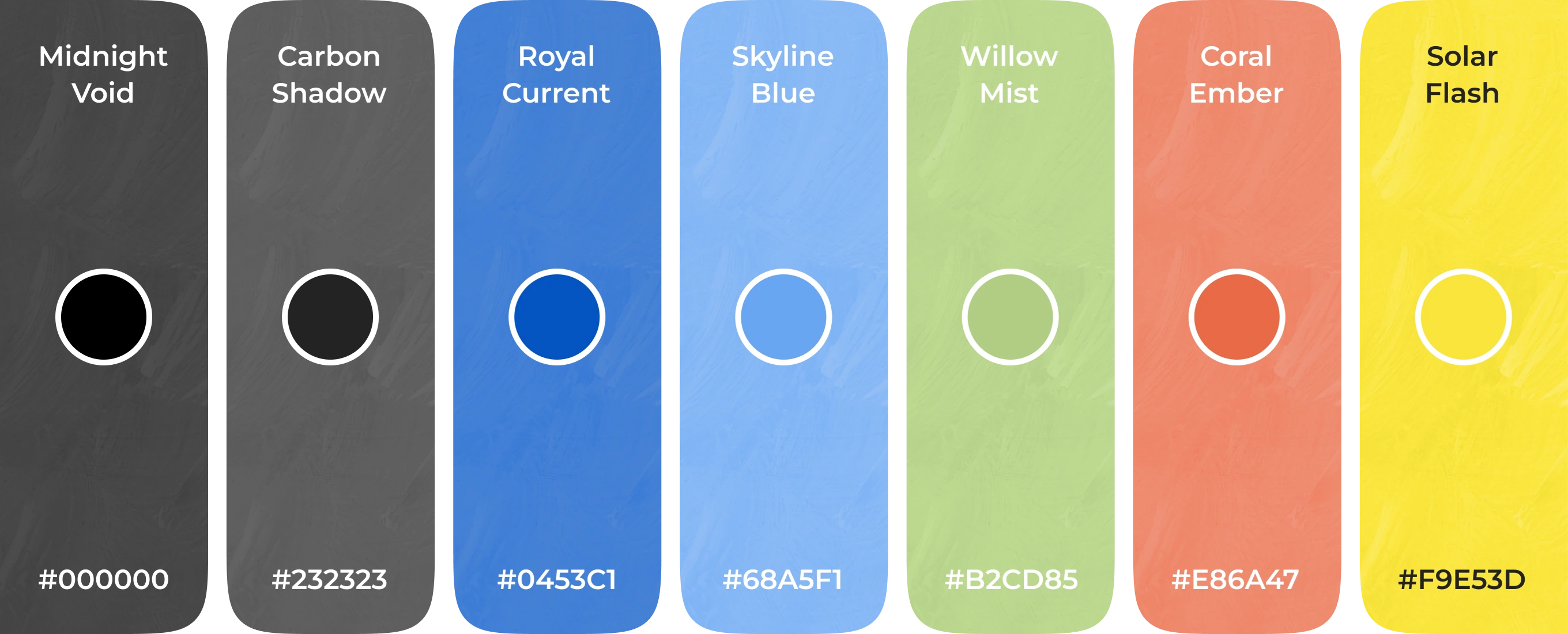
A seven-color palette defines the visual identity built around Maria's story, ranging from dark neutral tones to bright saturated accents.
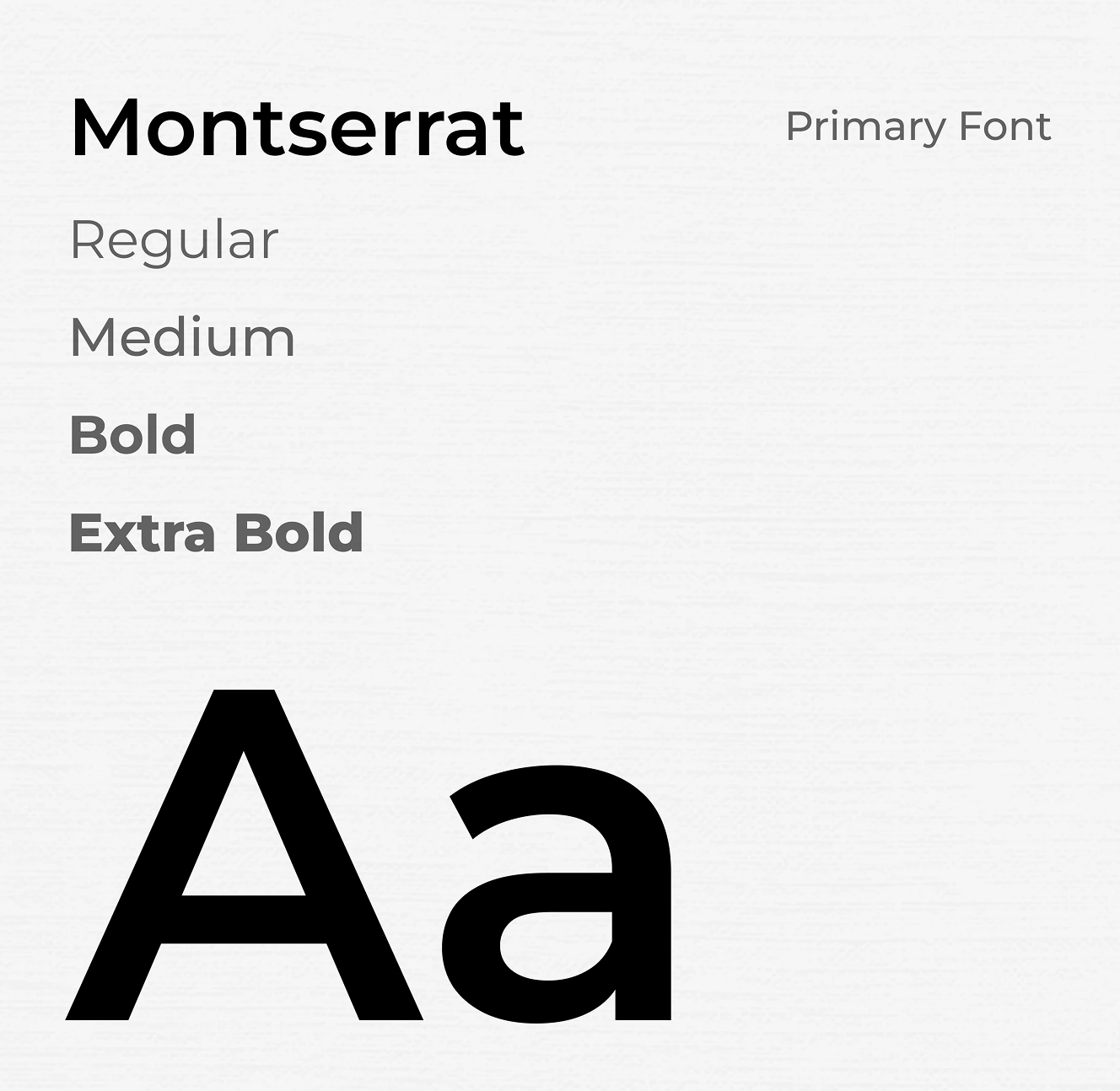
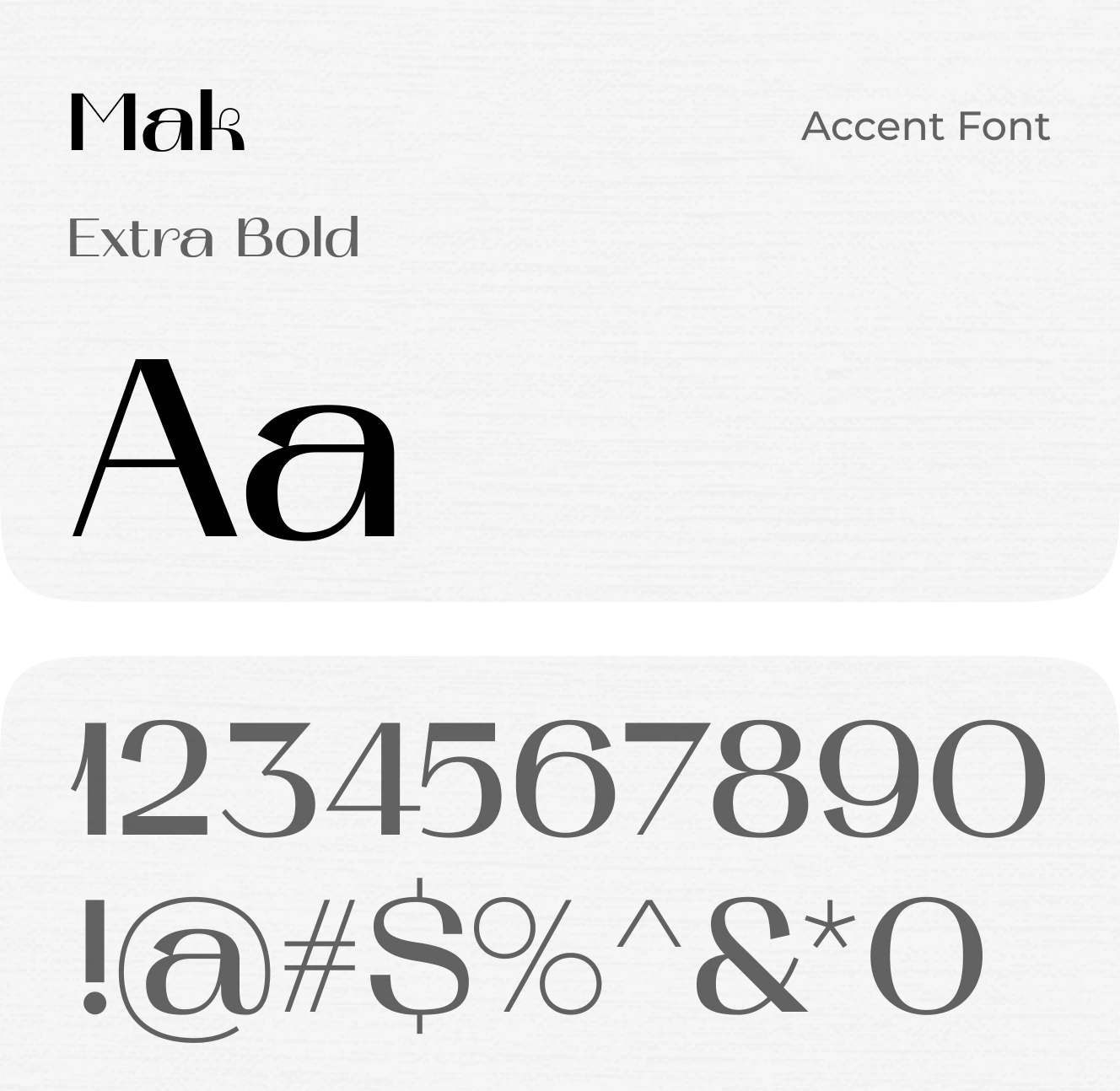
Montserrat serves as the primary typeface throughout the biographical text. Mak, an accent display font, is reserved for chapter titles and large numerals.
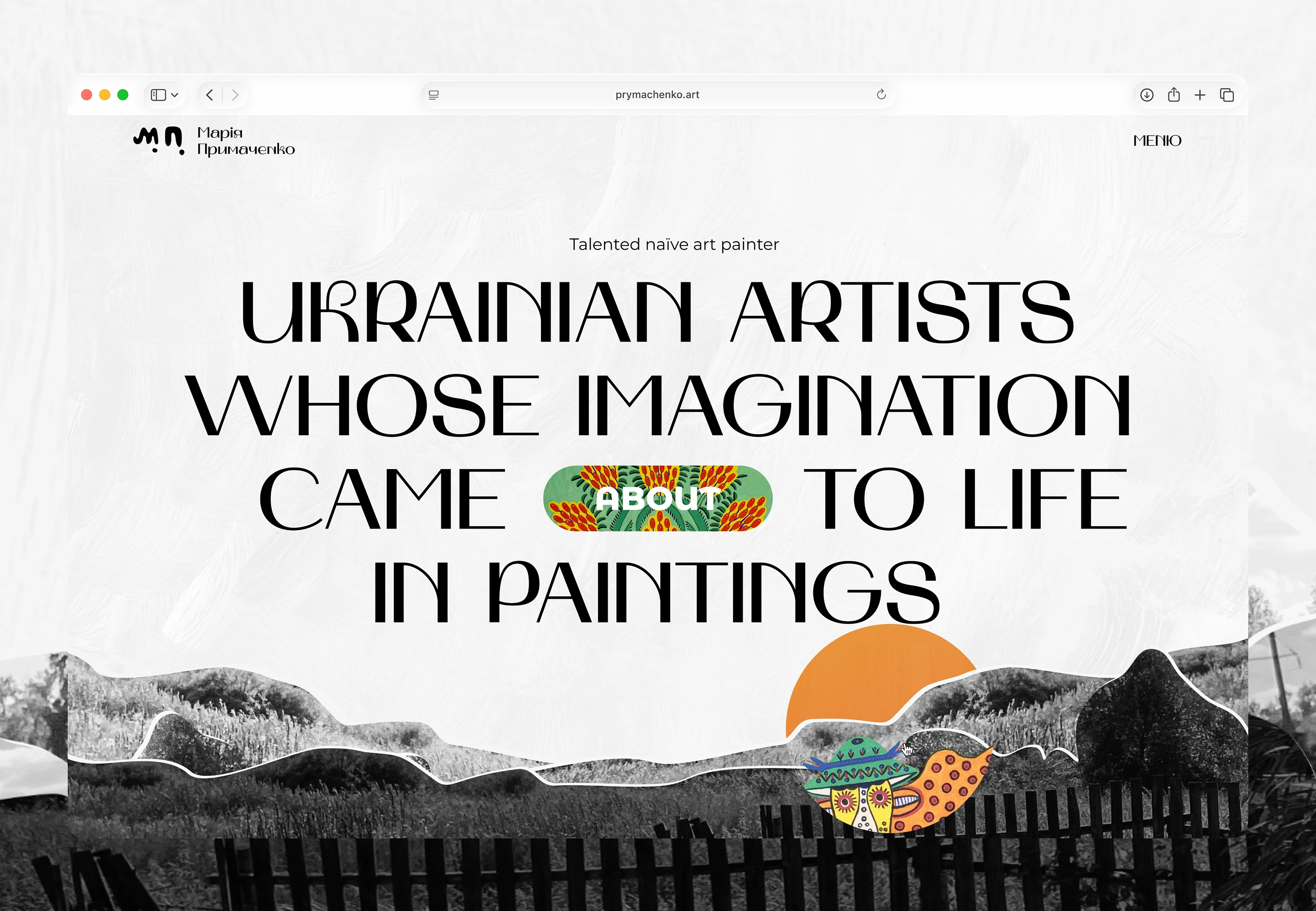
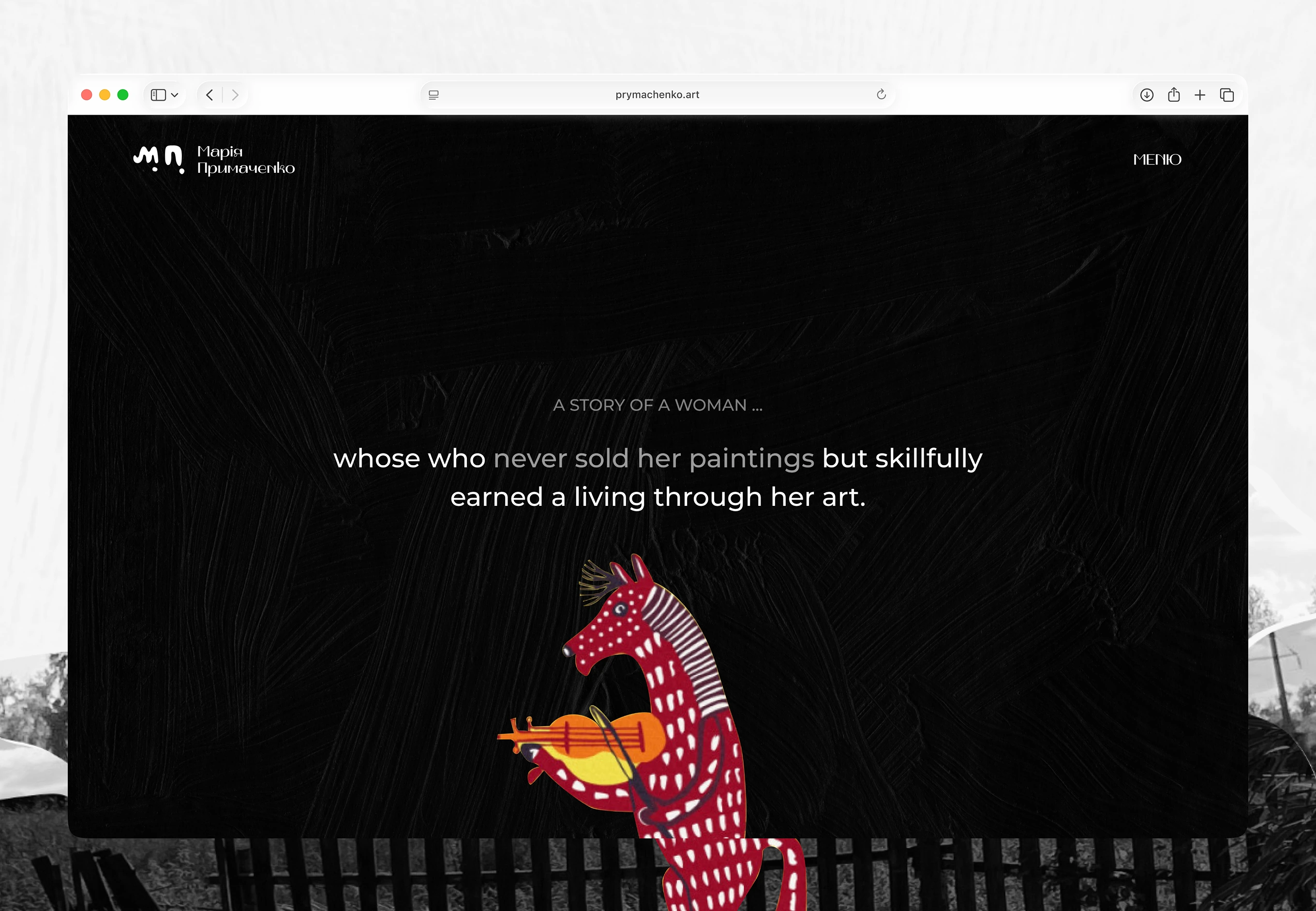
Maria was a self-taught painter whose bold, folklore-rooted imagery defied convention. She never sold her paintings, yet earned her living through her art, leaving behind a body of work whose scale speaks for itself.
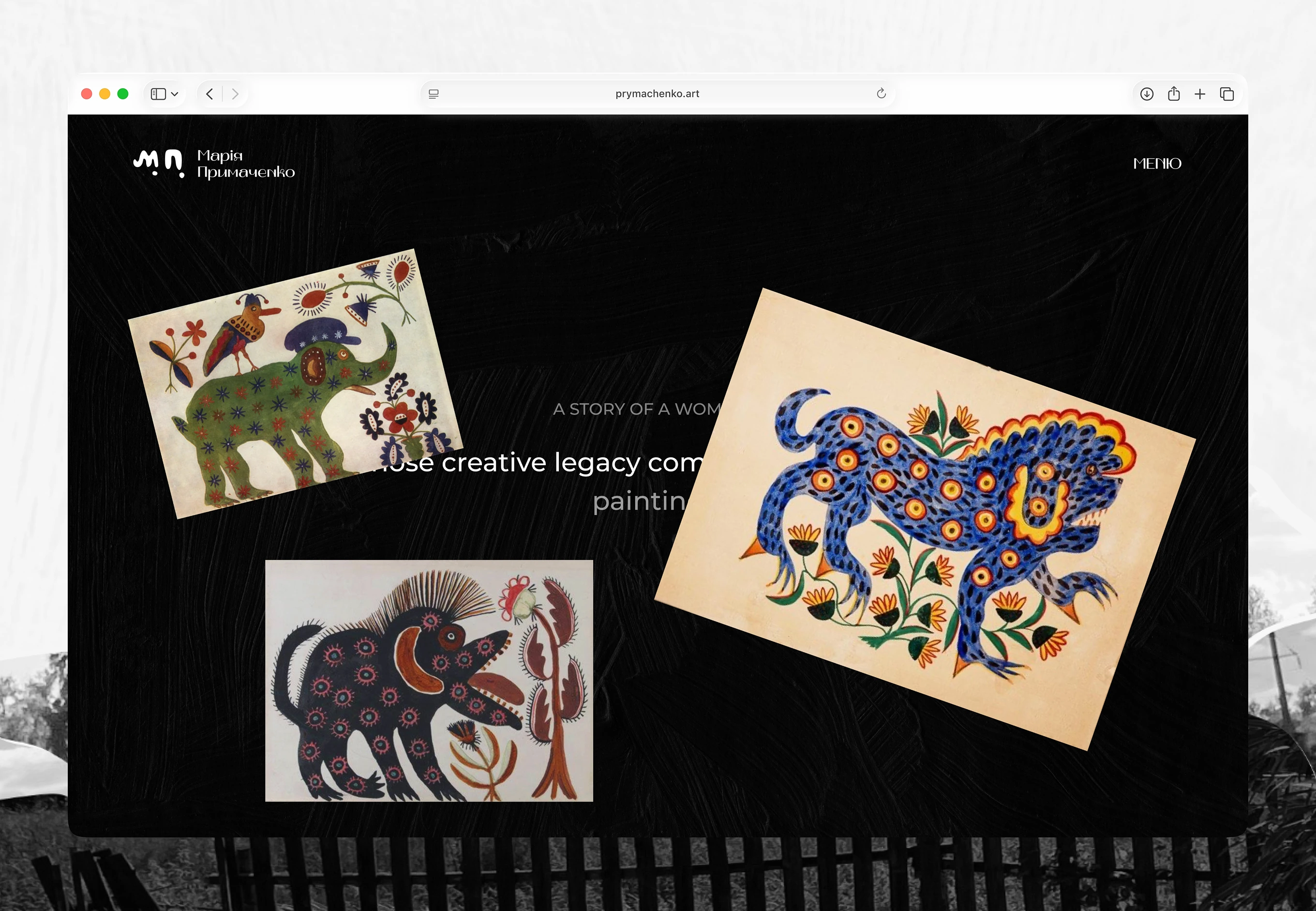
The mobile view repeats the homepage introduction and puts her legacy into numbers – a body of work built over decades in her home village.
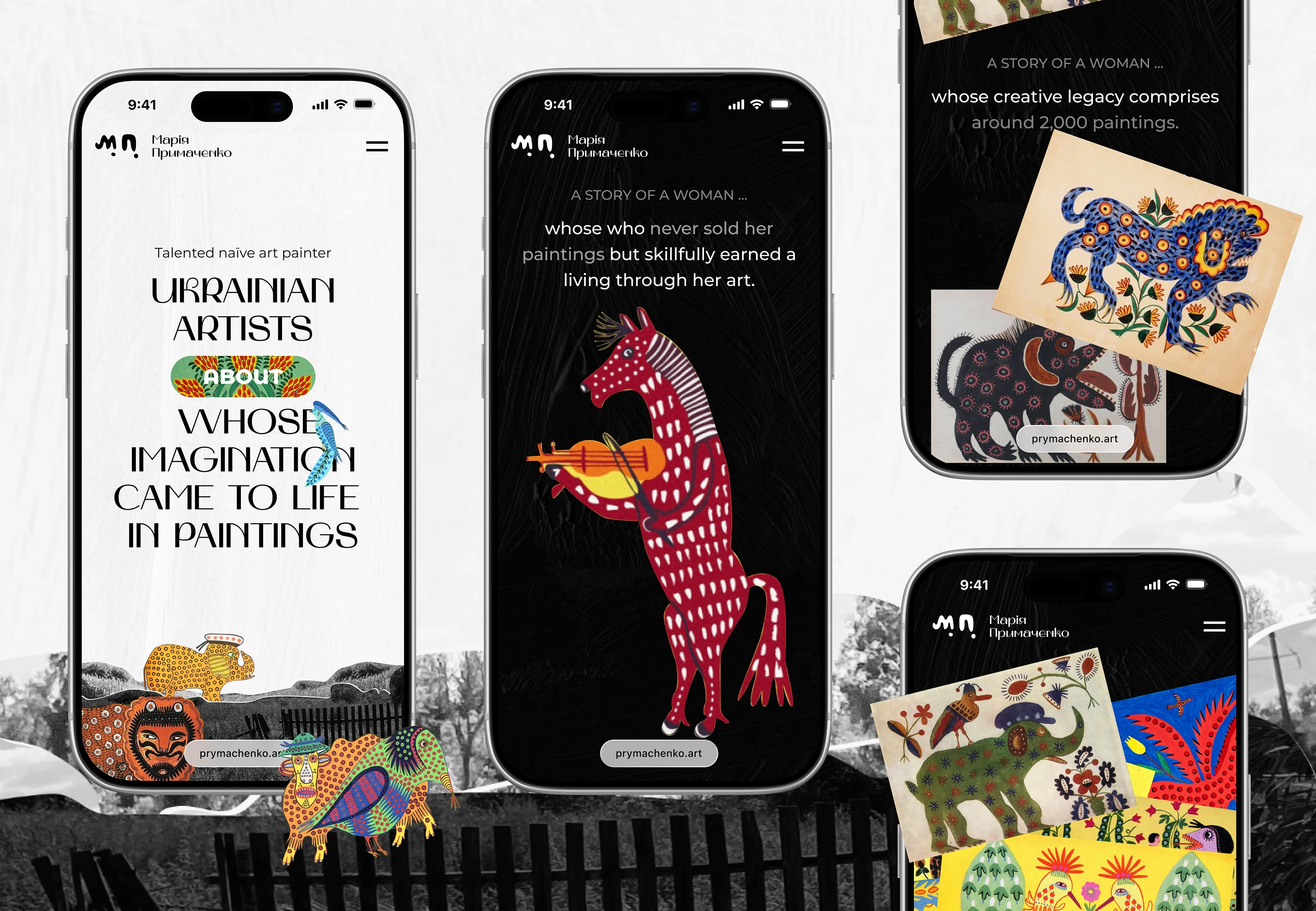
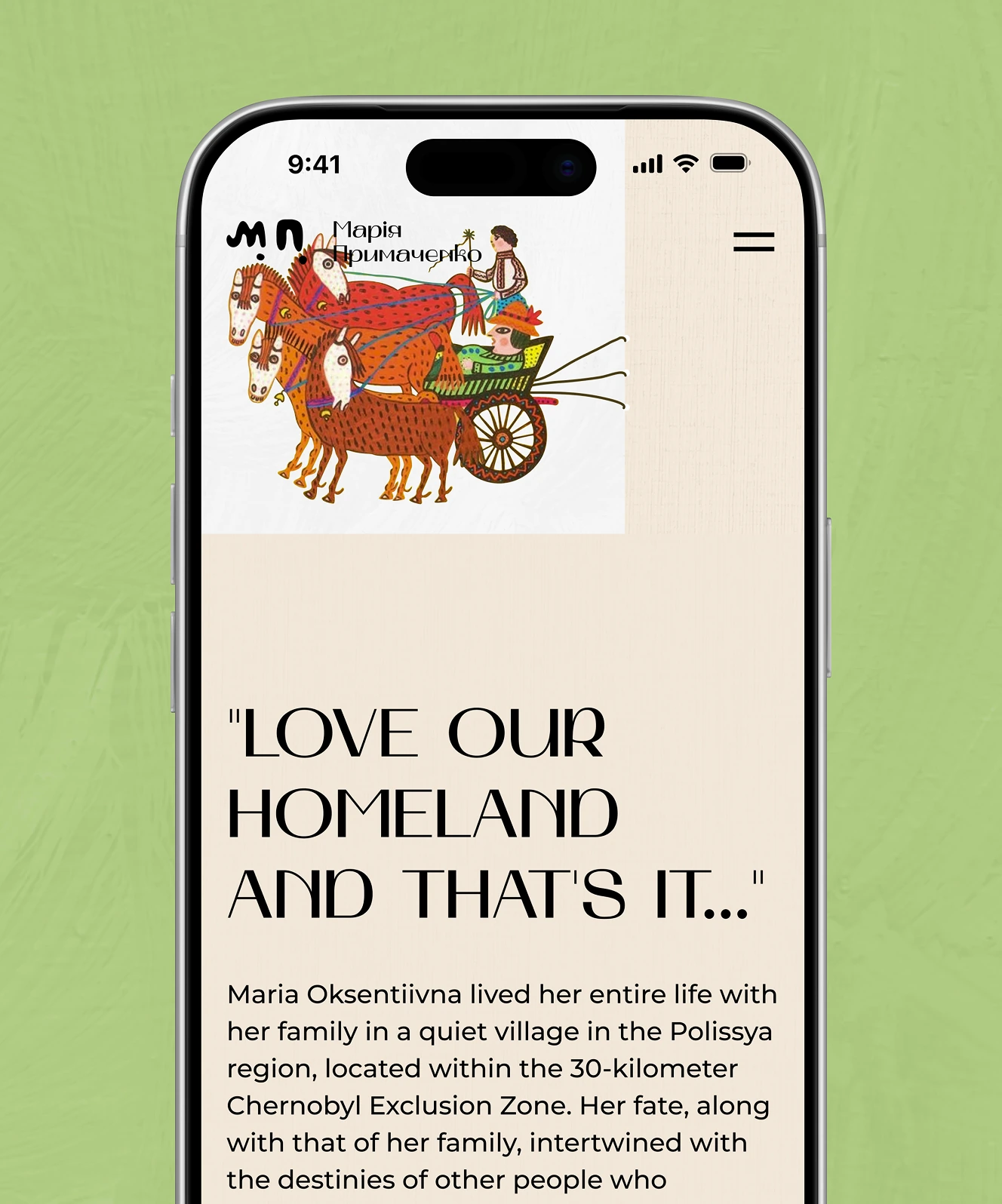
The first chapter opens in Maria's childhood, setting up a story that runs from a Ukrainian village to international exhibitions and back home again.
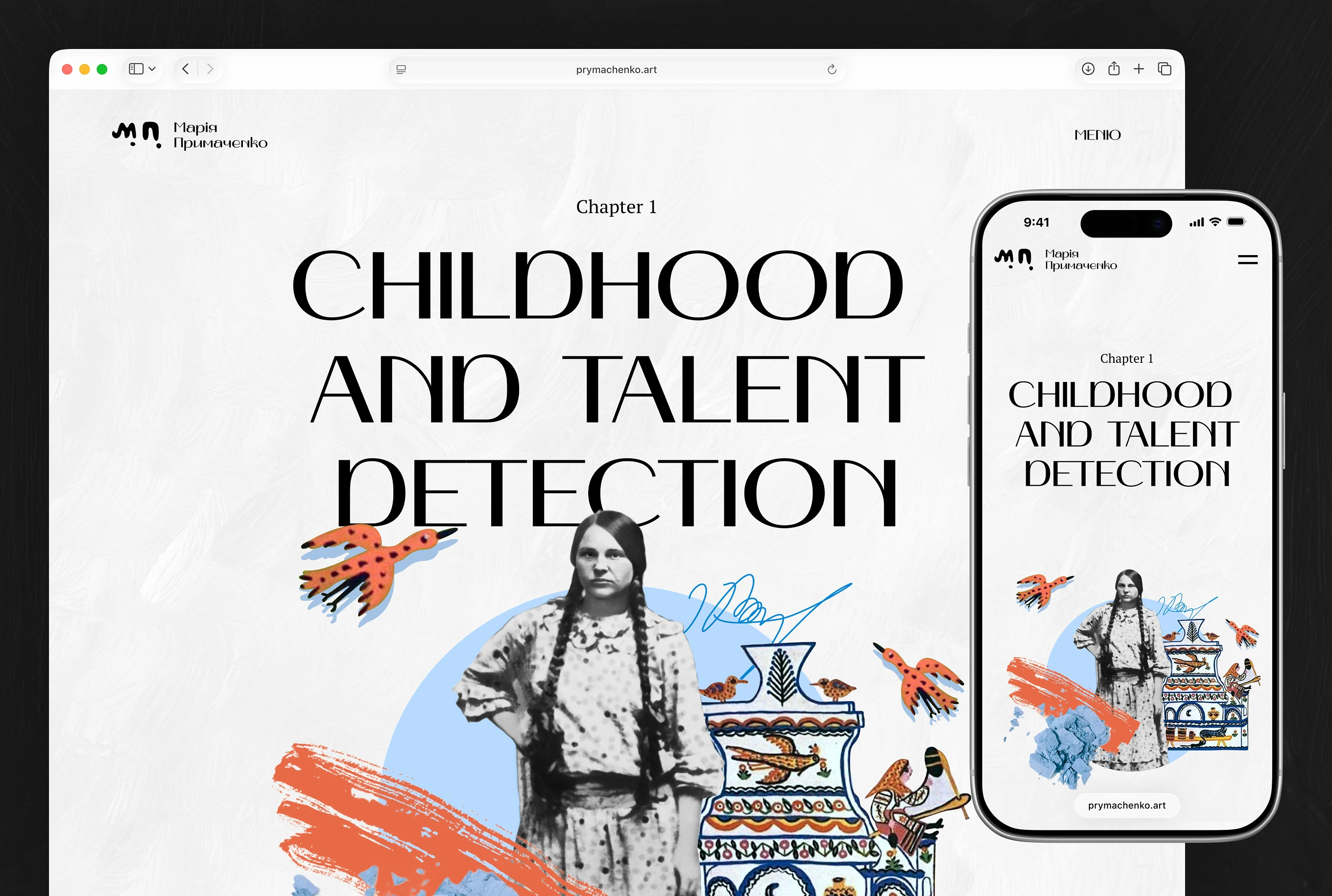
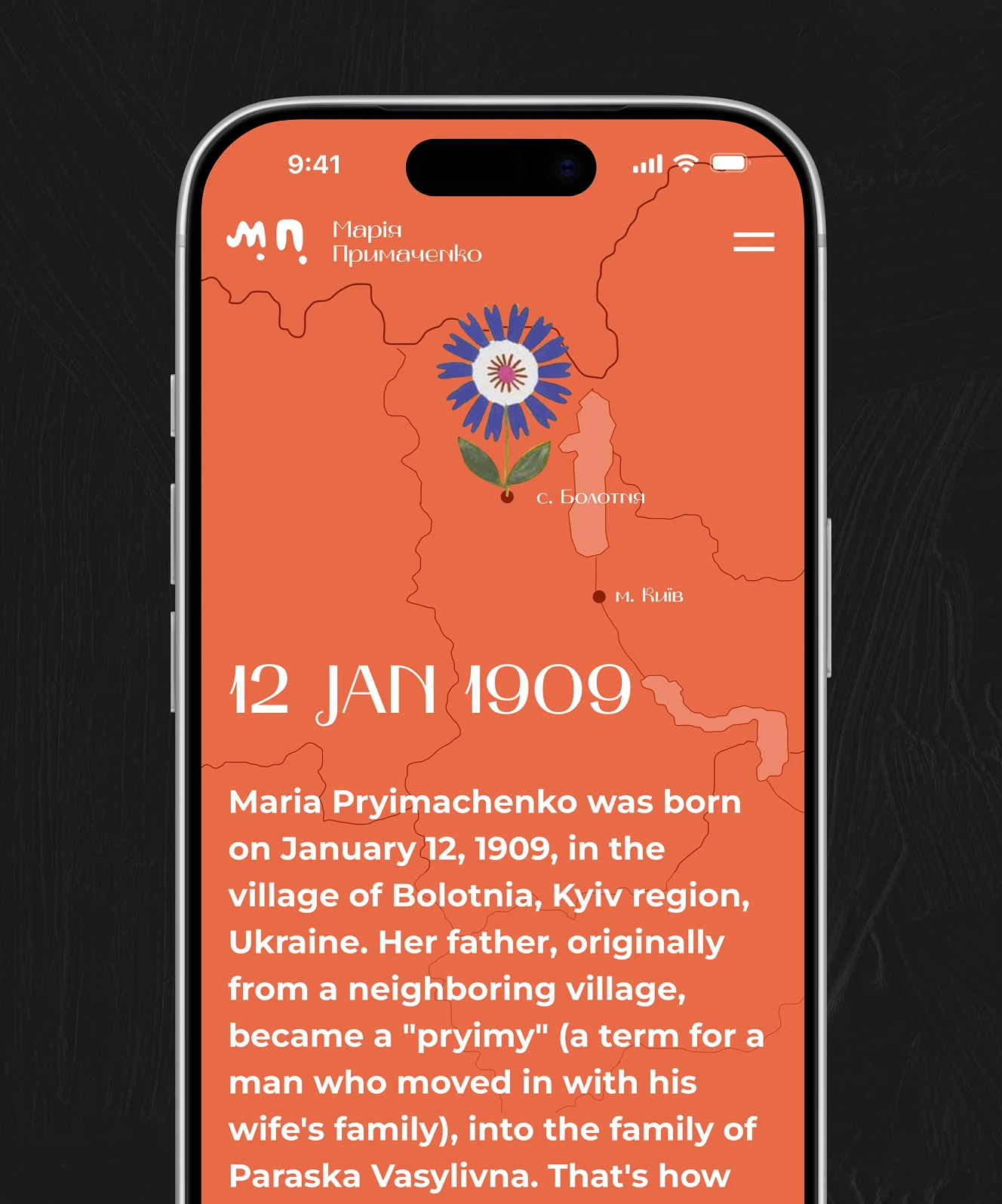
Maria was born on 12 January 1909 in Bolotnia, Kyiv region; her father, who married into the village, took the nickname 'pryimy' – the origin of the family name Prymachenko. Her parents worked as a carpenter and an embroiderer, shaping her craft.
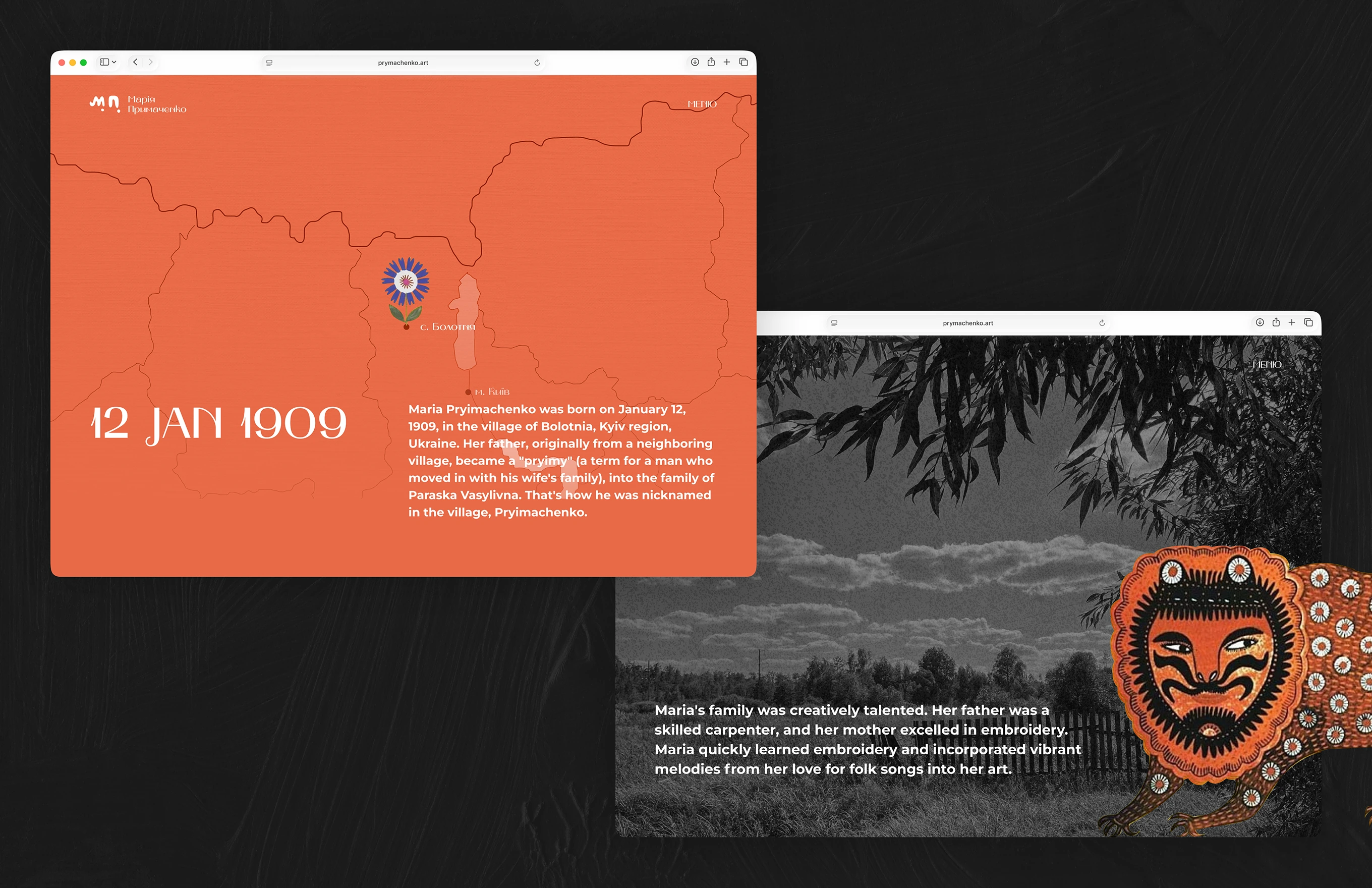
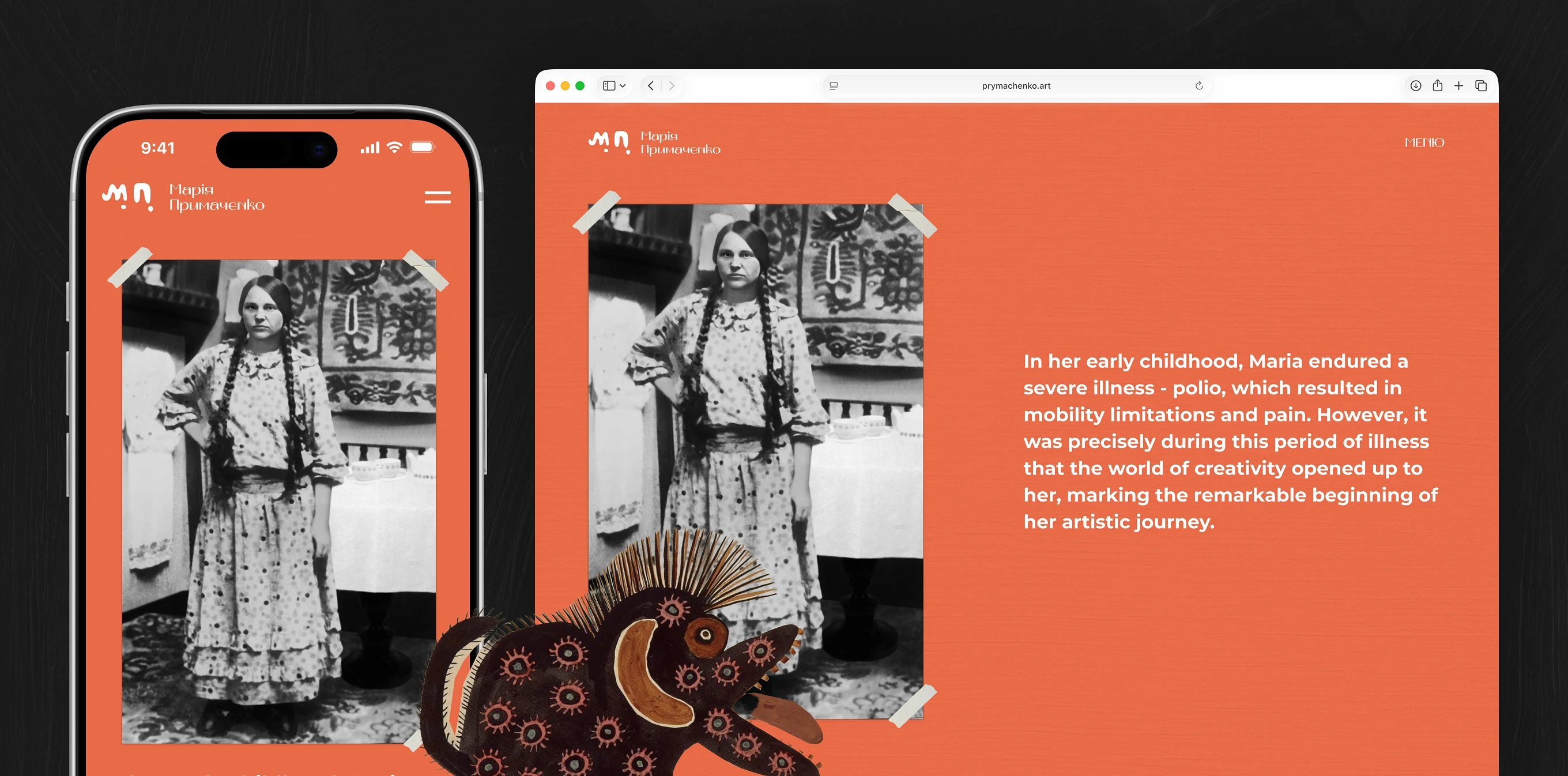
Childhood polio left Maria with lasting mobility limitations and pain, confining her to periods of stillness. That illness became the unexpected starting point of her artistic path.
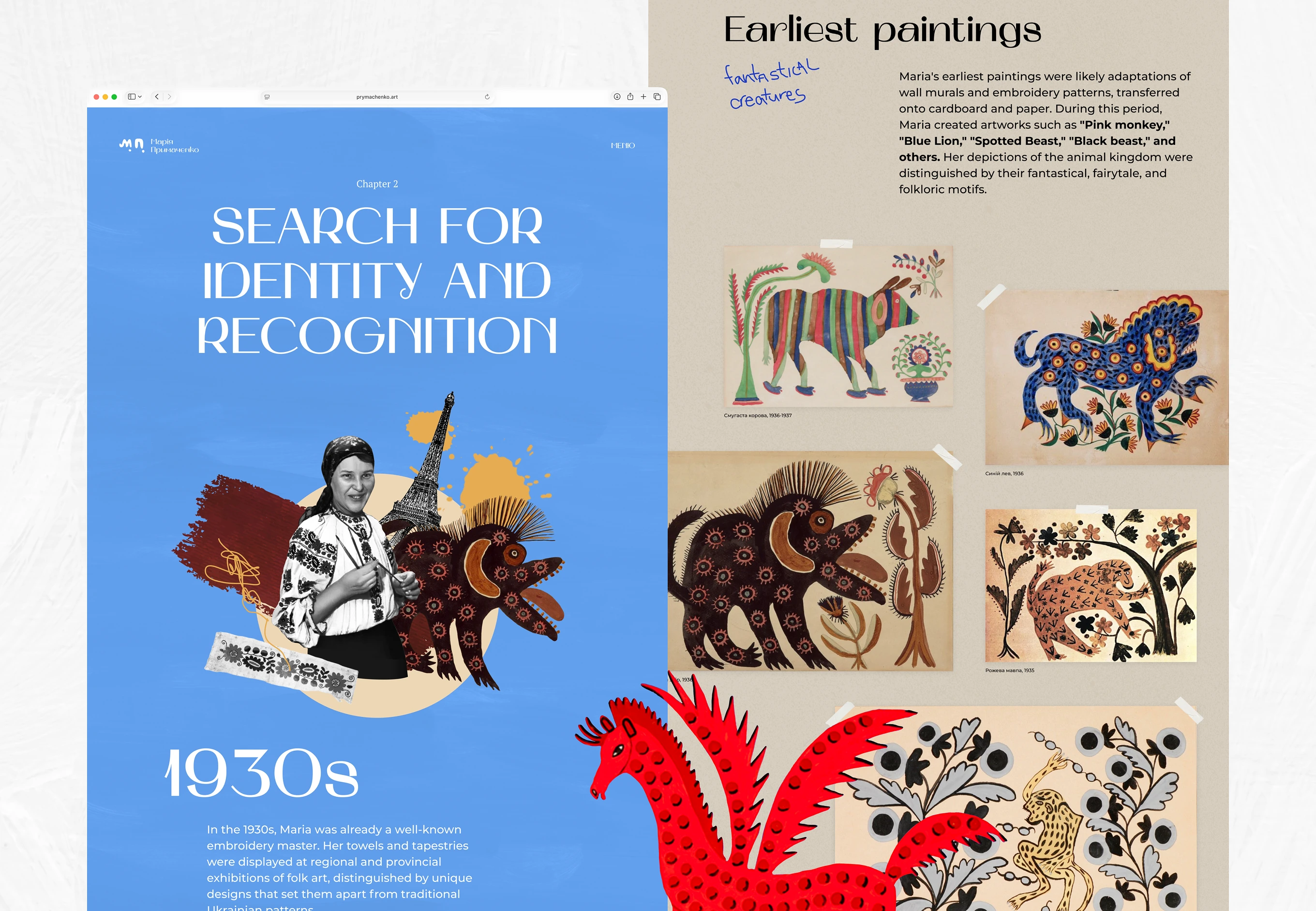
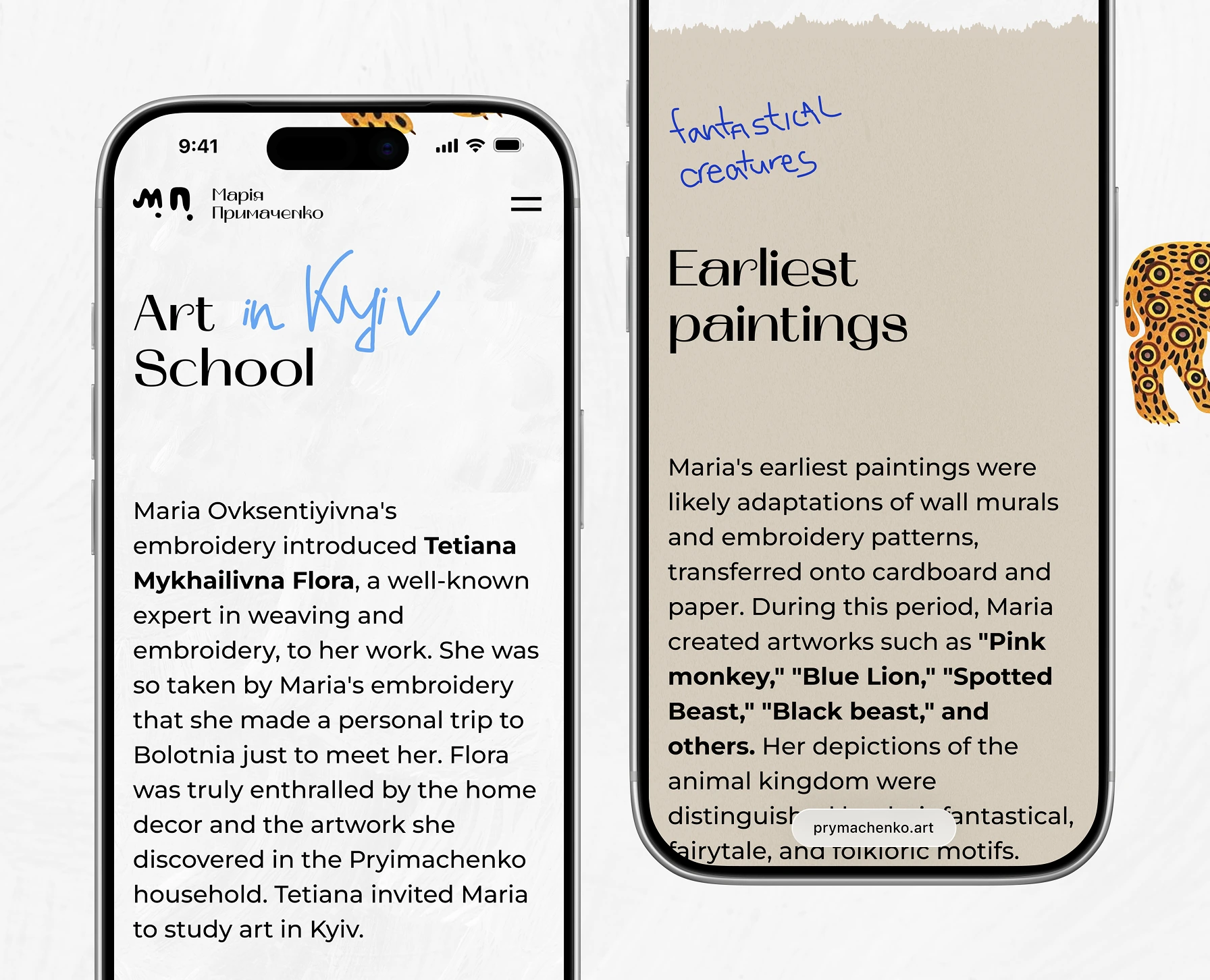
By the 1930s Maria was already a recognized embroidery master, exhibiting at regional and provincial folk art shows. Her earliest paintings, including Pink Monkey and Blue Lion, translated embroidery patterns into fantastical animal forms.
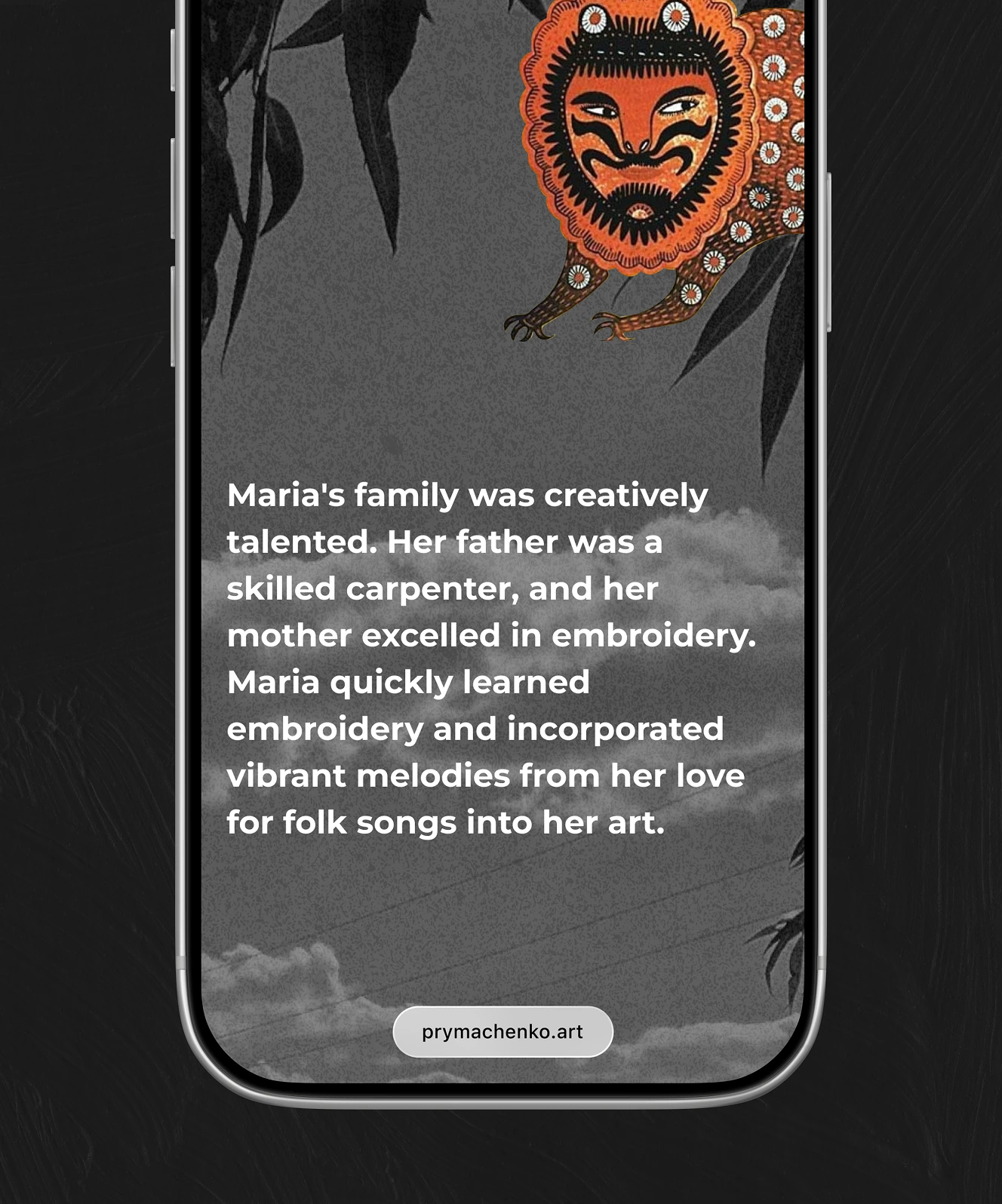
Maria carried her embroidery training directly into painting, weaving melodies from folk songs she loved into the animal motifs she created. A surviving embroidered garment on display links her needlework years to the paintings that followed.
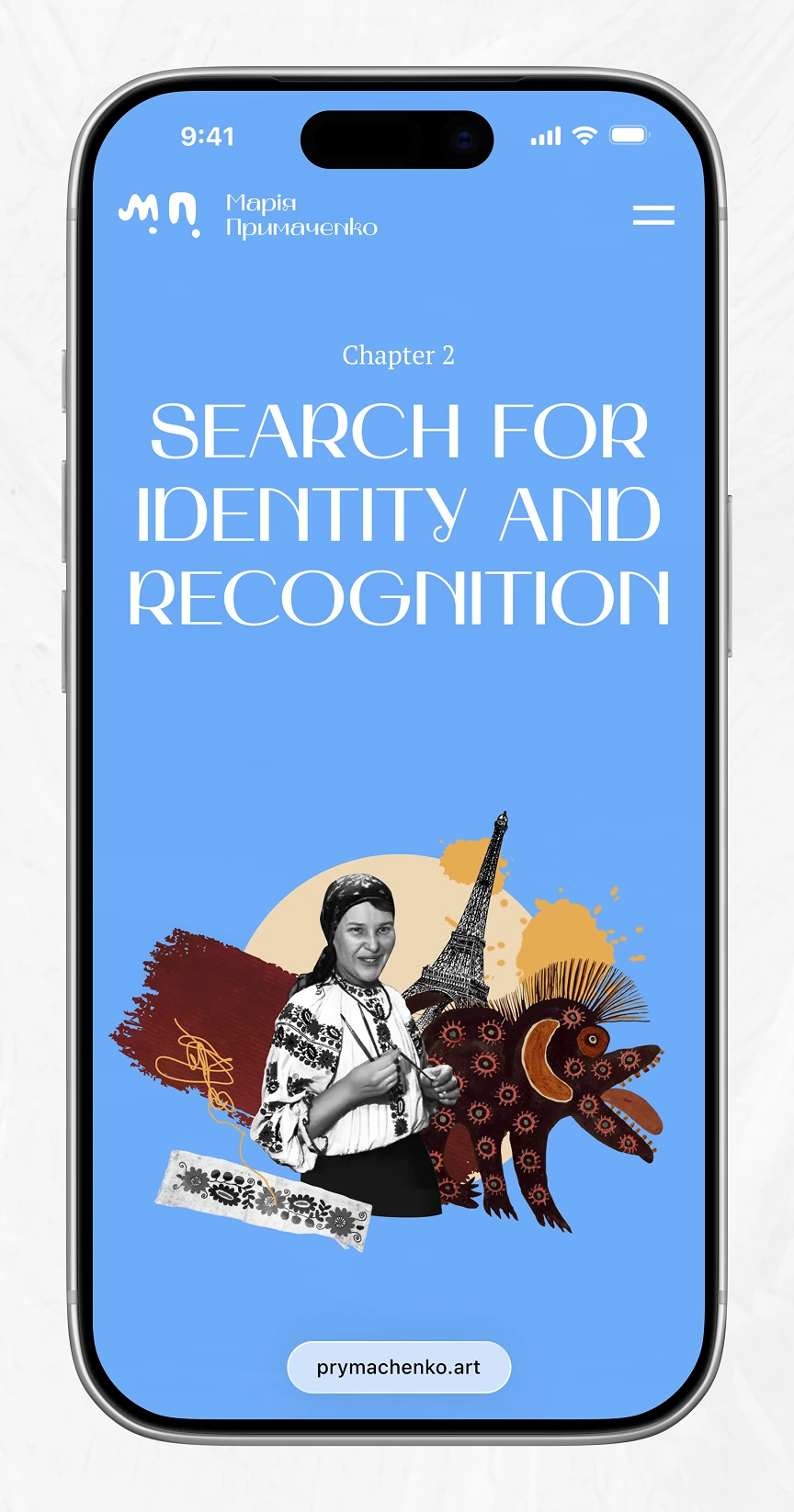
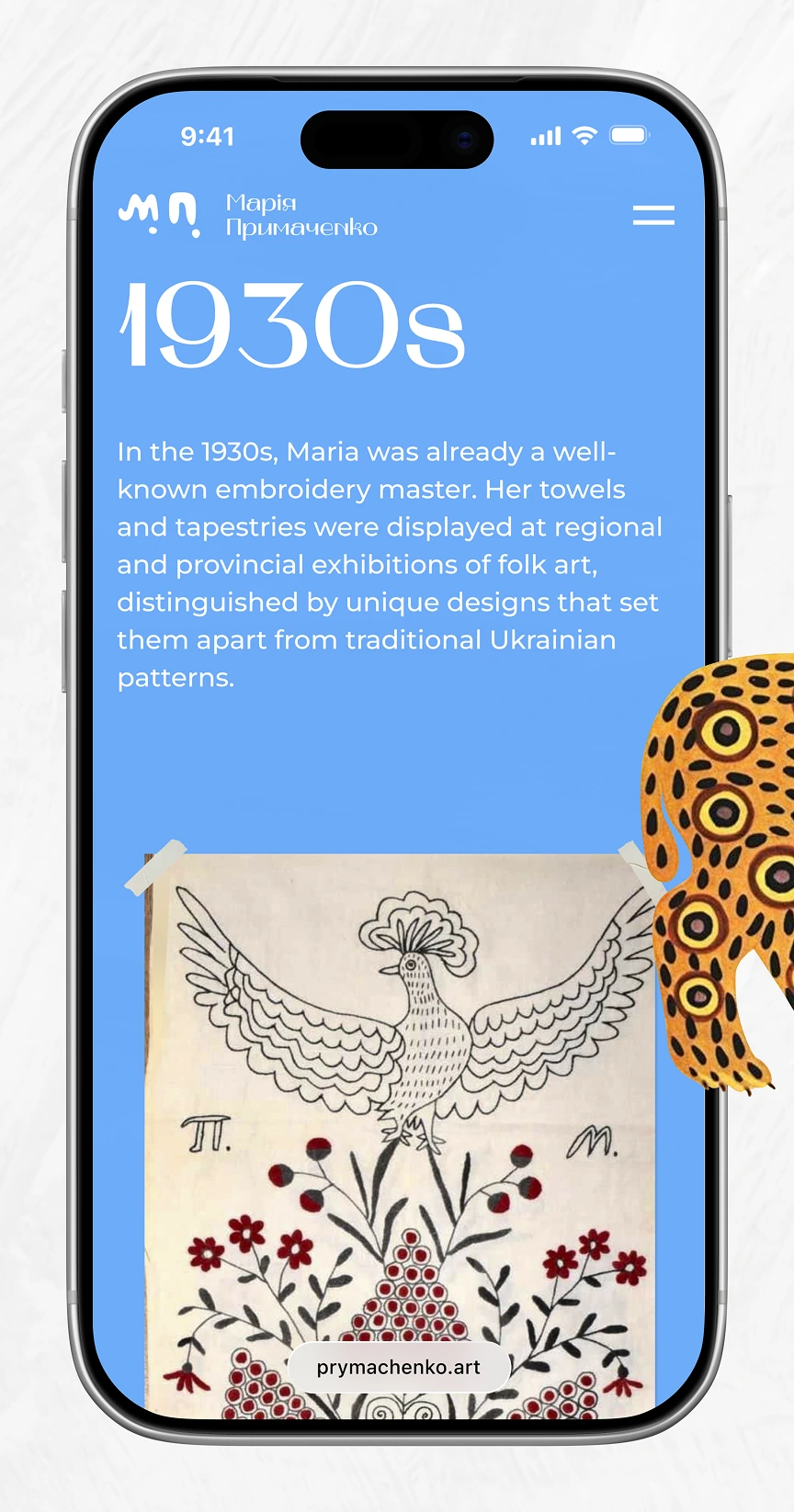
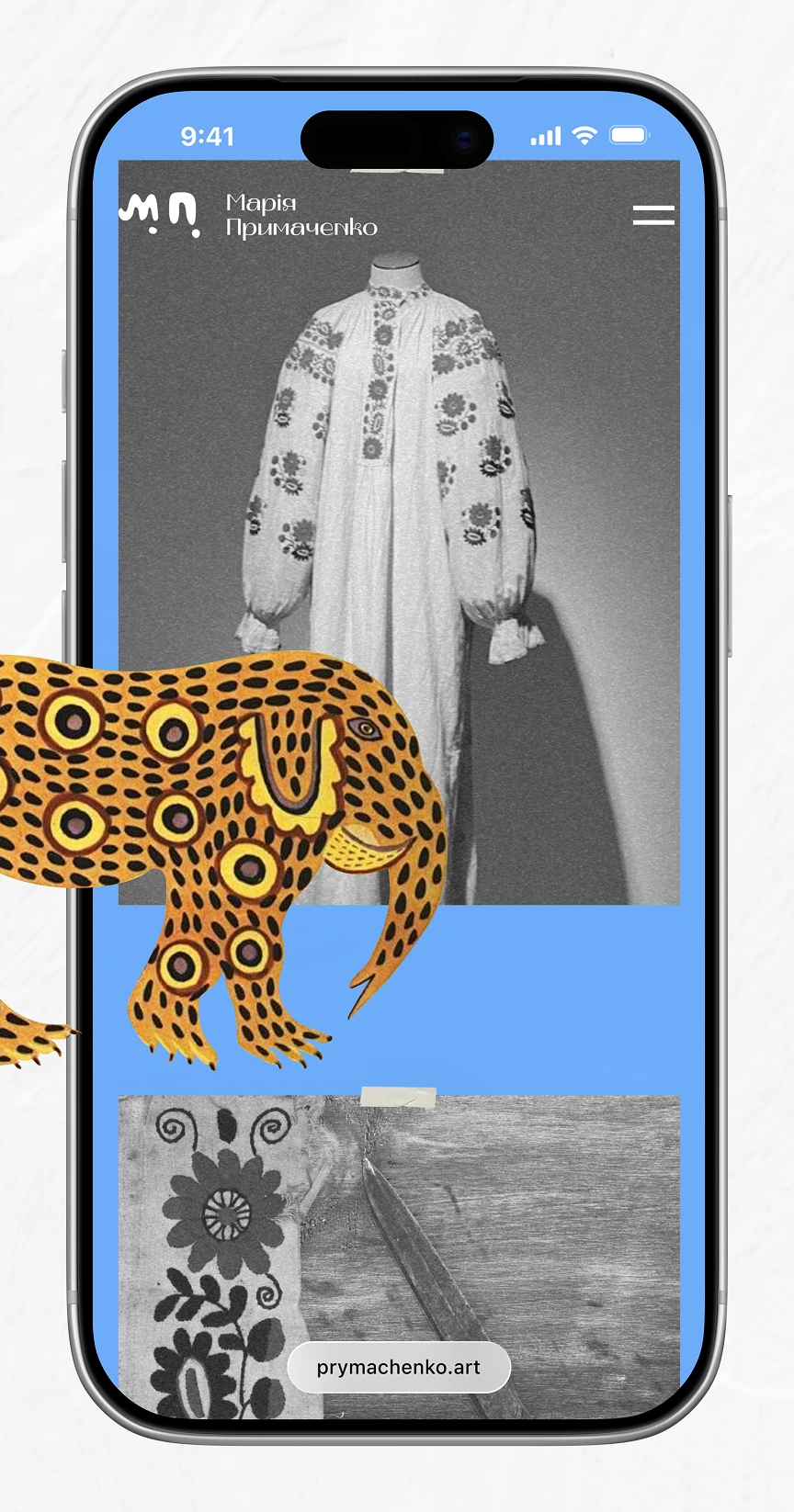
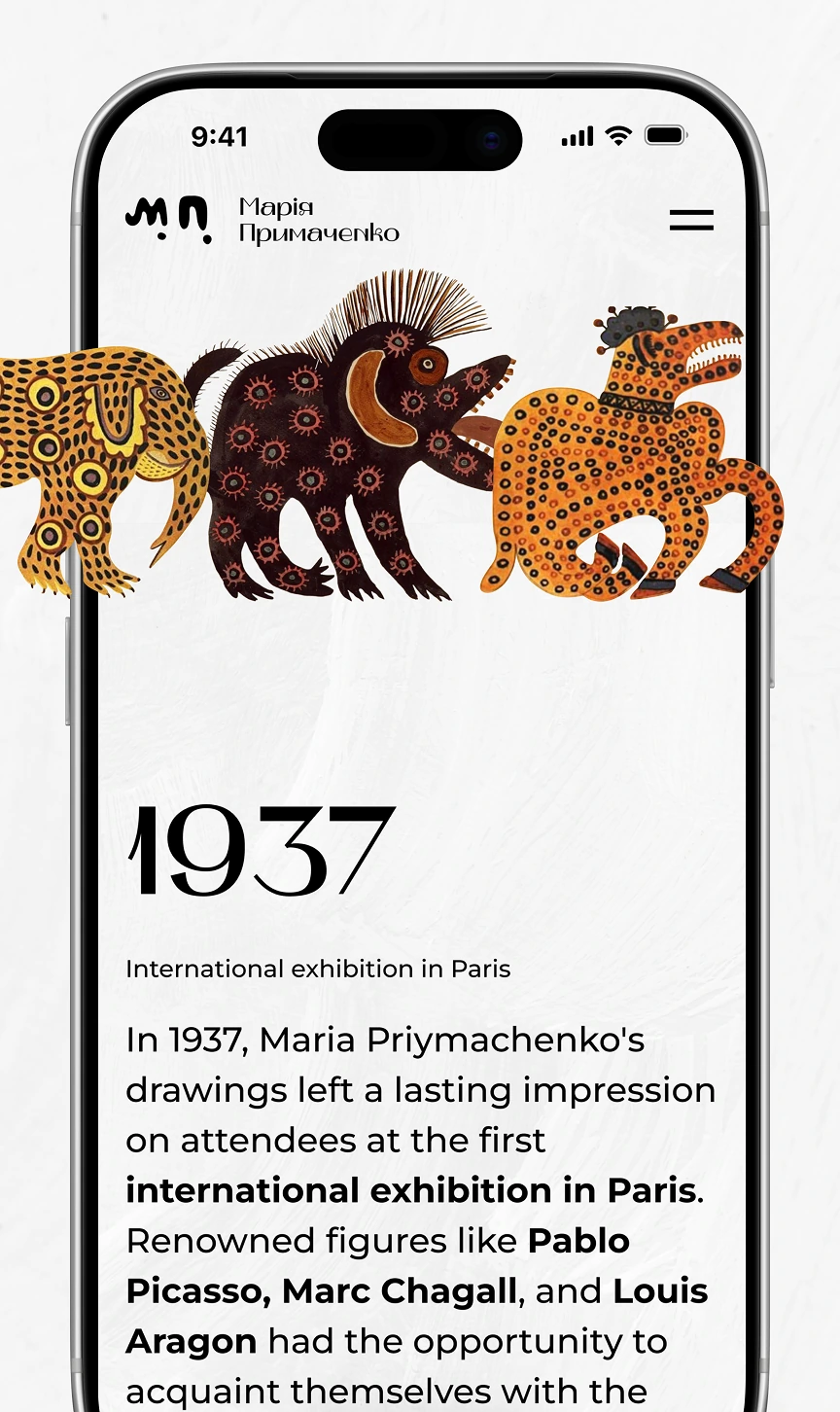
A sequence of cards follows Maria from an invitation to study in Kyiv through the 1937 international exhibition in Paris, where her work won global recognition – before war changed her story.
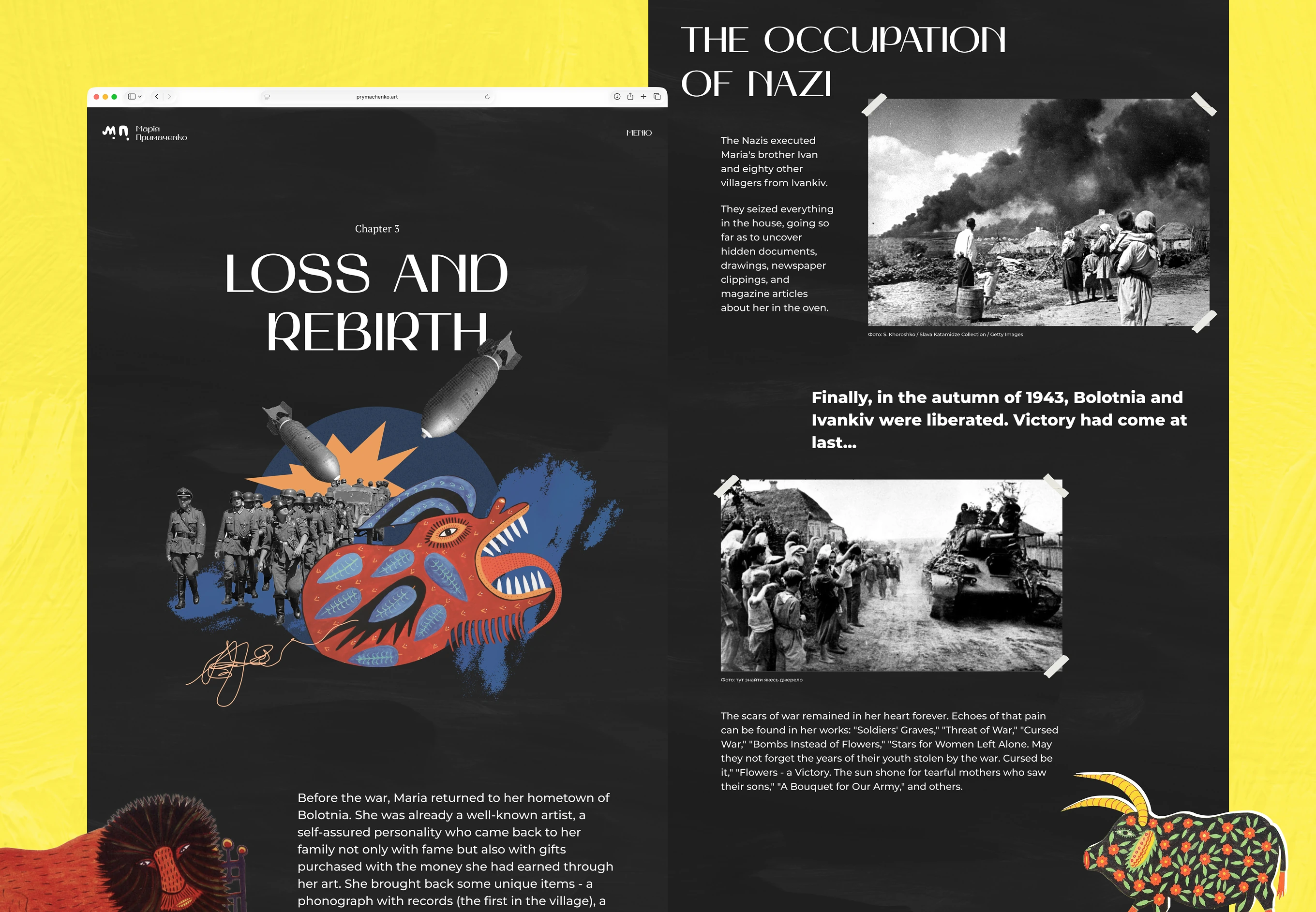
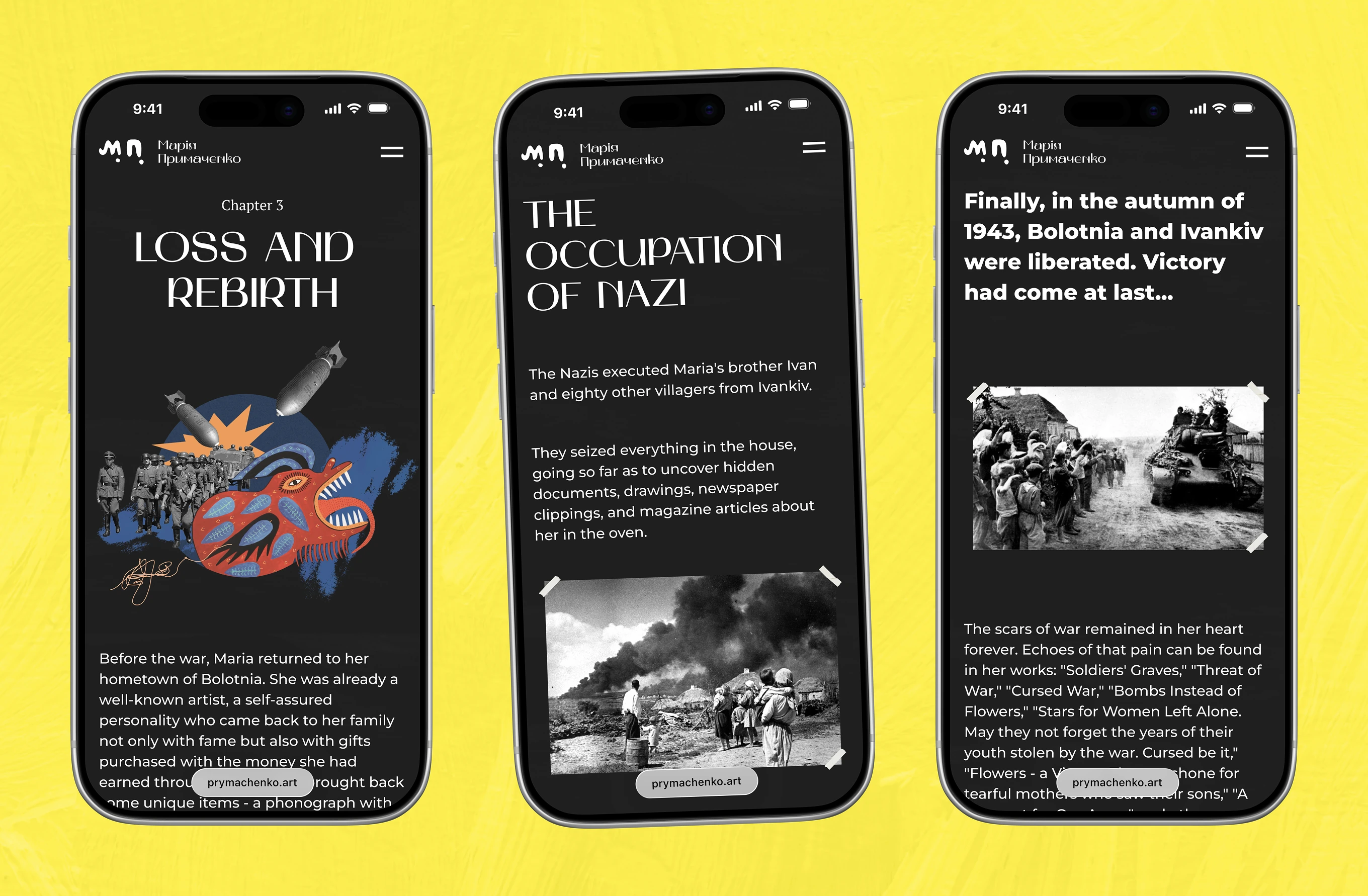
Three mobile screens cover the Nazi occupation and the execution of Maria's brother, carrying her story through to the liberation of her region in autumn 1943.
Maria's wartime paintings carry titles she assigned them – Soldiers' Graves and Threat of War included – shown against a dark gallery background. Mythical creatures in purple and yellow become her visual language for expressing the profound losses of the period.
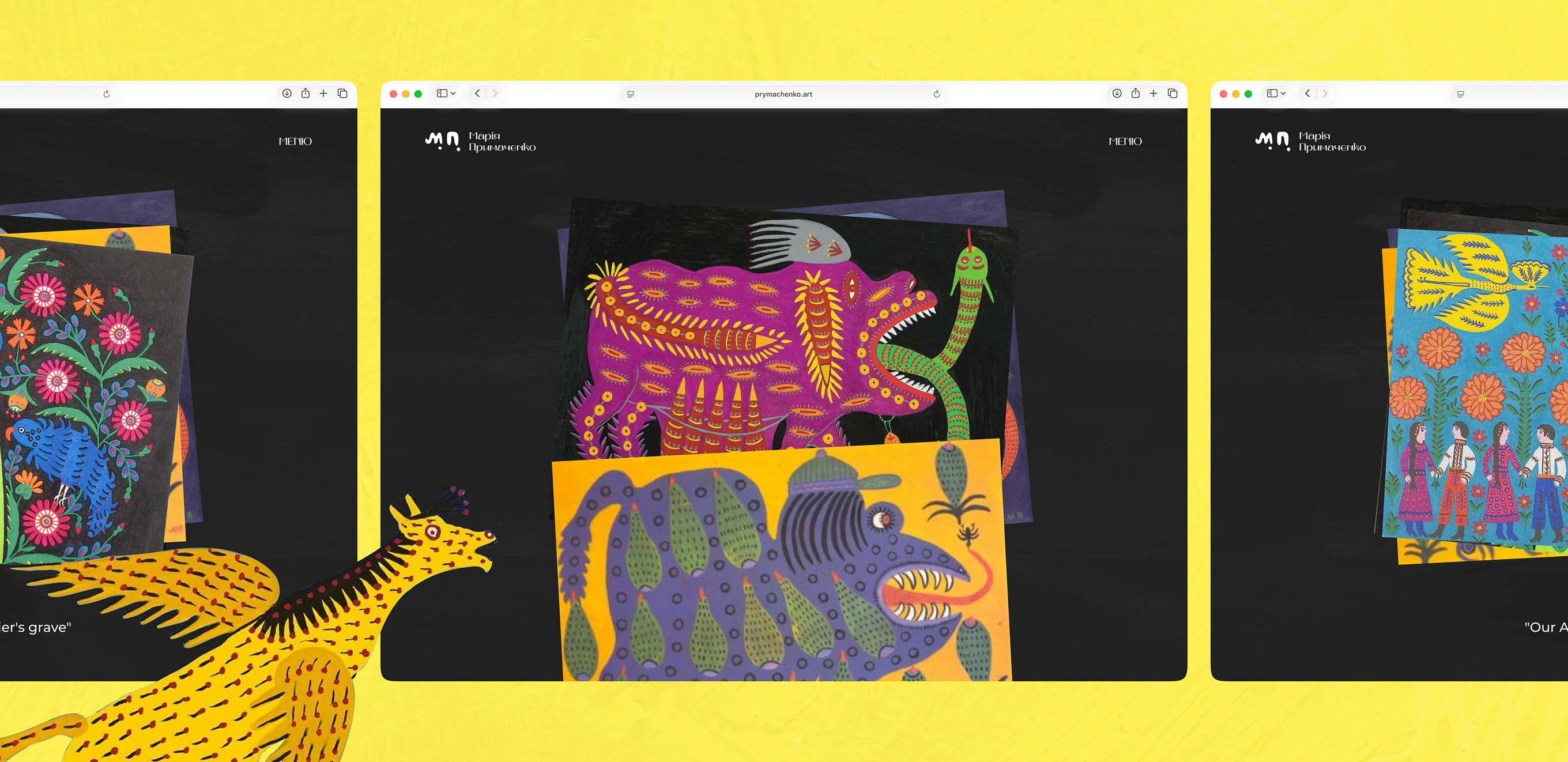
On mobile, each wartime painting is shown with its full title, including Three Parrots on a Soldier's Grave and Our Army, Our Guardians. The war years left a mark that surfaced repeatedly in the titles she chose.
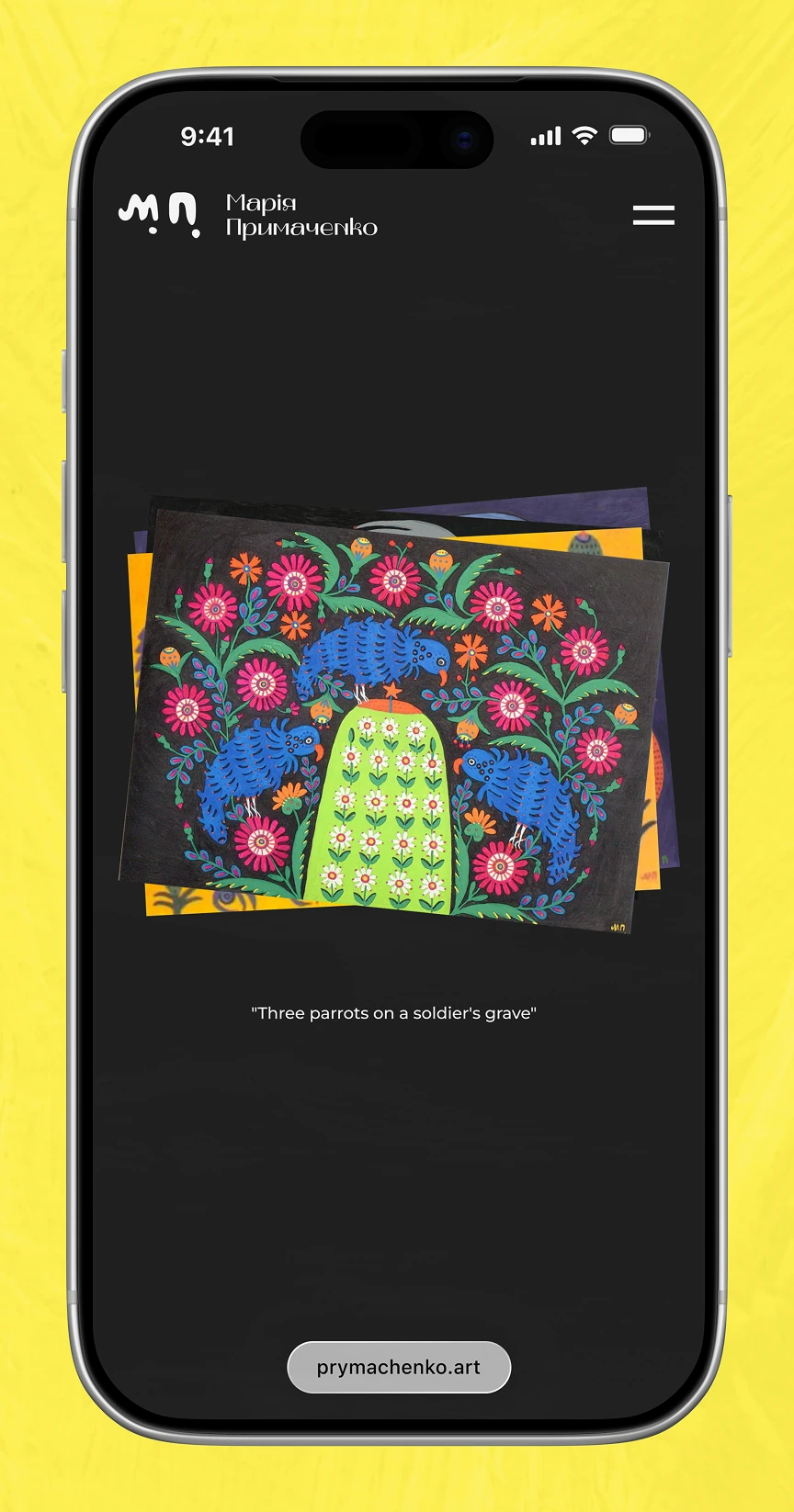
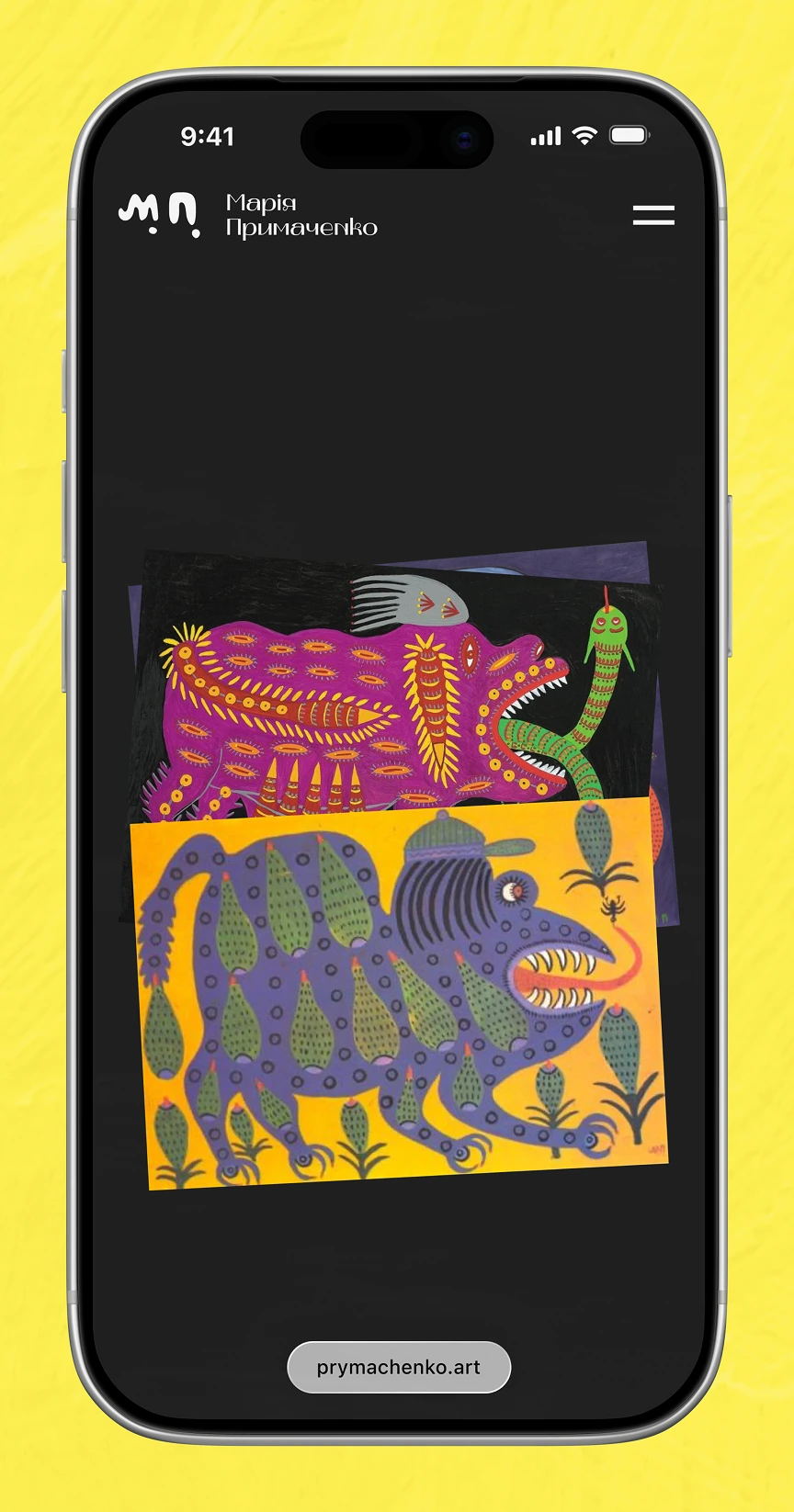
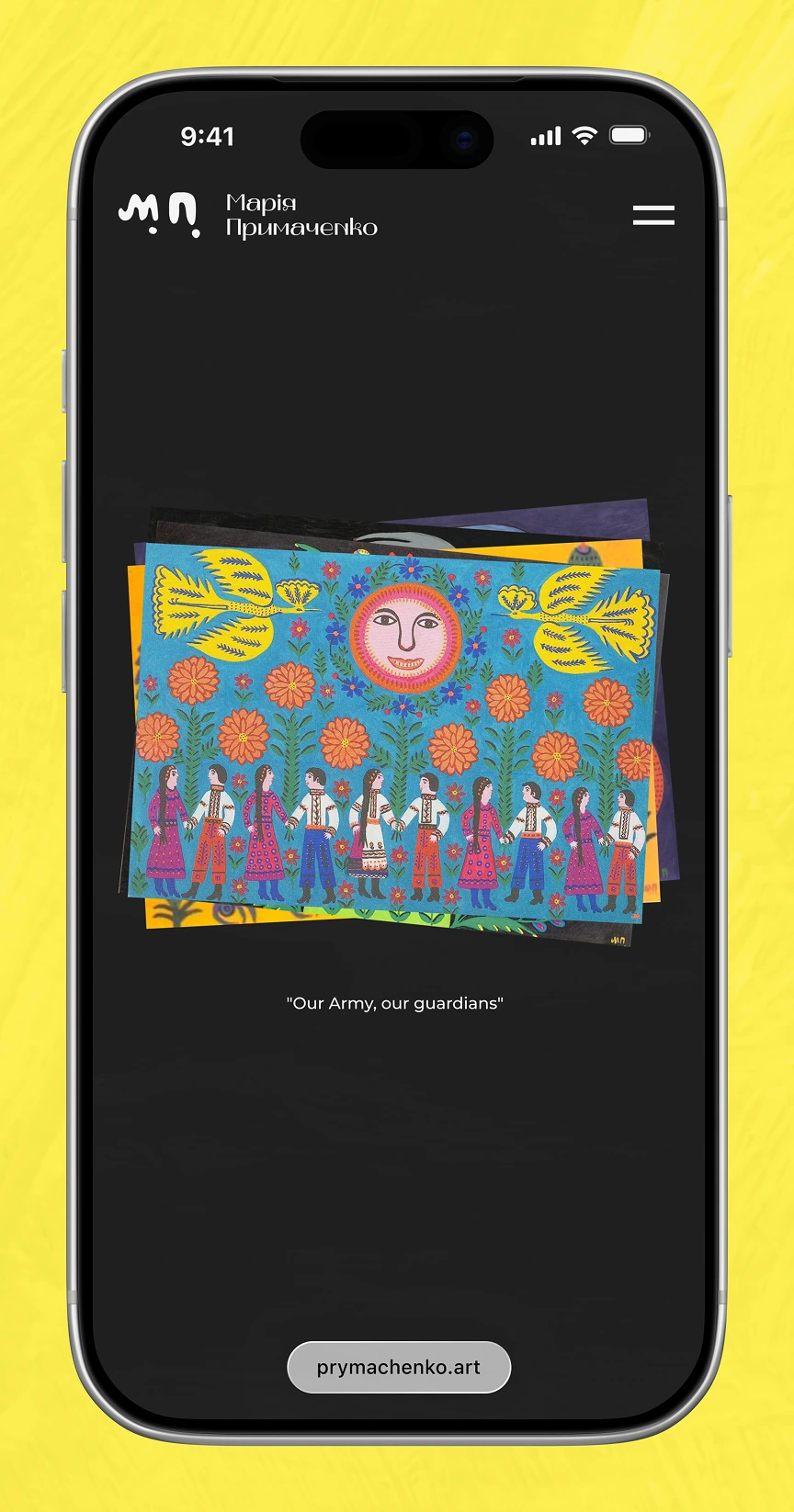
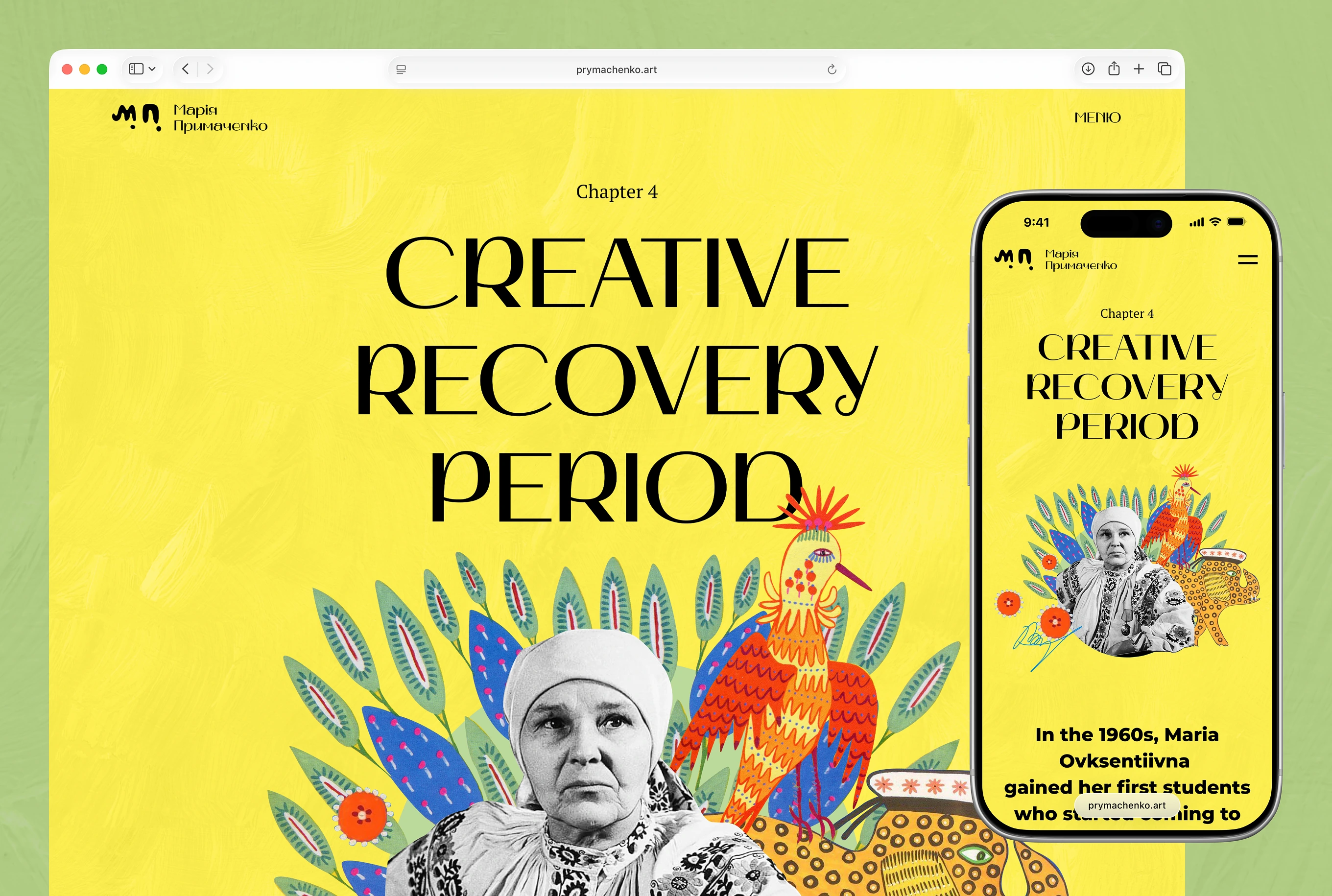
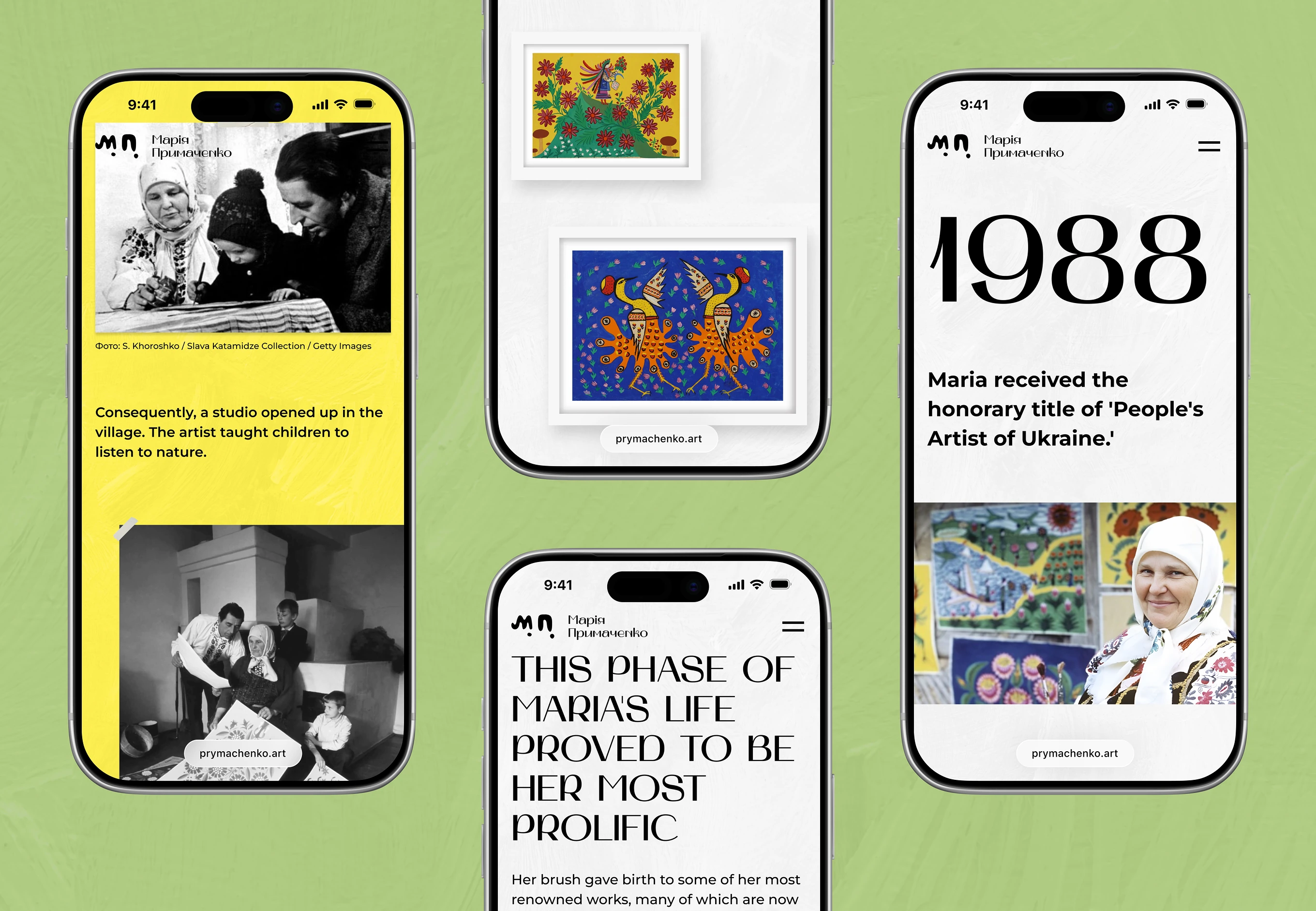
Chapter Four opens in the 1960s, when Maria began teaching children rather than only painting for herself. A colorful bird-and-leopard illustration marks her shift from a wartime survivor to a recognized teacher of her craft.
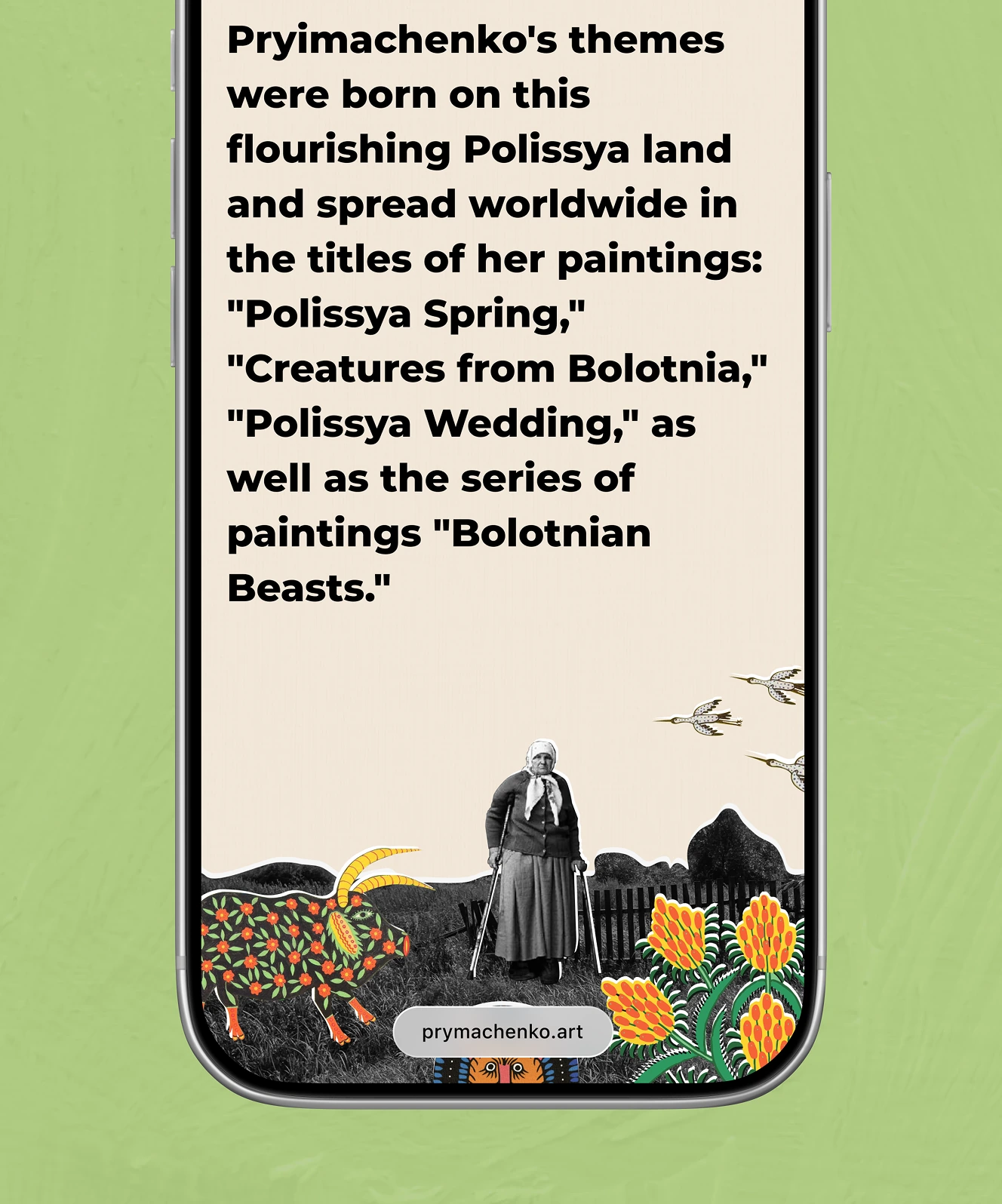
This section ties Maria's later work to Polissya, her home region within the Chornobyl Exclusion Zone. A cow-in-boots painting responds symbolically to radiation-contaminated grass, alongside titled series like Polissya Spring.
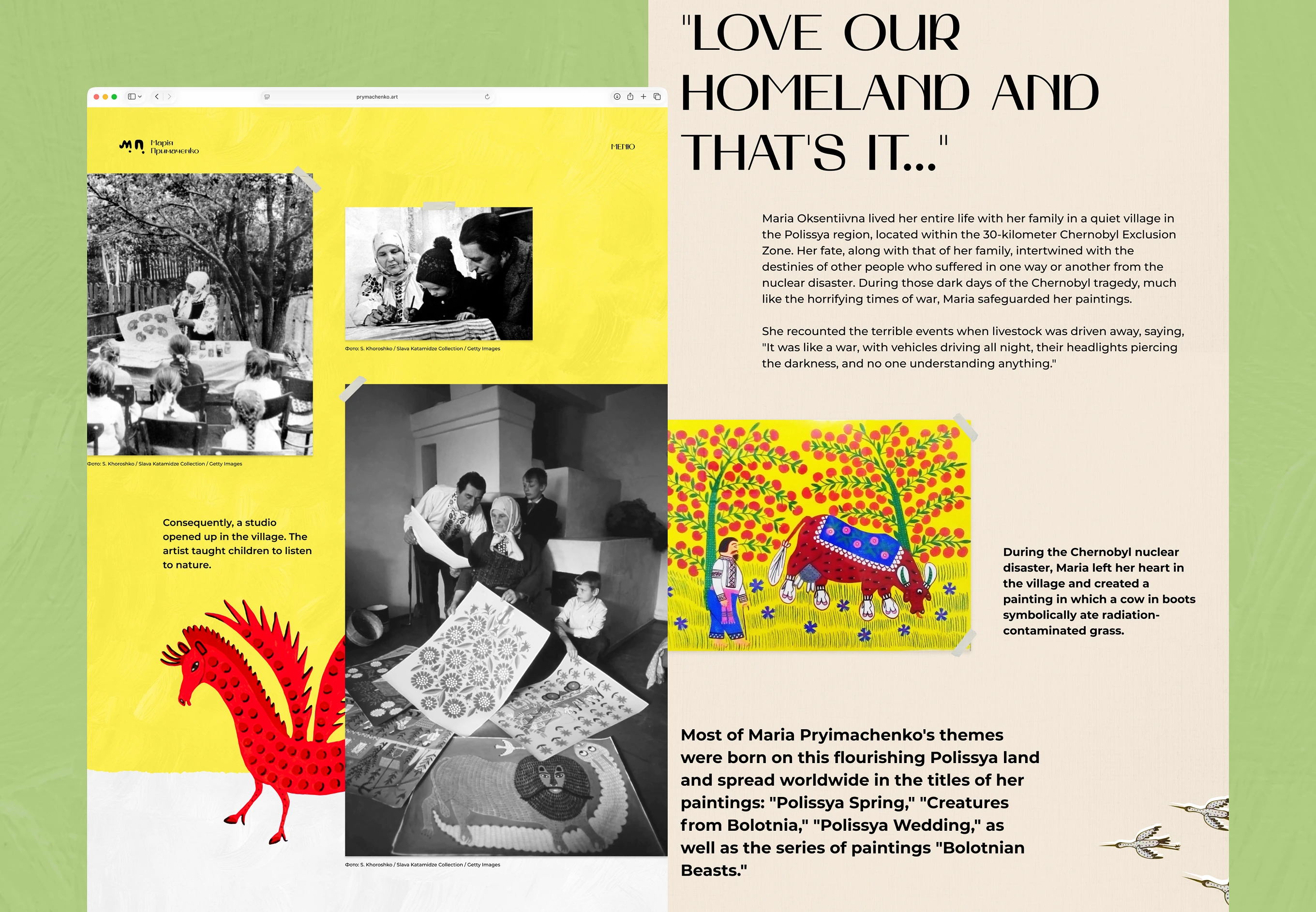
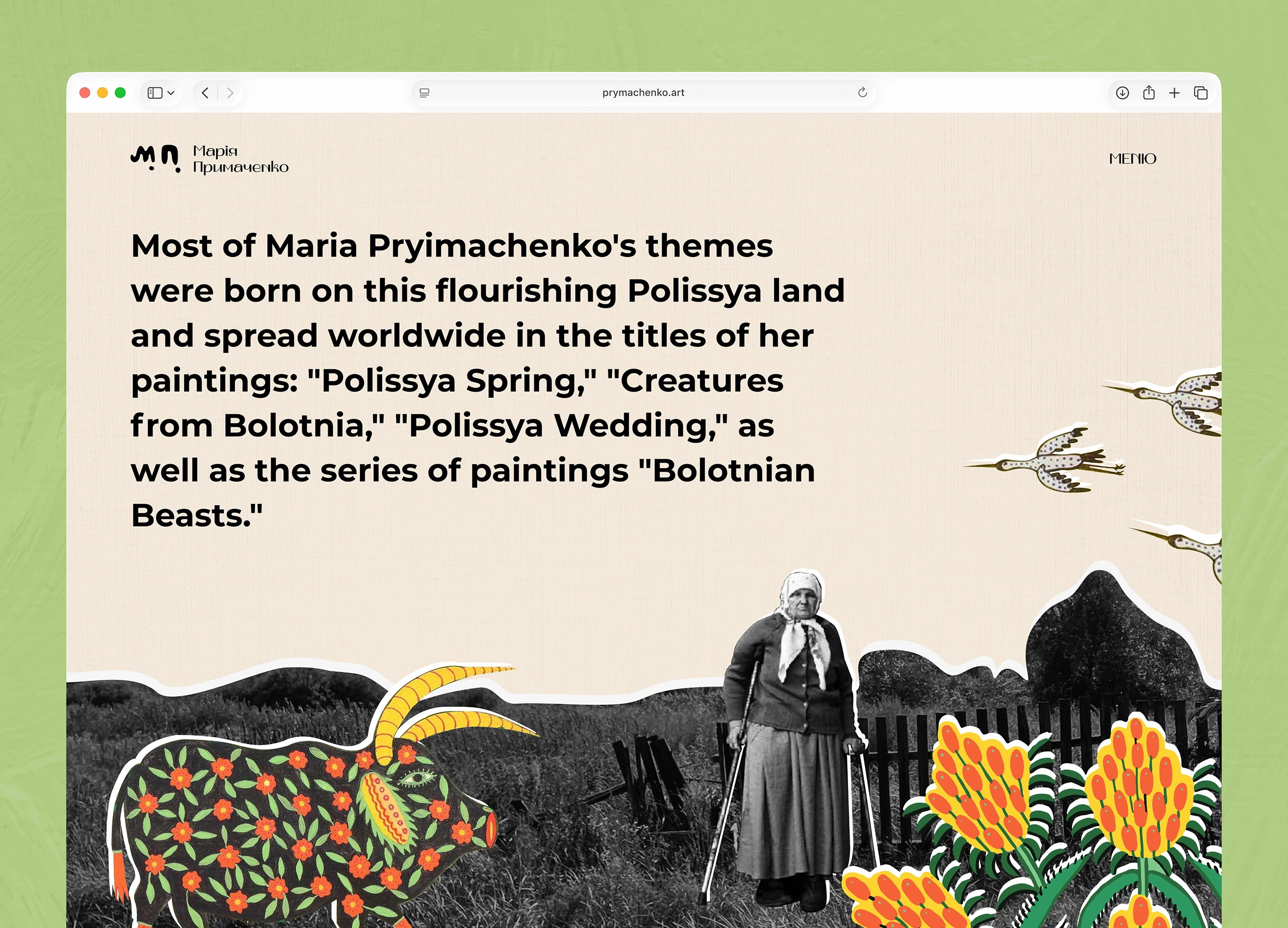
In the village studio Maria opened, she taught children to observe nature rather than copy it, marking the beginning of her most prolific creative period. In 1988 she received Ukraine's honorary title of People's Artist.
If your heritage site feels informative but forgettable, the missing piece is usually how the content is structured, not how much of it there is.
We close that gap – get in touch.
