




View more

Fundrais­ing Concept

From idea to investor-ready in 4 weeks. Skip early code—we package your vision into a compelling deck and interactive prototype designed to sell your product in the room.
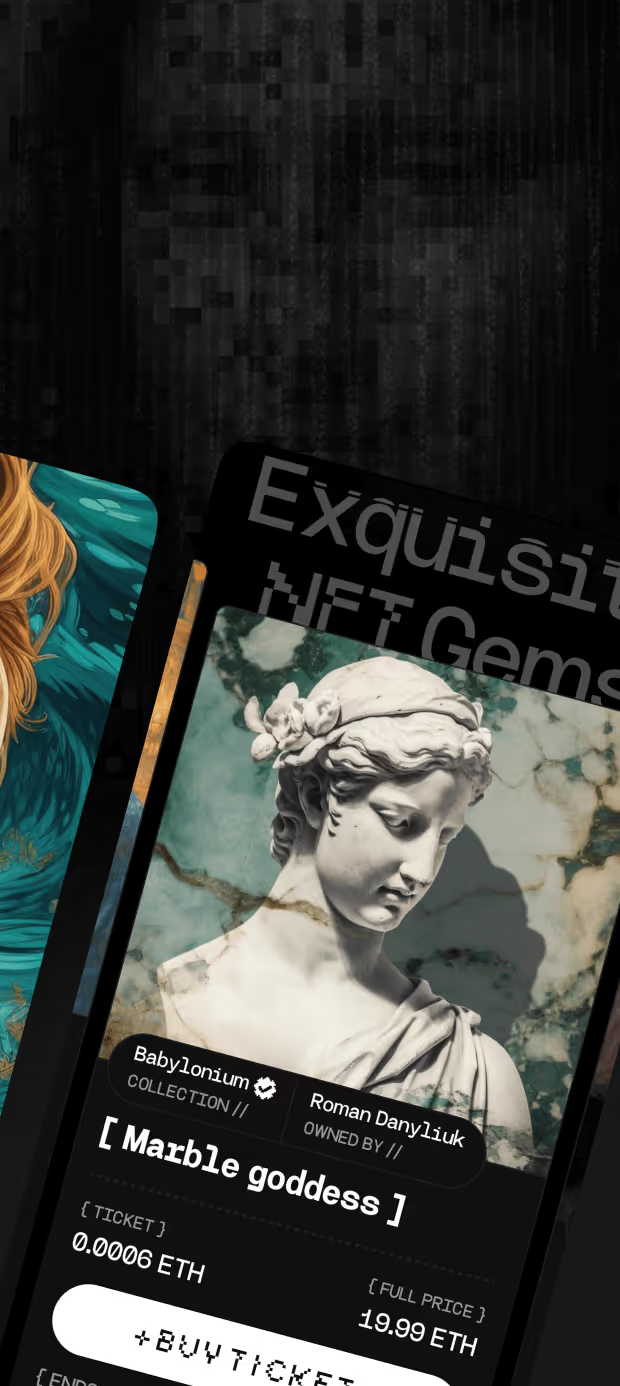
Web3
Babylon 7. Where art fortune is made.
Web3.
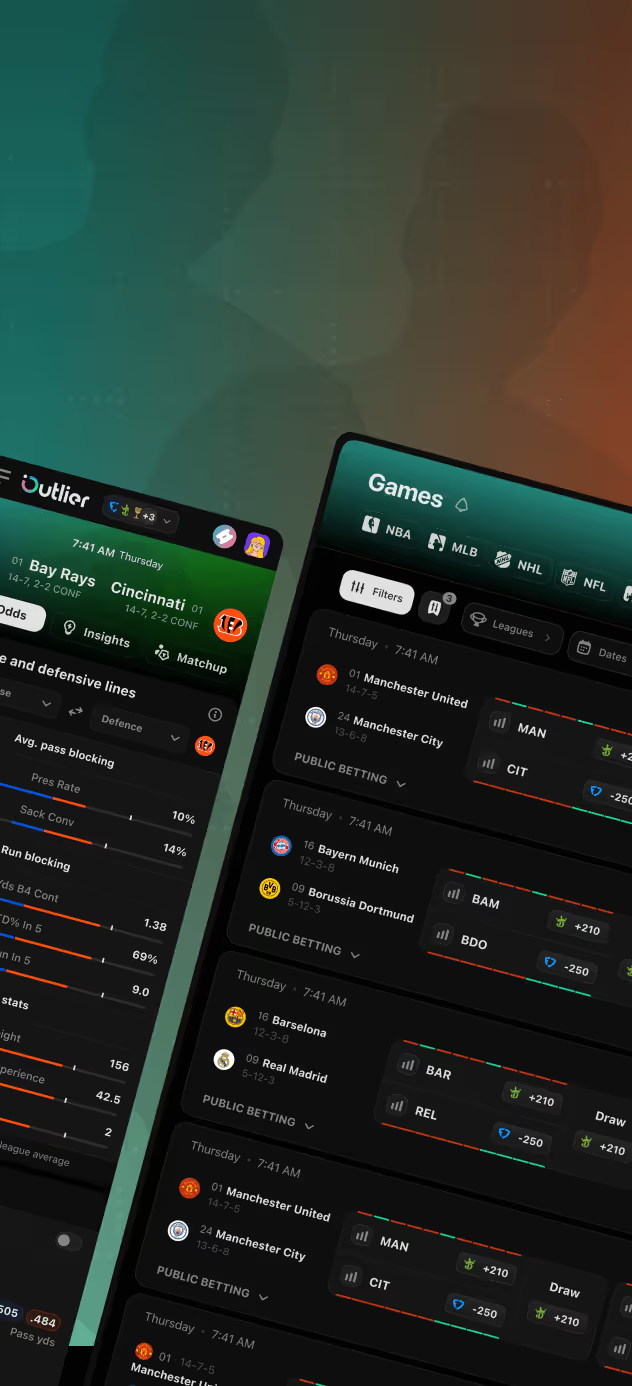
SportsTech
Outlier. Pro betting intel, simplified.
Sports.
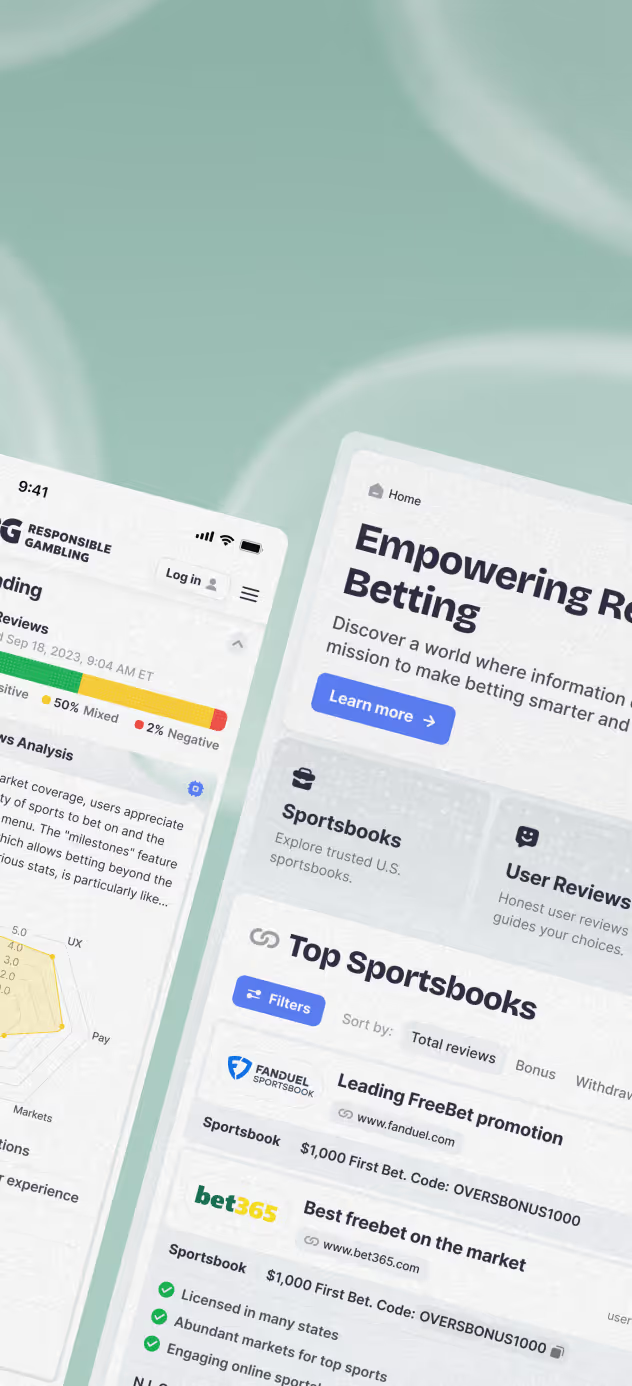
Media
RG. Empowering responsible gambling.
News.
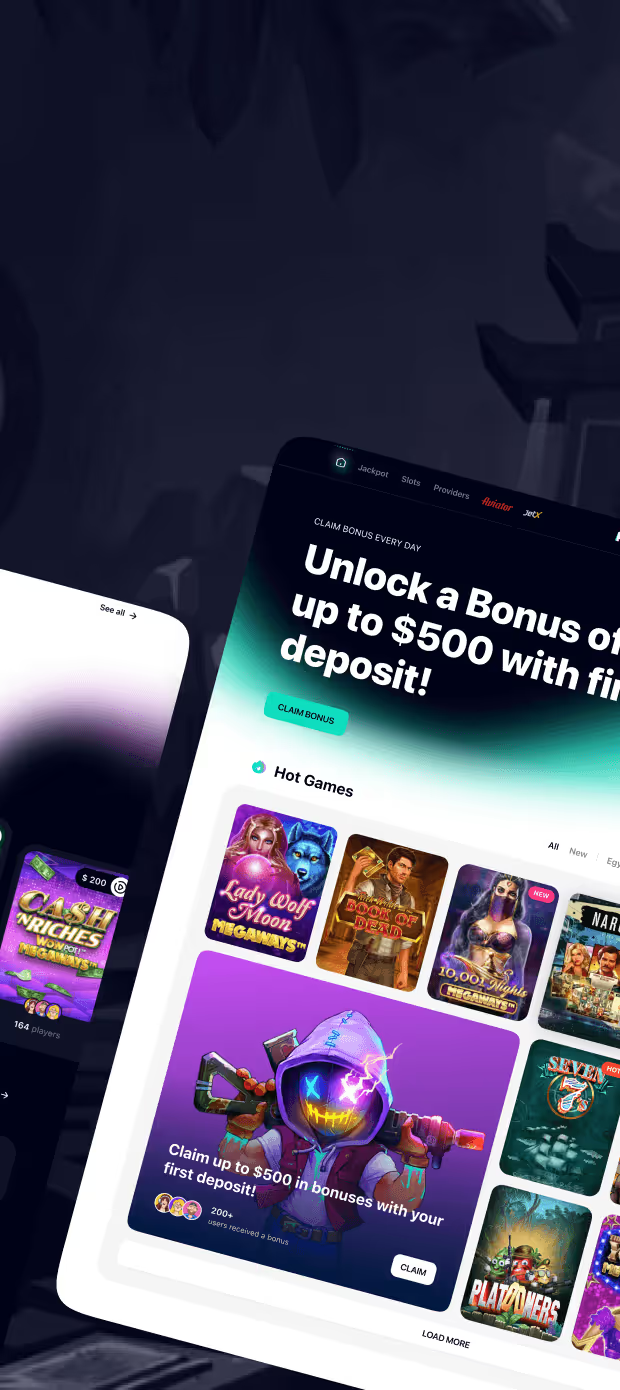
iGaming
FPS Casino. Apple-native feel.
iGaming.
Business Problem

The "build trap": Burning cash on code.

Founders burn months (and budgets) on MVPs that investors ignore. We flip the script: Sell the vision first. You need a high-fidelity story that de-risks investment, not a buggy codebase.


What’s in the Pack:

1
Concept Analysis
We leverage AI to analyze your idea and market context. This ensures your product logic is grounded in reality, not assumptions, before design begins.
2
High-fidelity interaction (Clickable)
Depending on your product's complexity, we deliver a clickable prototype or an AI-assisted functional PoC. We use vibecoding where it adds the most value.
3
Essential branding (MVP Identity)
A fast, minimal identity for a credible signal. Logomark, palette, and typography that keep your deck and prototype aligned — without the overhead of a full brand process.
4
Investor pitch deck
A focused 10–15 slide deck that delivers your story: problem, insight, solution, market size, and product angle. Built so investors can understand and trust the opportunity fast.
Scope

The process

Week 1
Concept analysis.
We leverage AI to deeply analyze your idea, specific audience, and market context to find the strongest angle.
Logic definition.
We translate insights into action: prioritizing the right features and defining the core product logic that your users actually need.
Week 2
Visual identity setup.
We craft one polished logo concept, typography, and colors — ensuring your deck and prototype look professional and consistent from Day 1.
Product concept.
We design high-fidelity screens for core product pages. This visualizes your main features, showing investors exactly how the platform works.
Week 3
Pitch deck design.
We structure the data and design a 10–15 slide deck that flows logically, highlights the opportunity, and looks premium.
Week 4
Prototyping.
We finalize a high-fidelity clickable prototype in Figma.
AI-Assisted pilot.
Where applicable, we leverage vibecoding to spin up a functional proof-of-concept. This allows investors to "feel" the live interaction of your core features without a full engineering cycle.
Delivery!
You receive all source files, the prototype link, and any functional AI-generated modules ready for your meetings.
Rationale

Why “Vision first”?

Flatstudio
Other
Risk & Burn
Result
Investor reaction
Flatstudio fundraising sprint
4 weeks
Best choice
Risk & Burn
Fixed price, zero engineering cost
Result
Pitch-ready product vision
UX Quality
"I see the opportunity. Let’s talk."
Rushed coded demo
3–6 months
Risk & Burn
High burn rate + lost dev cycles
Result
Buggy demo with no clear story
Investor reaction
"I don't understand the value."
Offer

What you get

Editable Pitch Deck
Visual identity assets
Prototype (Figma or vibe-coded)
Product concept
Engagement Model
€7,500
Fixed price
4 weeks
Guaranteed
Timeline
Weekly syncs
Async reviews
Format
Not sure where to start? Let’s discuss your specific case.
FAQ

Frequently Asked Questions

Can I edit the pitch deck myself later?

Yes, absolutely. We build the master structure in Figma, but we can export it as an editable Google Slides or PowerPoint file so you can tweak numbers and text before every meeting.

Is the prototype functional (code-based)?

No, it is a high-fidelity simulation in Figma. It is fully interactive—you can click through flows just like a real app—but it does not run on code. It is designed to prove the concept and raise capital without burning budget on engineering.

What happens after we raise funding?

Since we already designed the logic and prototype, we can transition straight into MVP development. This saves you 2–3 weeks of "onboarding" time because our engineering team already knows the product inside out.

I only have a rough idea. Is that enough to start?

Yes. You don't need wireframes or specs. We just need your vision, target audience, and raw data. Our "Week 1: Concept analysis" is specifically designed to turn vague ideas into structured product logic.

Got more questions?